
 Televison New
Introduction: The Anti-Hero We Didn’t Know We Needed In the saturated landscape of prestige television, where anti-heroes like Tony Soprano and Walter White have long reigned supreme, a quiet, unassuming hitman from the suburbs of Sydney managed to carve out a niche that is arguably more profound, more grounded, and infinitely more “Australian.” That man is Ray Shoesmith, the protagonist of Mr. Inbetween. Created by and starring Scott Ryan, and directed with surgical precision by Nash Edgerton, the series is a masterclass in “Australian Noir.” It is time to stop overlooking this masterpiece and appreciate the sheer genius behind its storytelling, its character depth, and its brutal, uncompromising honesty.
The Genesis of Ray Shoesmith The genius of Mr. Inbetween begins with its history. The character of Ray Shoesmith first appeared in the 2005 cult film The Magician, a mockumentary also created by Scott Ryan. It took over a decade for Ryan to bring Ray back to the screen, and that passage of time is evident in the character’s soul. Ray is not a flashy, Hollywood-style assassin. He doesn’t drive luxury cars or use high-tech gadgets. He is a working-class father, a brother, a boyfriend, and a friend who just happens to kill people for a living. This duality is the engine that drives the show’s brilliance.
The Masterclass of “The Mute” and the Mundane What sets Mr. Inbetween apart from other crime dramas is its obsession with the mundane. The show spends as much time—if not more—on Ray’s conversations about dim sims, the etiquette of borrowing money, and the frustrations of parenthood as it does on his “work.” This is the core of Australian Noir: the juxtaposition of extreme violence with the banality of suburban life. One moment, Ray is having a philosophical debate with his best friend Gary about the ethics of “The Tooth Fairy,” and the next, he is buried in the woods, dealing with a body. This tonal shift is handled so effortlessly that it feels natural, reflecting the chilling reality that violence is often just another day at the office for those involved.
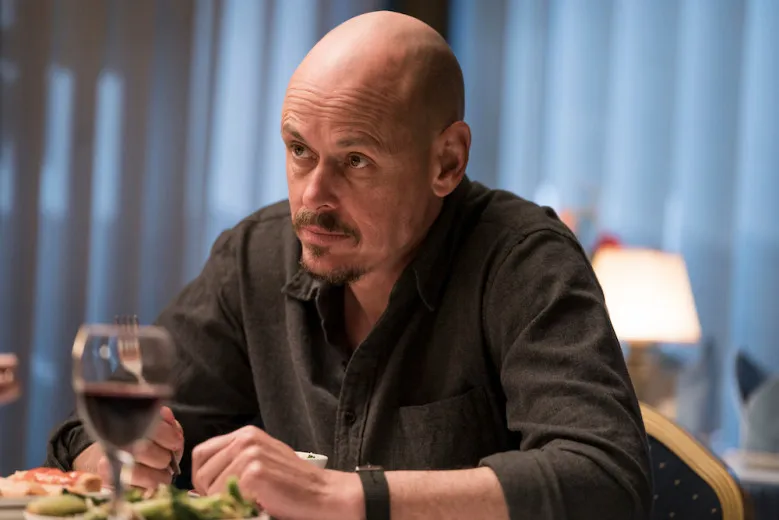
A Directing Masterpiece by Nash Edgerton Directing every single episode, Nash Edgerton brought a visual consistency that is rare in television. The cinematography is stripped back, raw, and visceral. Edgerton understands that in Noir, what you don’t see is often more terrifying than what you do. The camera often lingers on Ray’s face—a face that can shift from a warm, fatherly smile to a cold, predatory stare in a fraction of a second. The pacing is deliberate, allowing the tension to simmer until it inevitably boils over into short, sharp bursts of violence that feel earned and terrifyingly real.
The Complexity of Morality: The Ray Shoesmith Code Ray Shoesmith is a man of a very specific, albeit twisted, moral code. He isn’t a psychopath; he has deep empathy for his daughter, Brittany, and his brother, Nick, who suffers from Motor Neurone Disease. The scenes between Ray and Nick are some of the most heartbreaking in modern television, showing a side of Ray that is tender, patient, and deeply grieving.
However, Ray has zero tolerance for “bad manners” or “bullies.” His violence is often triggered by a sense of justice—however skewed it may be. Whether he’s teaching a lesson to two punks who harassed his daughter or dealing with a pedophile, Ray acts as a dark vigilante. This creates a fascinating dilemma for the audience: we find ourselves rooting for a man who commits horrific acts because he often targets those we feel deserve it. This “Grey Morality” is the hallmark of a great Noir story.
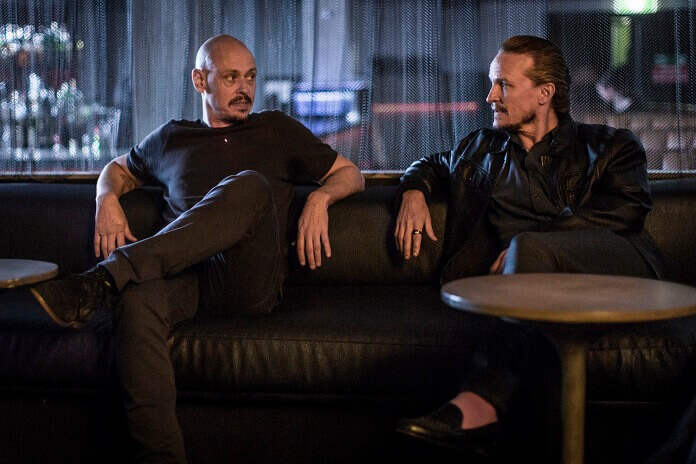
The Supporting Cast: Building a Real World The world of Mr. Inbetween feels lived-in because of its supporting cast. Gary, played by Justin Rosniak, provides the perfect foil to Ray—a loyal, somewhat bumbling best friend who represents the “normal” life Ray tries to keep a foot in. Their chemistry is the heart of the show’s humor. Then there is Freddy (played by the legendary Damon Herriman), Ray’s boss, who embodies the cold, transactional nature of the criminal underworld. Every character, no matter how small their screen time, feels like a real person with a history, which elevates the stakes of every confrontation.
The “Very Australian” Identity You cannot separate the genius of this show from its Australian roots. The slang, the dry humor (often referred to as “taking the piss”), and the rugged suburban landscape of New South Wales are essential characters in their own right. It captures a specific brand of Australian masculinity—stoic, laconic, but hiding a reservoir of repressed emotion. It avoids the “Outback” clichés of Crocodile Dundee and instead focuses on the gritty reality of the urban fringe. For an international audience, especially in the US, this is a breath of fresh air—a crime story that feels alien yet strangely familiar.
The Final Season and the Legacy of the “Smile” As the series progressed toward its finale, the weight of Ray’s double life began to crush him. The final season is a somber meditation on the consequences of violence. We see the toll it takes on Ray’s relationships and his psyche. The ending of the series is one of the most talked-about finales in recent years. Without giving too much away, it perfectly encapsulates the essence of Ray Shoesmith: a man who is always prepared, always dangerous, and forever “in between” the light and the dark.
Why It Deserves More Appreciation Despite critical acclaim, Mr. Inbetween remains a “hidden gem” for many. In the age of algorithmic content, shows this bold and original often get lost. However, for those who have seen it, the consensus is clear: it is one of the greatest character studies ever produced. Scott Ryan’s performance is nothing short of legendary—he didn’t just play Ray Shoesmith; he became him.
Conclusion: A Storyline for the Ages At Storyline Movies, we believe that the best stories are the ones that challenge our perceptions of good and evil. Mr. Inbetween does exactly that. It is a brilliant, brutal, and beautiful piece of Australian Noir that demands your attention. It proves that you don’t need a massive budget or a superhero to create a compelling narrative; you just need a deep understanding of human nature, a sharp script, and a character as unforgettable as Ray Shoesmith. If you haven’t watched it yet, you are missing out on one of the greatest “storylines” in the history of television.