

Televison New
- Newness , Newsbeat
- Tháng 6 27, 2026
- 109 views
“I Am So Proud of You”: What the DOJ’s Epstein Files Reveal About Sarah Ferguson’s Private Relationship With a Convicted Sex Offender
The United States Department of Justice has been releasing millions of documents from what it calls the “Epstein library” — the accumulated communications, financial records, and correspondence of Jeffrey Epstein, the financier convicted in 2008 of soliciting prostitution from a minor and arrested again in 2019 on federal sex trafficking charges before his death in custody that August. Among the many public figures whose names and private communications have surfaced in those files, Sarah Ferguson — the former Duchess of York and ex-wife of Prince Andrew — has become one of the most prominent, and the picture the emails paint is significantly more complicated than the public distance she has claimed to maintain from Epstein since his convictions became impossible to ignore.
CNN’s examination of dozens of files in the Epstein library, published in March 2026, found a pattern of correspondence that stands in direct contrast to Ferguson’s public statements about her relationship with the financier. And the most recent reporting, from June 27, adds a specific detail that has not previously been fully reported: according to emails reviewed by NewsNation, Ferguson visited Epstein not once but twice while he was participating in a work release program at a company that federal investigators later confirmed was fictitious — created by Epstein specifically to secure those work release privileges and, according to victims, used as a site of abuse.
It is important to state clearly at the outset: Ferguson has not been accused of any crime in connection with Epstein. The appearance of a person’s name in the Epstein files does not, by itself, suggest criminal wrongdoing. What the files do reveal is a private relationship that was substantially warmer, more financially entangled, and more personally significant to Ferguson than the public record has previously suggested — and a pattern of behavior that raises serious questions about her judgment and the accuracy of her public statements about how well she actually knew Epstein and what she knew about him.
The Work Release Program — and the Fake Company
To understand what Ferguson’s visits actually mean, it is necessary to understand where she was going. Epstein served his 18-month sentence at the Palm Beach County Stockade, beginning in 2008, after pleading guilty to a single charge of procuring a minor for prostitution. The plea deal — widely criticized at the time and subsequently investigated for the extraordinary leniency it showed a man whose conduct federal investigators had documented far more extensively — also granted Epstein access to a work release program that allowed him to leave his cell for up to 12 hours a day, six days a week.
To qualify for work release, Epstein registered the Florida Science Foundation, a nonprofit organization that ostensibly provided him with a legitimate employer to report to. Federal investigators and victims’ advocates have since established that the Florida Science Foundation was not a functioning organization in any meaningful sense. It was, according to those accounts, a mechanism — a paper entity created to satisfy the legal requirements of the work release program and give Epstein access to an office where he could conduct his affairs largely unsupervised. At least one victim, a woman named Roza, told Congress that Epstein offered her a job at the foundation and abused her there during the work release period.
It was at this office — this fictitious company, at this address, during a period when Epstein was technically still serving a criminal sentence — that Sarah Ferguson came to visit him. According to the emails reviewed by NewsNation, she visited twice, with a third visit planned but canceled at the last minute.
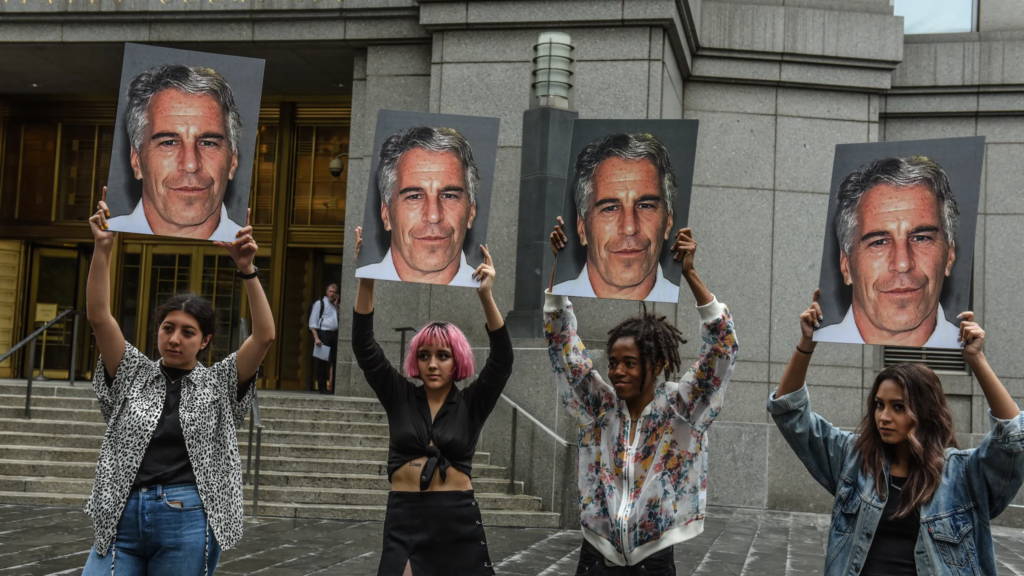
The Emails: What Ferguson Actually Wrote
The substance of Ferguson’s correspondence with Epstein, as documented in the DOJ files, tells a story about the nature of their relationship that is difficult to reconcile with the public distance she has attempted to maintain.
In early April 2009 — nine months into Epstein’s sentence — Ferguson emailed him to say she was landing in Palm Beach in a few hours and wanted to know whether she could stop by for “a quick cup of tea.” Epstein, who still had months remaining on his sentence, confirmed he was available. Two days later, he wrote to say she looked great — a comment suggesting the visit had occurred. The warm, casual register of both messages — neither person treating the situation as legally or morally exceptional in any way — is among the more striking details in the correspondence.
The broader pattern of Ferguson’s emails to Epstein during this period is equally revealing. She referred to him consistently in terms that suggest not a casual acquaintance or a professional contact but a genuinely close personal relationship. She called him her “spectacular and special friend” and “the brother I have always wished for.” She told him, explicitly and in writing, “I am so proud of you” — a sentiment expressed while he was serving time for procuring a child for prostitution.
She inquired repeatedly about borrowing money from him, asking whether he could lend her funds and whether he might employ her as his “house assistant.” She sought his advice on business ventures, including a project called “Mothers Army” — an initiative aimed at helping mothers in need, which Epstein reportedly helped her conceptualize and which she subsequently incorporated as an official entity in October 2011. Public records confirm that the company was dissolved in December 2016, with Ferguson listed throughout as a director.
On more than one occasion, Ferguson also jokingly suggested that Epstein should marry her. The emails, reviewed by CNN across dozens of documents, paint a portrait of a woman who was financially dependent on and personally devoted to a man whose crimes were not, by the time of this correspondence, matters of allegation — they were matters of record.
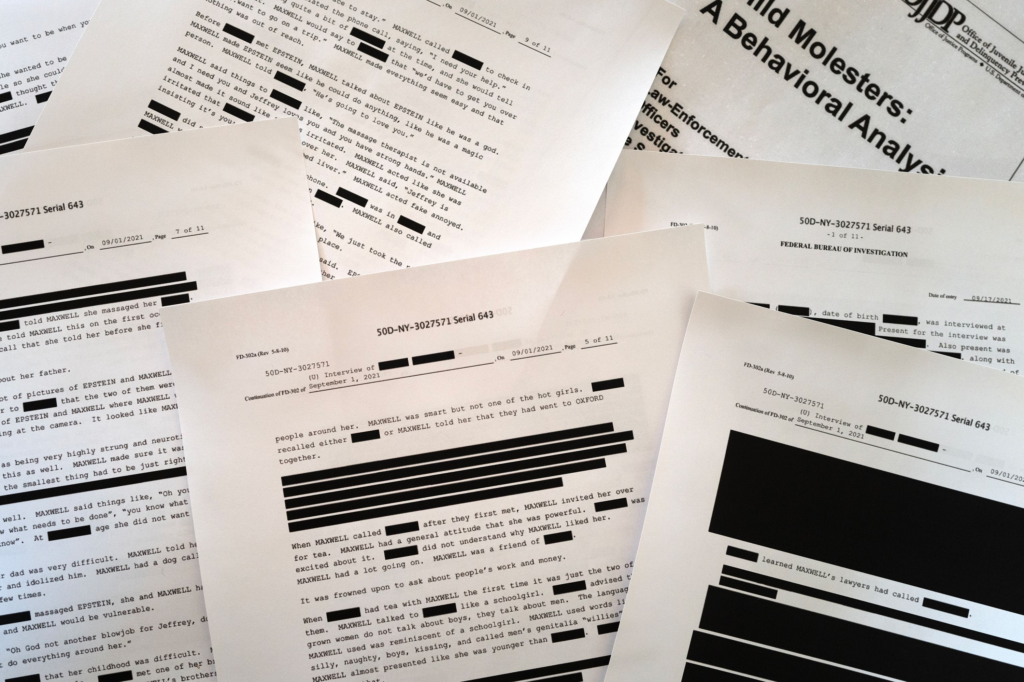
The Public Record vs. The Private Correspondence
What makes the emails particularly difficult to dismiss is the gap they reveal between what Ferguson said publicly about Epstein and what she wrote to him privately. In an interview, Ferguson tied Epstein to pedophilia and publicly distanced herself from him — a statement that, on its face, read as a clean repudiation of someone she had recognized as dangerous. The DOJ files reveal what happened next: Ferguson, in private correspondence, apologized to Epstein for those public comments. She was, according to the emails, remorseful not about her association with a convicted sex offender but about having said something that might have hurt his feelings.
That sequence — public condemnation, private apology — is among the more damning details in the files, because it suggests that the public statements were strategic rather than sincere. A person who genuinely believed their friend had done something monstrous does not typically write to apologize for saying so. A person managing their reputation while maintaining a private relationship might.
The broader Royal Family context adds further weight. Ferguson’s ex-husband, Prince Andrew, has faced extensive public consequences for his own association with Epstein — stripped of his royal duties and titles, removed from his residence in the Windsor Estate, and arrested in February 2026 on suspicion of misconduct in public office, with those charges still pending. Six companies linked to Ferguson were reported to be shutting down in the aftermath of the DOJ file releases, CNN previously reported. The institutional damage to the House of Windsor from the Epstein connection has been severe and ongoing, and Ferguson’s emails add another chapter to a story that the Royal Family has been unable to close.
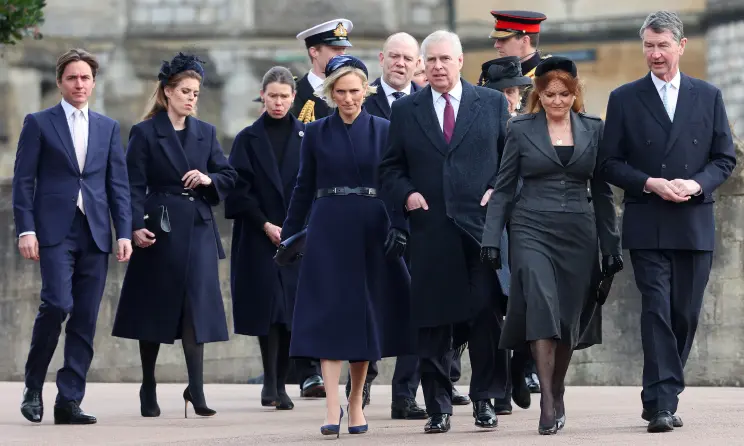
What Ferguson Has Said — and What She Hasn’t
CNN reached out to a representative for Ferguson for comment on the email revelations. As of publication, no response has been received. Ferguson has not made a public statement specifically addressing the DOJ file correspondence or the work release visits. Her previous public statements about Epstein have emphasized distance and repudiation — a position that the private emails complicate substantially.
It is worth restating the legal baseline: Ferguson has not been accused of crimes related to Epstein. Visiting someone during a work release program, while troubling given who Epstein was and what he was doing during those visits according to victims, is not itself a criminal act. The emails establish a relationship, a pattern of communication, and a significant gap between public statements and private behavior. They do not, on their own, establish legal culpability.
What they do establish is a portrait of a woman who was, during the period Epstein was serving his first criminal sentence, more financially dependent on him, more emotionally invested in him, and more privately supportive of him than has ever been publicly acknowledged — and who chose, in public, to position herself as someone who recognized Epstein as the threat he was.
Those two things cannot both be true. The emails suggest which one was real.
Why This Story Matters Beyond the Palace
The ongoing release of the DOJ Epstein files has raised questions that go well beyond individual celebrities or royals. The files document, in granular detail, the architecture of access and influence that Epstein built around himself using the names, reputations, and photographs of prominent figures to give himself credibility and social legitimacy. Ferguson’s emails suggest Epstein was doing exactly that with her: her name appears in his correspondence as a calling card, with emails indicating he offered contacts access to royal institutions including Buckingham Palace Apartments using her connection.
The broader implication — that Epstein’s social network was not incidental to his crimes but integral to his ability to continue committing them — is a thread that the DOJ files are making increasingly difficult to ignore. The people who wrote warm emails to a convicted sex offender, who visited him during his sentence, who sought financial favors from him and apologized privately for public criticisms they made of him publicly: they are part of that architecture, whether they understood themselves to be or not.
The files will continue to be released. The emails will continue to surface. And the gap between the public stories prominent people have told about their relationship with Epstein and the private record those documents preserve will continue to widen — one revelation at a time.
- Newsbeat , Newness
- Tháng 6 27, 2026
- 95 views
Netflix Just Canceled The Boroughs After 1.7 Billion Viewing Minutes. Here’s the Full Story Behind One of Streaming’s Most Baffling Decisions.
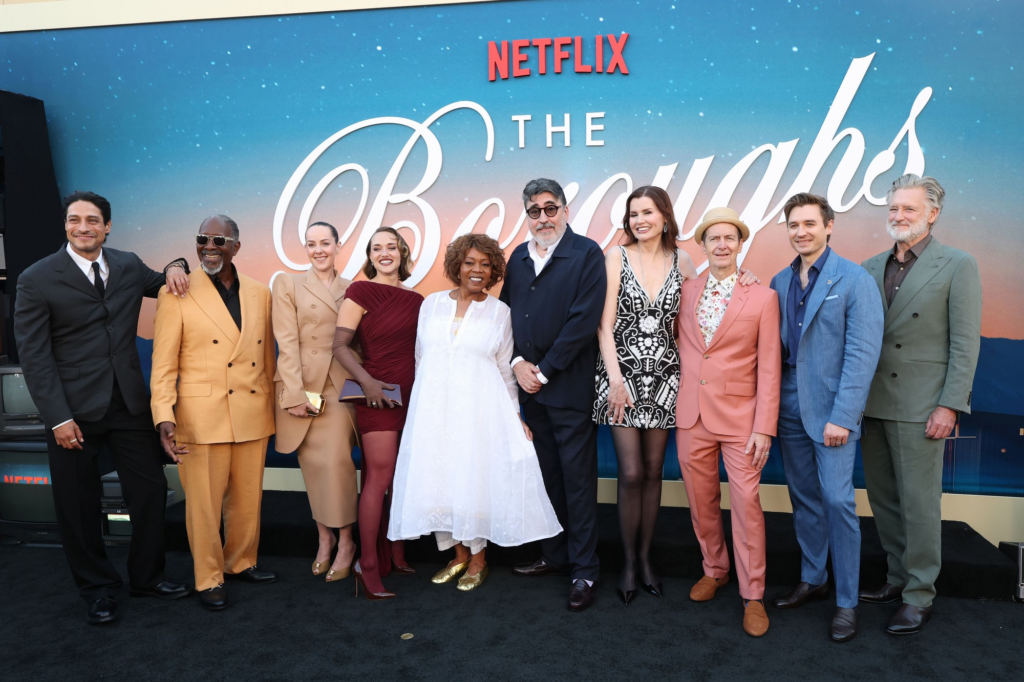
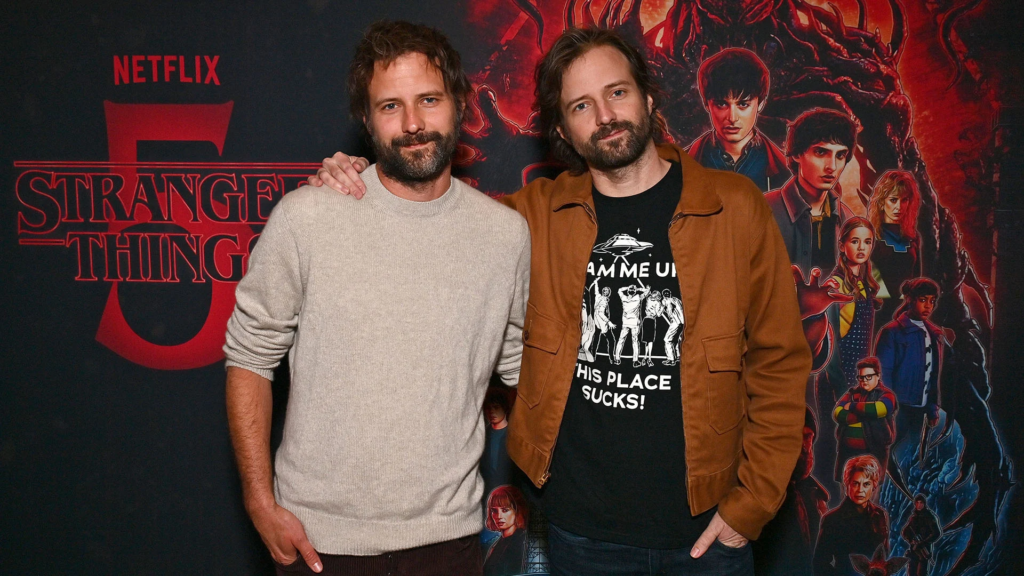
On June 17, 2026, Netflix canceled The Boroughs — a sci-fi drama executive produced by the Duffer Brothers, starring Alfred Molina, Geena Davis, Alfre Woodard, Denis O’Hare, Clarke Peters, and Bill Pullman, reviewed at 97% on Rotten Tomatoes, and watched for 1.7 billion minutes in its first full week of availability. The cancellation came less than four weeks after the show’s May 21 premiere. A Season 2 writers’ room had already been opened. Sources had been discussing the possibility of filming Seasons 2 and 3 back-to-back. The show was described by multiple entertainment outlets as the spiritual successor to Stranger Things, built on one of the most acclaimed ensemble casts assembled for a streaming drama in recent memory. And then Netflix said no.
The reaction was immediate and sustained. Fans flooded streaming forums and social media with the specific kind of frustration that comes not from a bad show being canceled but from a good one being killed before it finished what it started. “Netflix is going to keep losing subscribers,” wrote one viewer. “I loved The Boroughs. So tired of Netflix ending shows once you are hooked.” The sentiment was not unique. It was, however, uniquely pointed given what the numbers actually showed about how the show had performed.
What The Boroughs Actually Was
For viewers who missed it during its brief window on the platform, The Boroughs is worth understanding before interrogating why it was canceled. Created by Jeffrey Addiss and Will Matthews and executive produced by Matt and Ross Duffer, the show is set in an idyllic New Mexico desert luxury retirement community — the kind of place that looks too perfect, with an unnervingly cheerful corporate staff and carefully curated grounds that suggest something has been very deliberately hidden from the residents who live there.
The series follows those residents — played by Molina, Davis, Woodard, O’Hare, Peters, and Pullman — as they uncover a dark conspiracy involving a subterranean supernatural entity and a youth-stealing cult operating beneath the community’s manicured surface. It is, in its DNA, a Duffer Brothers production: a genre show wrapped in warmth, using a supernatural threat as a lens for examining what it means to be human at a specific and underserved stage of life. The logline described it as a group of unlikely heroes who “must band together to stop an otherworldly threat from stealing the one thing they don’t have — time.” That framing — a horror story whose stakes are literally aging — gave the show an emotional dimension that critics responded to strongly.
It debuted on Netflix on May 21, 2026, with all episodes available at once. In its first four days, it drew 5.6 million views, placing it second on Netflix’s English-language TV chart behind Nemesis. In its first full week, it jumped to first with 9.5 million views and 35 million hours viewed. Nielsen’s own delayed chart confirmed the second-place debut figure. The reviews matched the viewership: a 97% approval rating on Rotten Tomatoes, awards buzz building around several of the ensemble performances, and widespread critical consensus that the show was one of the most interesting new dramas of the year.
The Numbers That Made the Cancellation Shocking
Understanding why the cancellation was so broadly perceived as a mistake requires sitting with the viewership trajectory — because the pattern is genuinely unusual. The Boroughs opened at 5.6 million views in its first four days. It climbed to 9.5 million in its first full week. Then it fell: 3.7 million in week three, 2 million in week four. By the time Netflix shared those week-four numbers on June 16, the decision had apparently already been made internally. The show was canceled the following day, June 17.
That declining curve is, on its surface, the statistical argument Netflix would make for the cancellation. Week-over-week drops of that magnitude signal that a show burned through its core audience quickly and failed to sustain the kind of ongoing discovery that keeps a title performing. In the streaming economy, a show that generates massive opening numbers but falls off sharply is less valuable than a show with modest but consistent viewership — because the latter keeps subscribers engaged across a longer window, which is what streaming platforms are actually selling.
But the numbers look different when you add context. The 1.7 billion minutes Nielsen reported for The Boroughs’ debut week placed it second on the chart, a figure that The Wrap noted was reported only days before the cancellation. The show generated 19 million views in its first 18 days — a figure Variety confirmed from Netflix’s own reporting. It was being compared to Stranger Things in coverage across every major entertainment outlet. Awards conversation had begun. And yet the decision had apparently been made before the show even had a chance to find its second wave of viewers through word of mouth and recommendation algorithms.
The Real Reasons: Cost, Betrayal, and a Deadline Nobody Talked About
The viewership data tells part of the story. The rest comes from reporting by The Hollywood Reporter and Deadline, whose sources inside and adjacent to Netflix filled in the details that the numbers alone don’t explain.
The first and most significant factor was cost. Each episode of The Boroughs reportedly cost approximately $10 million to produce — a figure that one source described as “materially higher” when the full accounting was done. For a streaming platform that has been working to rationalize its content spending after years of “Peak TV” excess, a show requiring that level of per-episode investment needs to perform at a scale that sustains the economics across multiple seasons. The viewership trajectory of The Boroughs, however impressive in absolute terms, apparently did not meet that threshold in Netflix’s internal projections for what a second and third season would need to generate to justify the cost.
The second factor is more complicated and carries a different emotional charge. Two days before news of the cancellation leaked, Paramount publicly announced that the Duffer Brothers had signed a four-year deal with the studio — a move that effectively announced they were leaving Netflix for a competitor, taking with them the creative identity most associated with Stranger Things and, implicitly, The Boroughs. According to THR sources, that announcement “rankled some high-ranking Netflix executives,” though a Netflix spokesperson denied that characterization, insisting the Duffers still have multiple projects in development at the platform.
Whether or not the Paramount deal directly influenced the cancellation decision, the timing created an inescapable optics problem. A show executive produced by creators who had just publicly signed with a rival studio was canceled less than 48 hours after that announcement. Netflix owns 100% of The Boroughs and has confirmed it has no plans to sell the series. The Duffer Brothers are gone. The show is gone with them, in the specific sense that matters most: there will not be a Season 2.
The third factor was structural and purely administrative. June 15 was the deadline by which Netflix had to extend the options on The Boroughs’ cast — the contractual mechanism that reserves actors for a potential second season. Netflix declined to extend those options. By declining, the platform effectively made the cancellation irrevocable before it was even publicly announced. The news leaked on June 17. The cast’s options had already lapsed two days earlier.
Is Netflix Actually the Villain Here?
The fan response to The Boroughs’ cancellation has been framed almost entirely as Netflix doing something wrong — canceling a good show with strong numbers before it had a chance to develop its full audience. That framing is emotionally satisfying and has the advantage of being, in some respects, accurate. But it is also incomplete.
CBR published an analysis in the wake of the cancellation arguing that Netflix is, statistically, no longer the “King of Cancellations” it was once labeled. Its cancellation rate has actually improved relative to its competitors: Amazon canceled one in every 3.7 shows, Peacock one in 3.1, Max one in 2.8, and Hulu one in 2.6. Netflix, by comparison, cancels one in every 4.2 shows — a ratio that places it among the more renewal-friendly major platforms. The problem is not that Netflix cancels frequently by industry standards. It is that the shows Netflix cancels tend to be high-profile, beloved, and mid-story — which makes each individual cancellation feel like a disproportionate loss.
The case for Netflix’s decision on The Boroughs is also not entirely without logic. A show that costs $10 million per episode and draws 2 million views in its fourth week is genuinely difficult to justify across a projected three-season run — not because the show is bad, but because the economics of expensive speculative programming have become less forgiving in the streaming landscape of 2026 than they were during Peak TV. The platform’s current executive regime did not greenlight The Boroughs. It inherited it, priced it, watched it perform, and made a calculation. Whether that calculation was correct is something neither viewership projections nor fan outrage can fully resolve.
What is clear is that the audience for The Boroughs — specifically the audience for a prestige supernatural drama centered on older characters, with an ensemble cast that represented a demographic almost entirely absent from the streaming landscape’s typical offerings — was real, engaged, and now left without an ending. The writers who had opened the Season 2 room will not finish the story. The cast, whose options have lapsed, are free to move on. The show that was described as “Stranger Things but for adults who have actually lived something” will remain exactly one season long.
Whether that is a business decision or a failure of nerve is a debate the streaming industry will be having for years. The Boroughs will not be there to resolve it.
- Newsbeat , Newness
- Tháng 6 26, 2026
- 84 views
David Clayton-Thomas, the Voice Behind “Spinning Wheel,” Is Gone. Here’s Why His Story Was Bigger Than the Music.
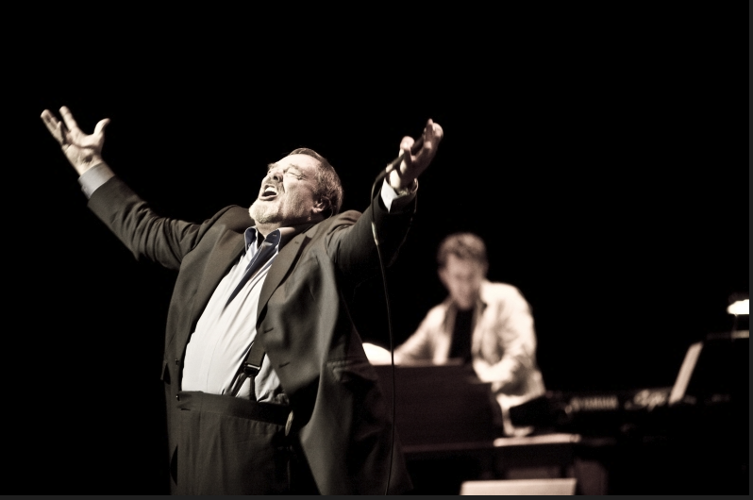
On June 24, 2026, David Clayton-Thomas died peacefully at St. Michael’s Hospital in Toronto at the age of 84. His publicist Eric Alper confirmed the news the following morning; no cause of death was given, though Clayton-Thomas had undergone serious heart surgery in 2016. He is survived by his daughters, Ashleigh Clayton-Thomas and Christine Graham, and a body of work that — by any honest accounting — reshaped the boundary between rock, jazz, soul, and brass-driven popular music in ways that still echo through the recordings of the artists who came after him. A memorial concert is being planned, with proceeds benefiting Peacebuilders Canada, the Toronto-based charity that works with troubled youth. Given the arc of Clayton-Thomas’s own life, the choice of cause is not incidental.
The Man Before the Music
David Henry Thomsett was born on September 13, 1941, in Surrey, England, the son of a Canadian soldier and an English music student who had met while she entertained troops. The family relocated to Willowdale, a suburb of Toronto, when he was young. His childhood was difficult in the specific way that turns some people toward crime and, occasionally, toward music — and for Clayton-Thomas, it turned toward both before it settled into one. He was jailed. He was homeless at various points. In a prison cell, he found a discarded guitar. He has credited that discovery with changing the direction of his life.
He began playing along Toronto’s Yonge Street strip in the early 1960s — clubs, bars, anywhere that would have him — fronting local bands called The Shays and then The Bossmen, one of the earliest rock outfits to incorporate significant jazz influences. His style already combined blues, soul, and a jazz sensibility that did not fit cleanly into any existing category. He was good enough that people noticed, but not yet famous enough that anyone had figured out what to do with him.
That changed in 1967, when he made his way to New York City.
How a Street Singer Became the Voice of a Generation
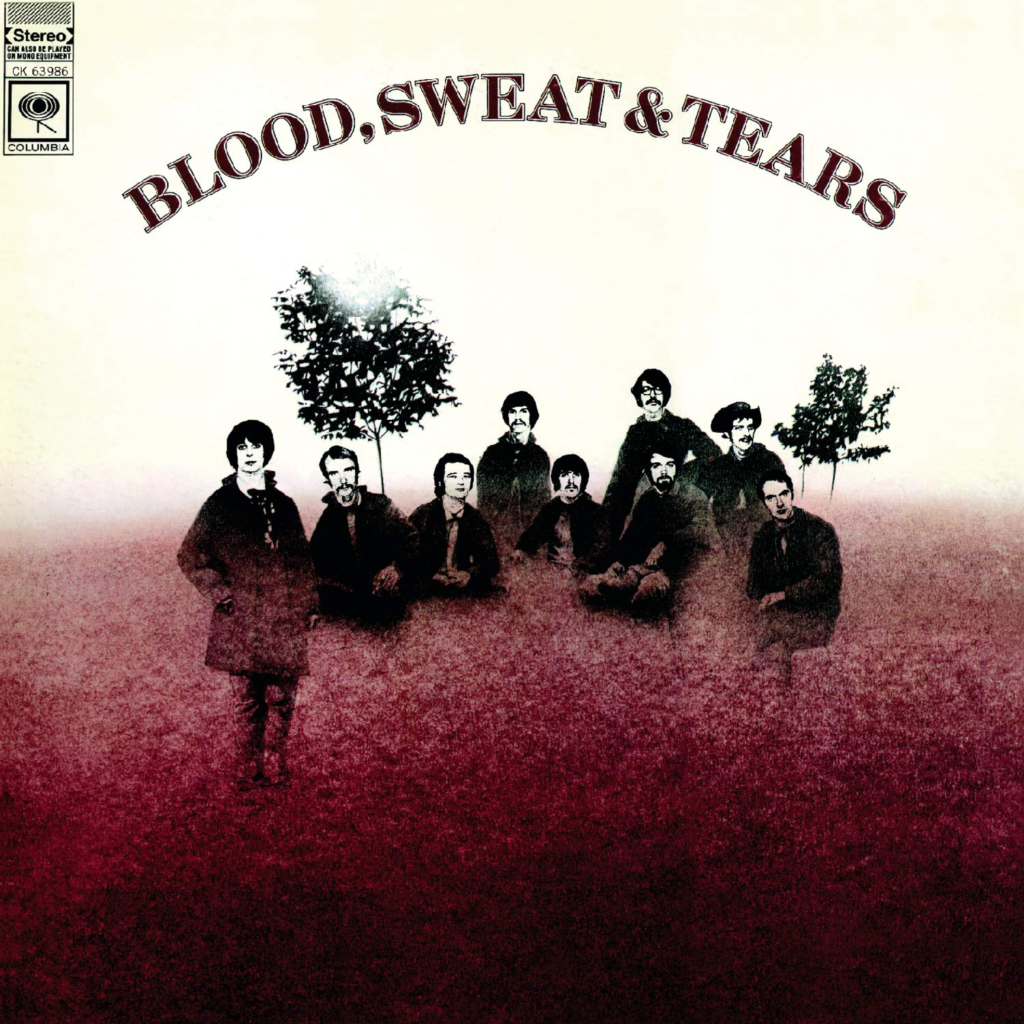
The story of how David Clayton-Thomas joined Blood, Sweat & Tears is one of those music industry moments that sounds like mythology but is simply well-documented fact. The band had released their debut album, Child Is Father to the Man, in 1968 — critically admired, commercially modest, led by Al Kooper. The group fractured shortly after. Drummer Bobby Colomby was rebuilding around a new concept, and folk singer Judy Collins — who had already been instrumental in spreading the word about Leonard Cohen and Joni Mitchell — heard Clayton-Thomas performing one night and told Colomby about him.
Colombo saw him perform. Columbia Records chief Clive Davis — the man who would later sign Bruce Springsteen and Whitney Houston — was present at one of their early rehearsals with Clayton-Thomas as the new frontman. Davis was immediately convinced. The reformed group went into the studio and recorded what would become simply Blood, Sweat & Tears — the self-titled second album released in December 1968.
What happened next was not gradual. The album sold ten million copies worldwide. It topped the Billboard album chart for seven weeks and charted for 109 weeks. It produced three singles — “You’ve Made Me So Very Happy,” “Spinning Wheel,” and “And When I Die” — all of which reached Number 2 on the Billboard Hot 100. At the 1970 Grammy Awards, the album won five Grammys, including Album of the Year. The competition it beat for that award was not minor fare. It was the Beatles’ Abbey Road.
“The first time I walked in and sang with that band, we were in shock,” Clayton-Thomas told Rock Cellar in 2013. “It was one of those electrical things that happen.”
The Voice: What Made It Different
Critics and fellow musicians have consistently reached for the same words when describing what David Clayton-Thomas brought to Blood, Sweat & Tears: power, urgency, physicality. His tenor was not smooth. It was not polished in the way that radio-era pop voices were trained to be. It was what the Associated Press described as a “husky, high-strung tenor” — a voice that sounded like it had earned what it was singing about, which, given his biography, it had.
He prowled the stage. He punctuated lyrics with growls, grunts, and shouts that were more reminiscent of blues and soul performance than of the jazz-influenced brass-rock context surrounding him. Clive Davis, watching him in those early rehearsals, described him as “staggering — a powerfully built singer who exuded enormous earthy confidence.” The combination of that voice with the band’s sophisticated brass arrangements — musicians who, as Clayton-Thomas himself noted, “would play a Broadway show matinee, then go up to Harlem and play Latin music or R&B and funk at night, or come down to the Village and play pure jazz the next night” — produced something that had no real precedent and has had very few successors.
“Spinning Wheel,” the most enduring of his compositions for the band, reached Number 2 in 1969 and has since been inducted into the Canadian Songwriters Hall of Fame. “And When I Die” — a Laura Nyro composition that Clayton-Thomas made definitively his own — remains one of the most recorded songs of the era. “You’ve Made Me So Very Happy,” a Motown cover, became something different in his hands: rawer, more urgent, less polished, and more honest.
The State Department Tour: The Scandal That Haunted the Band
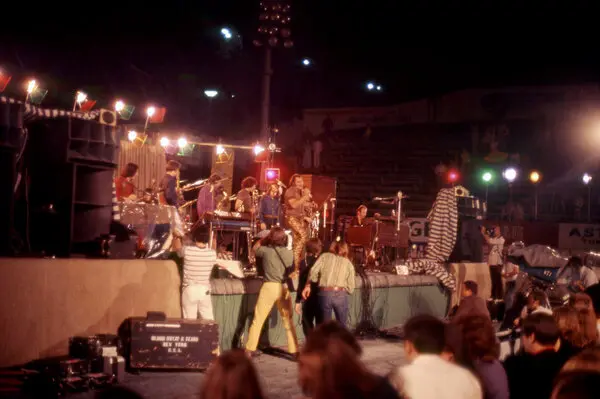
Success, for Blood, Sweat & Tears, came packaged with a complication that would shadow the band’s legacy for decades. From June to July 1970, the group undertook a United States State Department-sponsored tour of Eastern Europe — Romania, Yugoslavia, Poland — becoming the first rock group to perform behind the Iron Curtain. It was a historic achievement by any cultural measure. It was also, for their audience, a betrayal.
Voluntary association with the Nixon administration’s foreign policy apparatus was deeply unpopular with the rock counterculture of the era. The band was criticized sharply for allowing itself to be co-opted by the government. What was not publicly known at the time — and what was only fully revealed in the 2023 documentary What the Hell Happened to Blood, Sweat & Tears? — was the coercive dimension of that tour. The U.S. State Department had used the offer of a residency permit for Clayton-Thomas as leverage. He had a criminal record in Canada, had overstayed his visa, and faced deportation. The tour was, in substantial part, the price of his continued presence in the country that had made him famous.
The documentary, released three years ago, reframed the entire episode — not as cynical opportunism but as an institution exploiting the vulnerability of a working musician from a difficult background who had one chance at a career and could not afford to say no. Clayton-Thomas spoke about it in the film with the equanimity of someone who had made peace with a complicated chapter a long time ago.
By 1972, exhausted by the pace and the controversy, he left the band. He never fully regained the commercial peak of those two extraordinary years. Neither did the band without him.
After the Peak: Five Decades of Keeping Going
What followed the Blood, Sweat & Tears years for Clayton-Thomas was less spectacular but arguably more revealing of his character: a long, working musician’s life that never stopped. He rejoined and departed the band multiple times across the 1970s and 1980s. He released more than a dozen solo albums. He hosted his own television series on CBC Canada. He returned to Toronto permanently in 2004 and launched an all-star ten-piece band, continuing to tour and record well into his seventies. His most recent album, Say Somethin’, was released in 2020 — the year he turned seventy-eight.
He was inducted into the Canadian Music Hall of Fame. He received a special Juno Award for his contributions to Canadian music. In 2010 he earned a star on Canada’s Walk of Fame and published a memoir, also titled Blood, Sweat and Tears. In 2007, “Spinning Wheel” was enshrined in the Canadian Songwriters Hall of Fame.
In his later years, asked about his remarkable life arc — from jailed street kid to Grammy winner to enduring institution — he gave answers that were characteristically direct. “I was just a blues player,” he told Songfacts in 2015. “Give me three chords and I’ve got a song.” That self-description, offered by a man who had beaten the Beatles at the Grammys and performed at Woodstock, Madison Square Garden, the Hollywood Bowl, and the Royal Albert Hall, is either profound humility or the most confident thing a musician can say. Probably both.
What He Leaves Behind
David Clayton-Thomas leaves behind a specific legacy that is easier to hear than to describe. Blood, Sweat & Tears, with him as their frontman, helped inspire an entire wave of horn-led rock bands — Chicago, the Electric Flag, Ten Wheel Drive — that defined a particular sound of the late 1960s and early 1970s. That sound has never entirely left popular music; it simply moved further from the center of the commercial mainstream and closer to the foundation that other things are built on.
He also leaves behind the specific lesson of his biography, which is less tidy than a simple redemption narrative and more interesting for it: a man whose early life put him on a path toward nothing good, who found music, who was briefly the most famous singer in America, who navigated the specific corruption of sudden fame and government pressure and the cruel speed of trends, and who then simply kept working for fifty more years in a career that most people would have considered finished in 1972.
A memorial concert will be announced. The proceeds will go to Peacebuilders Canada, which helps young Canadians navigate the justice system and integrate into society. It is, as tributes go, exactly right.
- Newness , Newsbeat
- Tháng 6 26, 2026
- 118 views
Ann Blyth, 98: The Last Voice of Hollywood’s Golden Age Has Gone Silent
On June 24, 2026, Ann Blyth died peacefully of natural causes at the age of 98 — less than two months before what would have been her 99th birthday. She was, by the time of her death, one of the last surviving stars of Hollywood’s Golden Age: a woman who had performed on Broadway at twelve, earned an Academy Award nomination at sixteen, introduced a classic song to the world at twenty-three, and retired from the screen at fifty-seven with a body of work that spanned radio, Broadway, film, television, and live concert performance across seven decades. Her passing was reported by KABC’s George Pennacchio on June 25, and the response — measured in trending searches and obituaries published across every major entertainment outlet within hours — was a reminder that the Golden Age of Hollywood, though it recedes further into history with each passing year, still has the power to stop a news cycle when one of its last voices goes quiet.
A Career That Began Before Most People’s Grandparents Were Born
Ann Marie Blythe — she later dropped the “e” from both names — was born on August 16, 1927, in Mount Kisco, New York. Her father left the family early, and her mother moved her and her older sister to a walk-up apartment on the Lower East Side of Manhattan, where Blyth began performing on children’s radio shows at the age of six. By nine she had joined the New York Children’s Opera Company. By twelve she was on Broadway.
Her stage debut came in Lillian Hellman’s Watch on the Rhine in 1941-42, playing the daughter of Paul Lukas in a production that ran for nearly 400 performances and won the New York Drama Critics’ Circle Award. She was thirteen during the run. While touring with the play in Los Angeles, she was approached by Universal Studios and offered a film contract — the kind of discovery story that belonged entirely to a specific era of the entertainment industry, and that has essentially no modern equivalent.
Her early film work at Universal cast her in light musical comedies alongside Donald O’Connor and Peggy Ryan: Chip Off the Old Block (1944), The Merry Monahans (1944), Babes on Swing Street (1944). She was a teenager playing teenagers, unremarkable fare by any measure. Then came the loan to Warner Brothers, the role nobody expected her to land, and the performance that changed everything.
Mildred Pierce: The Role That Made Her
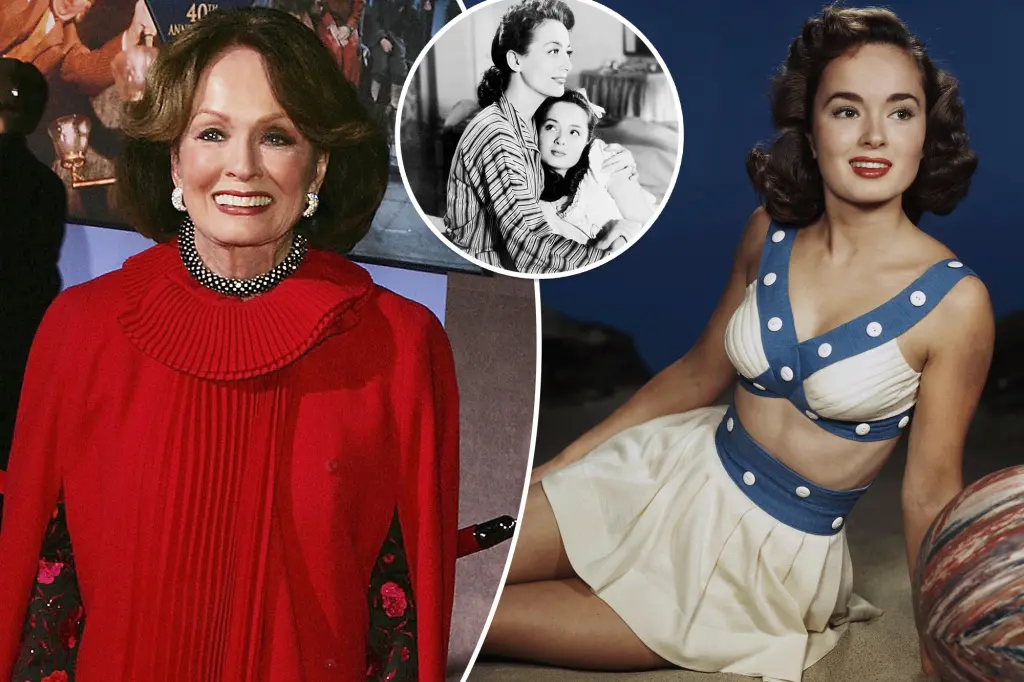
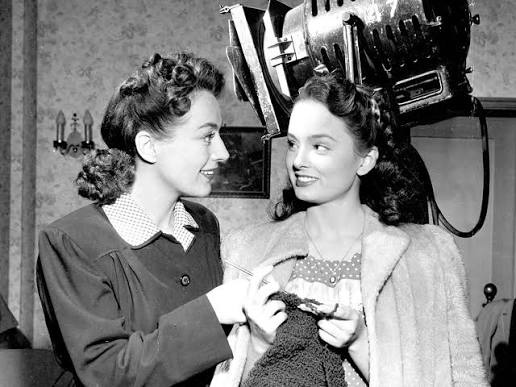
In 1945, director Michael Curtiz cast seventeen-year-old Ann Blyth “against type” as Veda Pierce in Mildred Pierce — the scheming, ungrateful, operatically cruel daughter of Joan Crawford’s devoted, self-sacrificing mother. It was a performance that should not have worked. Blyth was a sweet-faced teenage girl from the chorus of light musicals. Veda Pierce was one of classic Hollywood’s most memorable villains: cold, calculating, willing to destroy the people who loved her most in pursuit of status and ambition.
She was extraordinary in the role. The Academy of Motion Picture Arts and Sciences agreed: Blyth received a nomination for Best Supporting Actress — remarkable enough for any actress, genuinely astonishing for a sixteen-year-old who had been making cheerful musical comedies twelve months earlier. Crawford, meanwhile, won Best Actress for the same film, and their fictional relationship — one of Hollywood’s most toxic mother-daughter dynamics ever put on screen — became one of cinema’s enduring images.
What made Blyth’s performance particularly distinctive, and what reviewers noted at the time, was its restraint. Veda could easily have been played as cartoonishly monstrous, the kind of villain whose cruelty is telegraphed in every scene. Blyth gave her something more unsettling: a veneer of grace and sophistication that made the moments of cruelty land harder because they came from someone who knew exactly how to appear otherwise.
In an interstitial recorded decades later for Turner Classic Movies, Blyth recalled that despite the ferocity of their characters’ relationship on screen, she and Crawford got along well on set. The scene where she slaps Crawford — one of Mildred Pierce‘s most famous moments — was the hardest of her career. “It was hard for me to slap Joan Crawford,” she said simply, with the matter-of-fact tone of someone for whom that sentence summarized something genuinely difficult.
The Singer, the Soprano, and the Song Nobody Forgot
Acting was only one dimension of Ann Blyth’s talent. She was also a trained operatic soprano — a voice that opened a second career alongside her film work and that, in one specific moment, produced something genuinely lasting.
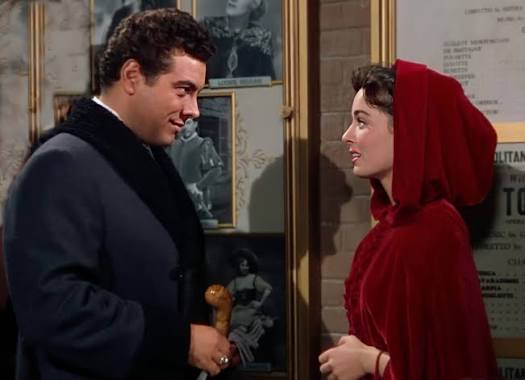
In 1951’s The Great Caruso, Blyth played Dorothy Benjamin, wife of the legendary tenor Enrico Caruso, portrayed by Mario Lanza. During the film, she introduced “The Loveliest Night of the Year” — an adaptation of the Juventino Rosas waltz “Over the Waves,” with lyrics by Paul Francis Webster. The song became a standard. It has been recorded by dozens of artists across seven decades, featured in films and television episodes, and heard in situations that have nothing to do with The Great Caruso by people who do not know where it came from. Blyth sang it first.
At MGM throughout the early 1950s, she appeared in a series of opulent film musicals — Rose Marie (1954), The Student Prince (1954), Vincente Minnelli’s Kismet (1955) — films that placed her operatic voice alongside some of the great musical set pieces the studio produced in its final grand period. She also appeared alongside Gregory Peck in The World in His Arms (1952) and Burt Lancaster in Brute Force (1947), demonstrating a range that moved comfortably between drama and music across her career.
Her final major dramatic role came in 1957’s The Helen Morgan Story — playing the tragic torch singer Helen Morgan alongside Paul Newman in one of his early major films. Strangely, and with the kind of Hollywood absurdity that sounds like legend but is simply fact, Blyth’s singing voice was dubbed for the role despite being a trained operatic soprano. She played a singer. Someone else sang for her. She was thirty years old.
The Later Years: Television, Retirement, and a Quiet Legacy
Blyth had begun making television appearances as early as the 1950s, turning up in Lux Video Theatre, The DuPont Show with June Allyson, The Dick Powell Theatre, and multiple episodes of the TV Western Wagon Train in the early 1960s. Her most memorable television work came in 1964, when she starred in the Twilight Zone episode “Queen of the Nile” — playing an ageless woman whose beauty conceals something far darker, a role that echoed her Mildred Pierce persona and reminded viewers she had never entirely left it behind.
Her final television appearance came in 1985 on Murder, She Wrote, after which she retired from acting entirely. She was fifty-seven years old — still performing at an age when many actors are long finished with the industry, but choosing, quietly and completely, to step away. She did not return for cameos or retrospective appearances. She simply stopped, and spent the remaining forty years of her life as a private person.
In 1953, Blyth had married Los Angeles obstetrician James McNulty — the brother of singer Dennis Day, who had introduced them. They were together for fifty-four years, until McNulty’s death in 2007. She is survived by their five children, ten grandchildren, and five great-grandchildren.
A star on the Hollywood Walk of Fame, at 6733 Hollywood Boulevard, has carried her name for decades. She performed in live concert tours for years, with Harper MacKay as her accompanist and musical director. In the 1970s she became familiar to a new generation of television viewers through a series of commercials for Hostess — pitching Twinkies, Crumb Cakes, and Ding Dongs with the same poise she had brought to Mildred Pierce thirty years earlier.
What Her Death Means
Ann Blyth’s passing at 98 closes something real. She was not merely a footnote to Hollywood history — she was one of its last surviving primary sources: a person who had slapped Joan Crawford on a film set, sung with Mario Lanza, appeared alongside Gregory Peck, Burt Lancaster, and Paul Newman, and been nominated for an Oscar at an age when most people are still in high school. With her death, the number of living people who worked in Hollywood during its studio system era — the age of contract players, of orchestrated star-making, of musicals that cost more than small nations — drops by one more.
The Golden Age of Hollywood ended a long time ago as a creative and commercial system. It has been ending personally, one obituary at a time, for decades. Ann Blyth was among the last. She was 98. She performed on radio at six, Broadway at twelve, and films until she was fifty-seven. She introduced a song the world still knows. She played a villain the world still remembers. She lived quietly for forty years after the cameras stopped, surrounded by children and grandchildren and great-grandchildren, and she died of natural causes less than two months before her 99th birthday.
That is a life.
- Newsbeat , Newness
- Tháng 6 26, 2026
- 240 views
Tom Sandoval’s Restraining Order, a Security Camera, and Two Very Different Stories: What We Know Right Now
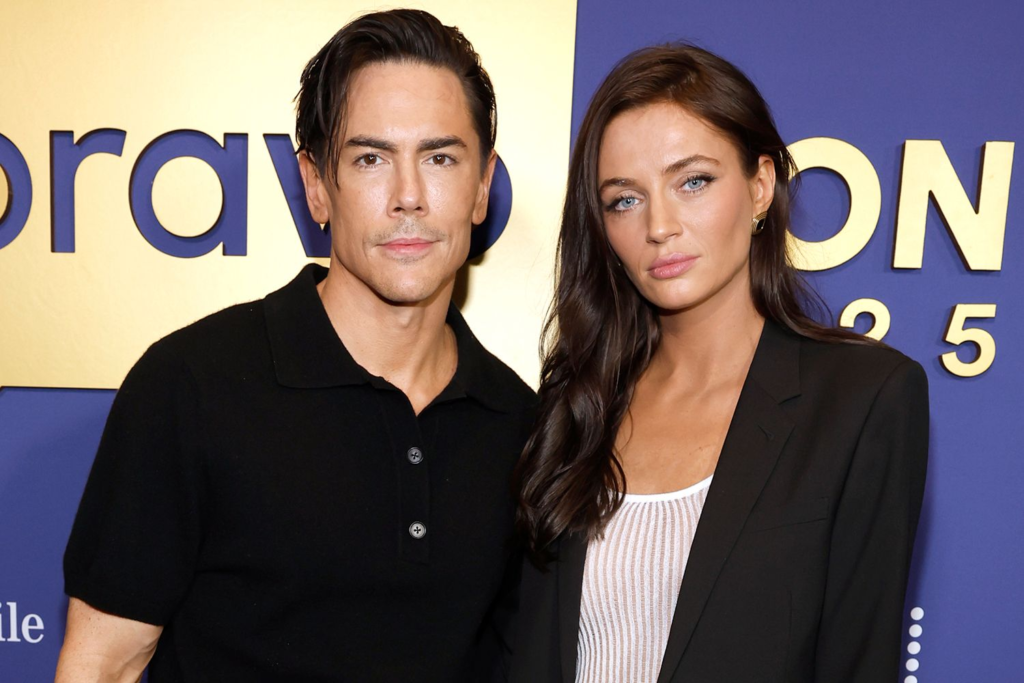
On June 26, 2026, Tom Sandoval became one of the most-searched names in the United States — not because of a new Vanderpump Rules storyline, not because of a red carpet moment, but because of a restraining order, a domestic violence arrest, and a piece of security camera footage that has complicated what might otherwise have been a straightforward legal narrative. The full picture of what happened between Sandoval, his now-former girlfriend Victoria Lee Robinson, and her father on the night of June 3 is still being assembled in court documents, competing accounts, and social media posts from people who were not there. Here is everything confirmed so far — and why the story is more contested than early headlines suggested.
Who Are the People Involved?
For anyone outside the Bravo reality television ecosystem, a quick introduction. Tom Sandoval, 42, became a household name through Vanderpump Rules, the long-running Bravo series set in the world of Los Angeles hospitality. His profile rose significantly during the 2023 “Scandoval” storyline — one of the most-discussed reality television moments of that year — when it emerged that he had been conducting a months-long affair with a castmate while in a long-term relationship with another. The fallout made him simultaneously one of the most-talked-about and most-criticized figures in reality television, and he has spent the years since navigating a public image that was fundamentally altered by that period.
Victoria Lee Robinson, 33, is a model and content creator. She and Sandoval began dating in early 2024, approximately a year after the Scandoval revelations began, making their relationship itself a subject of ongoing public commentary from the Vanderpump Rules fan base. By June 2026, Robinson and her father, J. Will Robinson, were both living at what Sandoval describes in court documents as his home — a rental property, the costs of which he claims to pay entirely.
What Tom Sandoval Claims Happened
According to court documents obtained by People, TMZ, and Just Jared, the incident that triggered the legal action occurred on the evening of June 3, 2026, following a night out that involved drinking. Sandoval claims the situation escalated when he noticed Robinson recording him during a verbal argument — a detail he says inflamed the situation further.
In Sandoval’s account, Robinson’s father J. Will Robinson became physically aggressive first, lunging at him and grabbing him in what Sandoval describes as a bear hug, restraining him in place. Robinson then allegedly struck Sandoval in the face — a blow he says was forceful enough to blur his vision and cause immediate physical pain. He claims the impact caused him to bleed from his ear and neck, sustained a bruise near his temple and eyebrow ridge, and left him with oral pain that persisted for two weeks and prompted a visit to the emergency room.
In his court declaration, Sandoval also described what he characterizes as a broader pattern of abusive behavior throughout their relationship — not just the June 3 incident. He alleges Robinson struck his neck, punched his face, and threw a full Gatorade bottle at him on other occasions. He describes a relationship in which she repeatedly called him a “f**king loser,” told him she “can get so much better,” and claimed that “the only reason people like you is because of me.” He also alleges she accessed his phone without permission to change his social media passwords, tracked his movements using an AirTag, and attempted to manipulate his public image by spreading what he describes as falsehoods online.
Following the June 3 incident, Robinson was arrested on a charge of intimate partner battery with physical violence. She was released on bond the same day. Sandoval says he has been “completely displaced” from his own home as a result of the ongoing situation, staying at hotels and a friend’s house because he felt unsafe returning while Robinson and her father remained there.
What the Security Camera Footage Shows — and Why It Matters
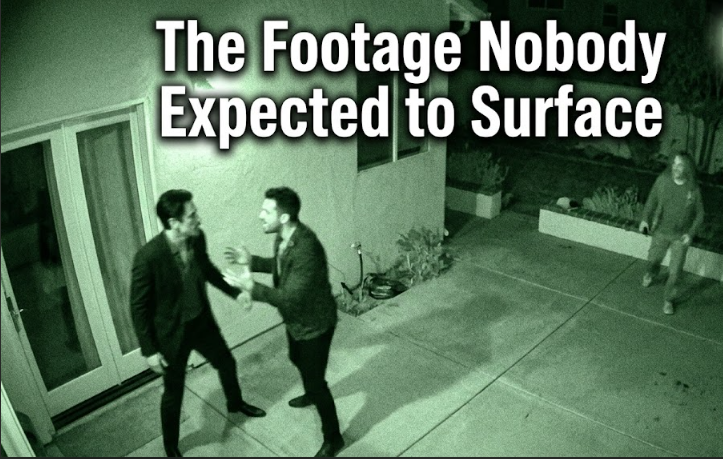
Here is where the narrative becomes genuinely contested. Shortly after Sandoval’s account began circulating through entertainment media, a piece of security camera footage surfaced that showed a different moment from the same evening — one that does not appear in Sandoval’s court filing.
The footage, which appears to show Sandoval shoving J. Will Robinson into a lit fire pit during a confrontation on the property’s patio, was widely circulated on June 26. The clip does not have audio, and its full context — what preceded the shove, what followed it, what was said — is not captured by the camera angle. But its existence immediately complicated the public understanding of who was the aggressor and who was the victim on the night of June 3.
Will Robinson, speaking to TMZ, offered a version of events that differs substantially from Sandoval’s. In Robinson’s account, he was not restraining Sandoval — he was protecting his daughter from Sandoval, who he claims was “overpowering and twisting her arm” and “trying to take her phone aggressively after yelling at us in a very aggressive and threatening manner.” Robinson also stated that it was he, not Sandoval, who called the police that night — a detail that, if accurate, would significantly reframe the question of who initiated the legal process.
Robinson also disputed Sandoval’s characterization of whose home the property actually is, suggesting that Victoria’s name or financial contribution gives her at least partial claim to the space — a point that directly contradicts Sandoval’s filing, which asserts he pays all costs for the rental.
What the Court Has Decided So Far
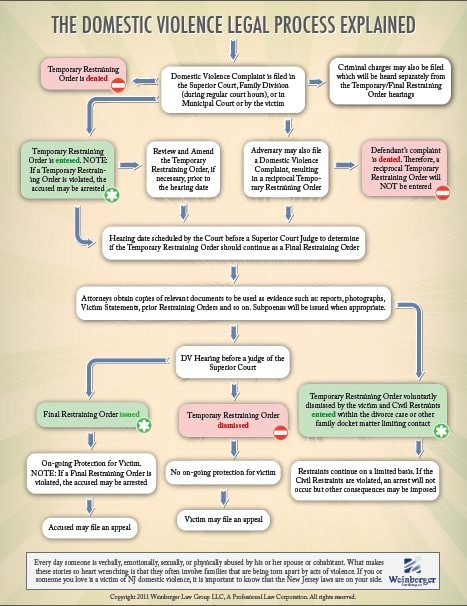
Despite the competing accounts, a judge acted on Sandoval’s restraining order request quickly. The temporary restraining order was granted, requiring Victoria Lee Robinson to stay at least 100 yards away from Sandoval at all times, refrain from any contact with him, and vacate the shared property along with her father immediately. Both Victoria and Will Robinson were ordered to leave the home.
A formal hearing on the restraining order has been scheduled for July 16, 2026, at which point both sides will have the opportunity to present their full accounts and evidence before the court makes a longer-term determination. It is at that hearing — not in the court of public opinion shaped by TMZ clips and competing statements — that the legal picture will begin to clarify.
Victoria’s arraignment on the intimate partner battery charge was also scheduled for June 25, the same day Sandoval filed the restraining order request. Whether the District Attorney proceeds with that charge, or whether it follows the path of an earlier incident Sandoval referenced in his filing that the DA reportedly chose not to prosecute, remains to be seen.
The Broader Context: Why This Story Is Being Watched So Closely
Tom Sandoval is not a figure who generates coverage in a vacuum. Since the Scandoval revelations in 2023, he has occupied an unusual position in reality television culture: a villain who has attempted rehabilitation, whose sincerity in that attempt has been debated continuously, and whose new relationship with Robinson was itself viewed through the lens of his prior behavior by a large segment of the viewing public.
That context shapes how this new situation is being received online — and not always in ways that serve clarity. Some commentary has treated the restraining order as karma, as though the legal system had delivered a verdict on Sandoval’s character rather than on a specific set of disputed events. Others have pointed to the fire pit footage as evidence that Sandoval’s account of victimhood is incomplete or manipulative. Neither of those readings is supported by the available facts, which are still incomplete.
What the available facts do support is this: two people got into a serious physical confrontation on June 3. One of them was arrested. Security camera footage captured at least one moment from that night that complicates a purely one-sided account of what happened. A judge has issued temporary legal protections while the full picture is assembled. A hearing is scheduled for July 16. Everything beyond that is, for now, speculation.
The most honest position to hold heading into that hearing is also the least satisfying one: we do not yet know exactly what happened in that house. Both sides have incentives to present the most favorable version of events. The camera captured one moment without audio or context. And the legal system, which is designed for exactly this kind of contested situation, will take six weeks to weigh what it has.
That timeline rarely accommodates the speed at which social media renders judgment — but in this case, it may be the only mechanism actually designed to find out what happened.
- Newsbeat , Newness
- Tháng 6 25, 2026
- 88 views
“I Drive a Truck and Have Seen a Horse Up Close Maybe 3 Times”: Why Heartland Keeps Winning Viewers It Was Never Made For
Here is a sentence that appeared in a real IMDb review of Heartland, written by a real person who gave the show a perfect ten: “First off, I’m a 32 year old man living in Upstate New York. I drive a truck and have seen a horse up close maybe 3 times. I love this show.” That review, sitting alongside more than 21,000 others that have given Heartland an 8.4 out of 10 on IMDb, is not an outlier. It is a data point in a pattern that the entertainment industry has spent nineteen years failing to adequately explain: a Canadian family drama about a horse healer, marketed primarily at women and families, watched almost compulsively by people who share almost none of the demographic assumptions behind its existence. Understanding why that keeps happening — why Heartland keeps finding viewers it was never designed for — turns out to be one of the more interesting questions in contemporary television.
The Reviews That Tell the Real Story
IMDb user reviews are not a scientific sample, but they are something almost as useful: unfiltered first-person accounts from viewers who felt strongly enough to write something down. The Heartland review section is notable not just for its volume but for the range of voices it contains. Alongside the expected responses from horse enthusiasts and longtime family drama fans, there is a consistent thread of reviews from people who begin with some version of the same disclaimer: they are not the intended audience, they stumbled onto the show by accident, and they are now embarrassed by how much they enjoy it.
One reviewer describes the show as “clearly-no-longer secret pleasures” — the language of someone who half-expected to feel judged for liking it, and found themselves hooked anyway. Another writes about the “mix of urban experience and back to the horse-manure land operation” as though the very incongruity is part of what drew them in — a city person’s fascination with a life structured around entirely different rhythms. A third notes that while horses are technically the hook, “I could quite easily watch the series without the horses, they are an added bonus” — which is a remarkably candid admission from someone who came for the animals and stayed for something else entirely.
What these reviews collectively describe is not a niche genre experience. They describe something much more basic: a show that makes people feel something real, reliably, across nineteen seasons, regardless of whether they came in predisposed to like it.
What the Show Is Actually About, Underneath the Horses
The most common misread of Heartland from the outside is that it is a show about horses. It is not. It is a show about people who use horses as a medium for working through the things they cannot say directly — grief, guilt, fear of not being enough, fear of being left. The horses are the language. The story is always about something else.
That distinction matters enormously for understanding why the show reaches people outside its apparent target demographic. A 32-year-old truck driver in Upstate New York has no particular reason to care about equine therapy. But he has every reason to care about a young man with a troubled past — Ty Borden — who is given a second chance by a family that did not have to extend one. He has every reason to care about a grandfather — Jack Bartlett — who loves his family with a ferocity he expresses almost entirely through action rather than words. He has every reason to care about what it means to hold onto land that carries the weight of six generations, and whether that weight is a gift or a burden or both.
One IMDb reviewer put it plainly: “The message Heartland and nature portrays — there is more to live than city living. There’s more out there. And it’s a richer life.” That observation, from a self-described non-horse person, identifies something the show communicates that has nothing to do with horses at all: a vision of a life organized around physical reality, meaningful labor, and direct human connection, offered to an audience that increasingly experiences the world through screens, algorithms, and the peculiar loneliness of hyper-connected urban existence.
The Comfort TV Effect: What 695 Million Hours Actually Means
Heartland sits at an 8.4 out of 10 on IMDb across more than 21,000 reviews, which is a remarkably consistent score for a show of its length. Individual episodes in Season 18 consistently scored above 9 out of 10, reflecting not just loyalty but active enthusiasm from a fan base that shows no signs of engagement fatigue after nineteen seasons. That kind of sustained, high-level viewer satisfaction is genuinely unusual, and it points to something specific about what the show is doing right.
Television researchers have identified a category of viewing behavior they call “comfort watching” — the deliberate selection of familiar, emotionally safe content as a regulatory response to stress, anxiety, or the general cognitive load of contemporary life. Heartland is, by almost any measure, the ideal comfort watch: predictable enough in its emotional structure to feel safe, varied enough in its storylines to stay interesting, long enough in its back catalog to sustain extended binge sessions, and emotionally consistent enough that viewers know what they are getting every time they press play. One reviewer described “sleepless nights” spent watching Heartland marathons until morning — not as a guilty pleasure but as a deliberate, functional choice. Another described it as something she turns on when she needs to feel “a light and happy feeling at the end of each episode.”
That functional dimension — watching Heartland not because you’re passively entertained but because it actively helps you feel better — explains a significant portion of the 695 million viewing hours the show accumulated on Netflix between 2023 and mid-2025. Comfort watching drives repeat viewings in a way that prestige drama rarely does. A viewer who uses Heartland as emotional regulation will watch the same seasons multiple times; a viewer who watched Succession for the plot rarely returns to episodes they have already seen. For a streaming platform whose engagement metrics reward hours watched rather than unique viewers, that behavior pattern is extraordinarily valuable — and it is a pattern the show generates almost automatically, in viewers who had no prior intention of becoming devoted fans.

The Demographic That Nobody Designed For
There is a specific type of viewer that Heartland‘s existence-by-accident reveals: the person who does not belong to any of the categories the show was made for, but who finds, upon watching it, that the show was somehow made for them anyway.
This viewer is sometimes male, sometimes urban, sometimes young, sometimes someone who laughs at the idea of watching a Canadian family drama about horses. What they share is not a demographic characteristic but a psychological one: the specific hunger for a show that takes its characters seriously, earns its emotional moments, and delivers a consistent sense that the people in it are genuinely trying to be good to each other and mostly succeeding. That combination turns out to be rare enough, and valuable enough, that when viewers stumble onto it they respond with the kind of loyalty that generates 21,000 IMDb reviews and 695 million hours of streaming.
“I would recommend Heartland to everyone of all ages,” one reviewer wrote, in a sentence that functions as both endorsement and genuine surprise. “It will fill your heart with joy.” It is the kind of statement that sounds like marketing until you read the sentence before it, which describes the reviewer as someone who came to the show with skepticism and was simply wrong about it.
That experience — being wrong about something in a direction that makes your life slightly better — is what Heartland keeps delivering to viewers who had no business falling in love with a show about a horse-healing cowgirl on a ranch in Alberta. It is, in its own quiet way, a form of the same thing Amy Fleming does for traumatized horses: not forcing anything, just creating the conditions for trust to develop, and waiting for the rest to follow.
- Newsbeat , Newness
- Tháng 6 25, 2026
- 177 views
Heartland Is Now on 25 Streaming Platforms at Once — And That’s More Unusual Than You Think
Most television shows live or die on one or two streaming platforms. They are exclusive to Netflix, or they are a Peacock original, or they are locked behind a single network’s paywall — and their audience is, accordingly, defined by which subscription that household happens to have. Heartland operates by a completely different logic. As of June 2026, JustWatch data confirms that the show is simultaneously available across 25 streaming services in the United States — a distribution footprint that rivals shows with five times its marketing budget and a fraction of its longevity. Understanding how a Canadian ranch drama built that kind of reach, and what it means heading into what may be its final season, requires tracing a distribution strategy that has been quietly expanding for years while most entertainment coverage looked the other way.
The Full Platform List: Where Heartland Lives Right Now
Before analyzing the strategy, it helps to see the scope of it. As of the most recent JustWatch tracking update on June 21, 2026, Heartland is currently available on the following platforms in the United States:
Paid streaming: Netflix, YouTube TV, UP Faith & Family (Apple TV Channel and Amazon Channel), fuboTV, Philo, Hallmark+ (Amazon Channel and Apple TV Channel), Peacock Premium, Peacock Premium Plus, Pure Flix, Great American Pure Flix (Amazon Channel), Wonder Project (Amazon Channel), Dove (Amazon Channel), Hallmark TV (Amazon Channel)
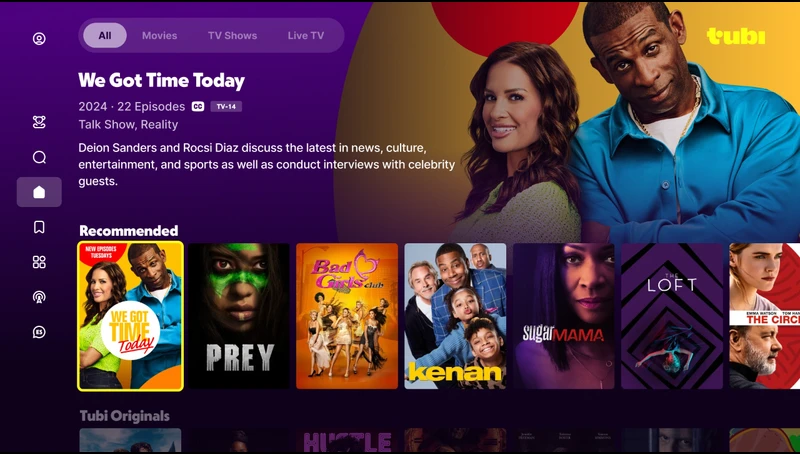
Free with ads: The Roku Channel, Xumo Play, Tubi TV
Purchase/rental: Amazon Video, Fandango At Home, Apple TV Store
Physical: DVD via Amazon and Zavvi
That list spans virtually every tier of the American streaming market: premium subscription services, mid-tier bundles, free ad-supported platforms, transactional VOD, and physical media. A viewer who subscribes to none of these services can still watch Heartland for free on Tubi, Roku Channel, or Xumo Play. A cord-cutter with YouTube TV gets it. A Peacock subscriber gets it. A Netflix subscriber gets it. A Hallmark+ subscriber gets it. The show has, effectively, made itself impossible to not have access to — which is a distribution achievement that very few non-original, non-prestige cable dramas have managed at this scale.
The Hallmark Move: The Deal That Changed Everything
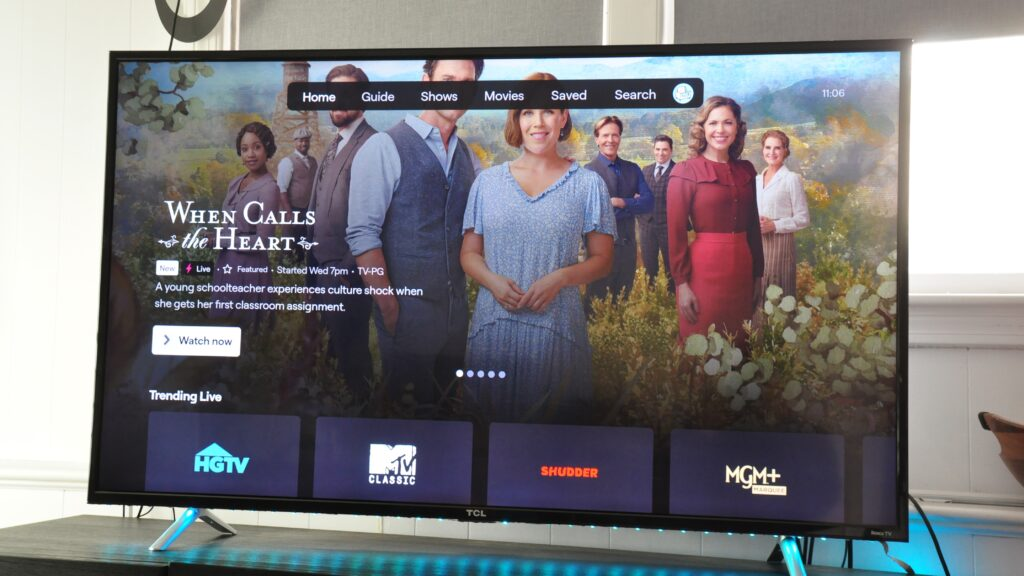
The most significant single distribution development in Heartland‘s recent history — and the one that has received the least coverage — is its arrival on Hallmark Channel in January 2025. Hallmark is not a neutral platform for a show like Heartland. It is arguably the most specifically aligned brand partnership the show could have made outside of its existing relationship with UP Faith & Family.
Hallmark Channel’s audience profile overlaps almost perfectly with Heartland‘s established viewer base: multigenerational families, faith-adjacent viewers, rural and suburban audiences, older women who drive household viewing decisions, and a cohort of younger viewers discovering the network through its expansion into streaming via Hallmark+. The channel’s brand identity — wholesome, family-safe, emotionally consistent — is the same identity Heartland has built for nineteen seasons. Putting the two together was, from a pure audience-matching standpoint, one of the most logical distribution decisions the show has made.
The practical effect has been an expansion of Heartland‘s discovery surface among exactly the viewers most likely to become long-term loyal fans. Someone already watching When Calls the Heart or Chesapeake Shores on Hallmark is precisely the viewer most likely to be converted by a Heartland recommendation from the same platform — and that recommendation now happens automatically, through the platform’s own algorithmic and editorial suggestions, without requiring any additional marketing spend from the show’s producers.
The Free Tier Strategy: How Heartland Finds New Fans Every Day
Of all the distribution channels Heartland now occupies, its presence on free ad-supported streaming platforms — Tubi, The Roku Channel, and Xumo Play — may be the most strategically significant for its long-term audience growth. Free platforms do something that paid platforms cannot: they remove the barrier of subscription cost entirely, which means Heartland can be discovered by viewers who would never proactively choose to add another streaming service just to try a show they’re not certain about.
Tubi, in particular, has become a meaningful discovery engine for older catalog content. With over 80 million monthly active users in the United States, Tubi’s audience skews toward viewers in smaller markets, rural areas, and lower-income households — demographic segments that overlap substantially with Heartland‘s core audience and that are significantly underserved by the prestige streaming economy. A viewer in rural Tennessee or small-town Ohio who discovers Heartland through Tubi is not the viewer Netflix’s recommendation algorithm was designed to find. But they are exactly the viewer the show has always been made for.
The Roku Channel adds another layer: with over 80 million active accounts on the Roku device ecosystem, it is one of the largest free streaming platforms in the country, reaching a hardware-defined audience that spans income levels and geographic markets in ways that app-based platforms do not. For a show with 279 episodes of back catalog, the combination of Tubi and Roku Channel creates a continuous, self-renewing discovery cycle — new viewers find the show for free, watch through the catalog, and then migrate to paid platforms to access the most recent seasons that the free services don’t yet carry.
What 25 Platforms Actually Means for a Show Heading Into Its Final Season
The timing of Heartland‘s distribution expansion makes its current platform footprint particularly notable. Season 20 — which many outlets and tracking services now describe as “expected to be its last” — is currently filming in Alberta, with a fall 2026 premiere on CBC planned. If the show is genuinely approaching its ending, the fact that it now reaches American audiences across 25 separate platforms means that its finale, whenever it airs on CBC and eventually makes its way through the UP Faith & Family exclusivity window toward Netflix US, will land in front of an audience that has been continuously refreshed by new discoverers on free platforms for years.
This is not incidental. It means that when Season 20 finally becomes available across the full platform ecosystem — likely 2027 on UP Faith & Family for US fans, 2028 on Netflix US — there will be viewers who just finished Season 1 on Tubi sitting alongside fans who have watched every episode since 2007. The finale of Heartland, if Season 20 is indeed the last chapter, will be experienced by the most distributed, most demographically diverse, and most geographically spread audience the show has ever had.
That is an unusual thing for a series that began as a modest Canadian family drama without a significant marketing budget or an American network home. It built its audience slowly, on trust, and it now distributes that audience across more platforms than most American prestige dramas manage in their entire run.
For a show that has always been about finding what you need in unexpected places, the distribution strategy has turned out to be unexpectedly appropriate.
- Newsbeat , Newness
- Tháng 6 23, 2026
- 128 views
Be Content Just Being Who You Are”: The Life Philosophy of Amber Marshall That Makes Her Different From Every Other TV Star
There is a particular kind of celebrity that comes from spending two decades playing a beloved character in a beloved show, and it tends to produce one of two things: an actor who cannot separate themselves from the role, or an actor who quietly builds a life so full and genuine that the role becomes just one part of a much larger story. Amber Marshall, who has played Amy Fleming on Heartland since 2007, belongs firmly in the second category. Ask her about fame, and she will redirect the conversation to her horses. Ask her about legacy, and she will tell you about the families who write to say they watch the show together. Ask her about happiness, and she will tell you something so simple it almost sounds like a deflection until you realize she actually means it: “I want to show people that you can be content just being who you are.” That sentence — six words of philosophy inside an interview answer — is as close to a mission statement as Marshall has ever offered. And over nineteen seasons on one of television’s most quietly influential shows, she has earned the right to mean every word of it.
The Dream That Had to Wait
Marshall was born on June 2, 1988, in London, Ontario — and she knew what she wanted almost immediately. She began riding at the age of three, was circling ranch property listings in real estate magazines by the time she was ten, and had her heart set on a life that combined animals with performance from before she had the vocabulary to describe what that combination might look like professionally.
She waited a long time for it. Her early career consisted of television commercials and small guest roles — appearances in Twice in a Lifetime, Doc, Monk, Dark Oracle, and a TV movie about Elizabeth Smart — the kind of résumé that sustains hope without yet confirming it. The Heartland pilot came in 2007, when she was eighteen years old. “It wasn’t until I was 18 that I got Heartland,” she told an interviewer with a smile that suggested she had made peace with the timeline. “So I had to wait a little while before that dream came true.”
That patience — the willingness to wait for the right thing rather than grab the nearest available version of it — is a quality that runs through everything Marshall has said publicly about her career and her life. She did not move to Los Angeles to chase visibility. She moved to Alberta when the show brought her there, found that it felt right, and stayed. She has filmed in the same geographic area for nearly twenty years. She calls that a feature, not a limitation.
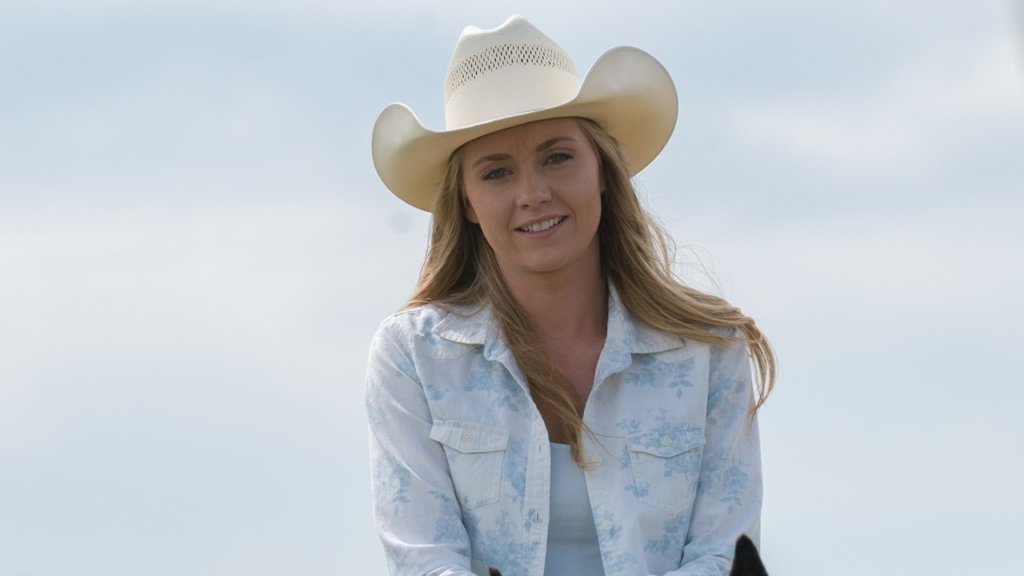
On Animals: The Philosophy That Predates the Career
Long before Heartland, before Amy Fleming, before any of it, Amber Marshall had a horse named Tony the Pony who started everything. The relationship between Marshall and animals is not a persona she adopted for the show and maintained afterward — it is the foundation on which everything else was built, including the show.
Her most quoted statement on the subject captures something specific about why animals matter to her in a way that goes beyond simple affection: “Animals keep me grounded. They don’t care who you are or what you look like — they just say, ‘All right, let’s go do this.'” That last phrase — all right, let’s go do this — is not poetic language. It is the language of someone who genuinely prefers the company of creatures that make no distinctions between who you are on television and who you are in a barn at six in the morning. Animals are, in her framing, the original antidote to ego.
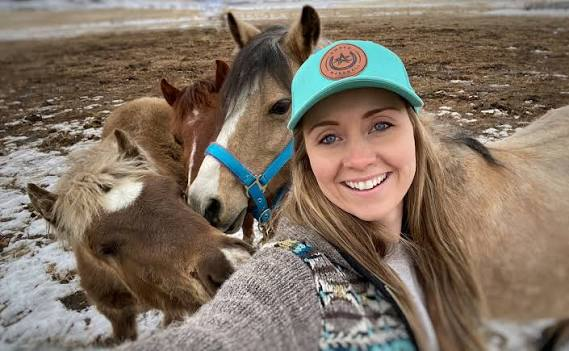
During breaks between filming seasons, Marshall volunteers at veterinary clinics and a Wildlife Rehabilitation Centre, where she has participated in raptor classes to gain experience working with falcons and hawks. These are not scheduled appearances or charity photo opportunities — they are activities she pursues specifically to expand her knowledge of animals beyond what the show requires of her, in settings where her name means nothing and her competence with the animal in front of her is the only thing that matters. That choice, repeated quietly across two decades, says more about her actual values than any interview answer could.
“Any chance I get, I’m spending it with my animals,” she told Cowgirl Magazine in January 2026. “They make me happy. They’re what keep me balanced.”
On the Show’s Legacy: Lives Touched, Not Awards Won
Marshall won the inaugural Canada’s Screen Star Award at the first Canadian Screen Awards — a recognition from the industry that her work had been seen and valued. She has not made much of that award in subsequent years. What she talks about instead, consistently and across many different interviews, is the mail.
“I live my life for me,” she told MovieGuide in 2026, “but I also think about the hundreds, thousands of lives I’ve touched through the show, interviews, whatever it might be. I hear from families who say, thank you for creating something wholesome we can watch together. That means a lot.”
That framing — not awards, not viewership numbers, not streaming charts, but the specific experience of families watching something together — reveals what she actually thinks the show is for. Not content delivery. Not brand building. Not prestige. Something closer to what she described in another interview as the quiet power of horses and open spaces to bring people together: a feeling that cannot be manufactured or monetized, only maintained, season after season, by people who actually believe in what they are making.
Her articulation of why Heartland has lasted nineteen seasons — and why she believes it could last more — always comes back to this same ground. “I believe horses have a lot to do with the longevity of Heartland,” she says. “You can feel their power even through a screen.” It is a statement that would sound like marketing language from almost anyone else, but from Marshall, who works with her own horse Hawk on set every day, goes home to her farm in Alberta every night, and spends her off-seasons at veterinary clinics by choice, it reads as observation rather than pitch.
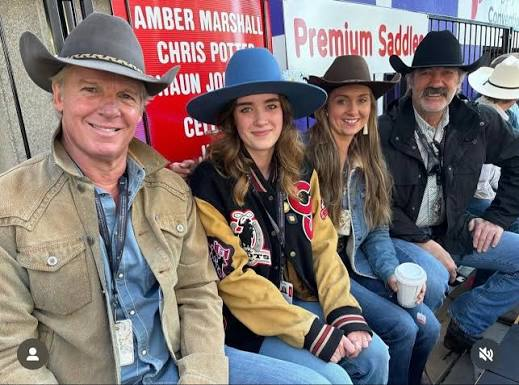
On Fame: Why She Never Chased It
The most striking thing about Amber Marshall’s public persona, observed across nearly two decades of interviews, is how completely it fails to perform celebrity. There is no aspiration toward a larger platform, no pivot toward film or American television, no calculated brand evolution. Her clothing store in Diamond Valley sells western wear made by local Alberta artisans. Her farm outside Calgary is where she actually lives. Her social media reflects the same life she describes in interviews. The consistency between what she says and how she lives is so complete that it has become, almost paradoxically, one of the most distinctive things about her in an entertainment industry built on aspiration and reinvention.
She went skydiving last season with her husband Shawn and a few Heartland castmates, and her description of the experience is characteristic: “It was peaceful. You can’t really describe it until you’ve done it. We were free-falling for almost a minute, then just gliding for eight minutes, looking around at everything. It was for us. We loved it.” She is not describing a content moment. She is describing a private experience she is willing to share because it was genuine, not because it was photogenic.
Her philosophy of contentment — “I want to show people that you can be content just being who you are. Laugh at yourself. Do crazy things. Live for you, not anyone else. Do it because it feels right and makes you happy” — is not the language of someone managing a public image. It is the language of someone who made a specific kind of peace with herself early enough that she never needed to manage one.
On the Character She Has Become
Perhaps the most revealing thing Marshall has said about the relationship between herself and Amy Fleming is also the simplest: “I think that over time, my character has become more like me, and I have become more like my character.” That mutual influence, tracked across nineteen seasons of scripts and improvisations and genuine relationships with animals on a genuine ranch, is what makes the show’s authenticity feel earned rather than performed. Amy Fleming heals horses by paying attention and staying calm. Amber Marshall volunteers with raptors on her days off. One of those things is fictional. The other is not. The gap between them is narrower than it has any right to be.
“My life has kind of been on repeat for twenty years,” she said in a January 2026 interview. “Filming through summer, traveling through fall, family time at Christmas, then back on the road until spring.” She said it not as a complaint but as a description — of a life that has found its rhythm and kept it, which is a rarer kind of success than most people in the entertainment industry are willing to admit they actually want.
As Season 20 films in Alberta this summer, Marshall has said she hopes the show can continue for “another decade or more.” Whether that happens depends on decisions above her. But what she has already built — the career, the farm, the store, the philosophy, the two decades of families watching together — does not depend on any of that. It is already there.
- Newness , Newsbeat
- Tháng 6 23, 2026
- 107 views
Hearing Aids and Breakdowns: The Quiet Heartland Season 19 Storyline That Hit Harder Than the Proposal
Everyone is talking about Nathan’s proposal. Everyone has an opinion about whether Amy should say yes. Everyone is counting down to Season 20’s premiere to find out what she said in that firefly-lit field on Salt Spring Island. That conversation is real and it matters — but it has almost entirely eclipsed what may be the most emotionally precise thing Heartland Season 19 actually did: the slow, parallel unraveling and rebuilding of Jack Bartlett and Lou Fleming, told through a hearing aid and a near-breakdown, in a season that used its quietest moments to say something the show has rarely said this directly. Heartland does not survive because one person is strong enough to hold it together. It survives because people learn, eventually, to stop trying to do that alone.
Two Characters, One Question
Jack Bartlett is eighty-something years old in the show’s current timeline — a man who has kept his promise to hold onto six generations of ranch land for his entire adult life. Lou Fleming is forty-three, a former New York career woman who came home when her mother died and never fully left — a woman who has spent two decades trying to do everything, fix everything, and control the outcome of situations that resist control. On the surface, they are very different characters at very different stages of life. Season 19 revealed how much they share.
The season’s official premise — the Bartlett-Fleming family risks everything to keep Heartland and those they love out of harm’s way — applies most literally to the cattle rustler storyline and the Pryce family rivalry. But it describes Jack and Lou’s internal arcs just as accurately. Both of them, across ten episodes, are quietly risking the thing they most fear losing: their usefulness. Their identity as the people the ranch cannot function without. Their certainty that Heartland needs them specifically, in the form they have always taken, or it will fall apart.
Season 19 tests that certainty carefully and methodically, and finds it wanting — in the best possible way.
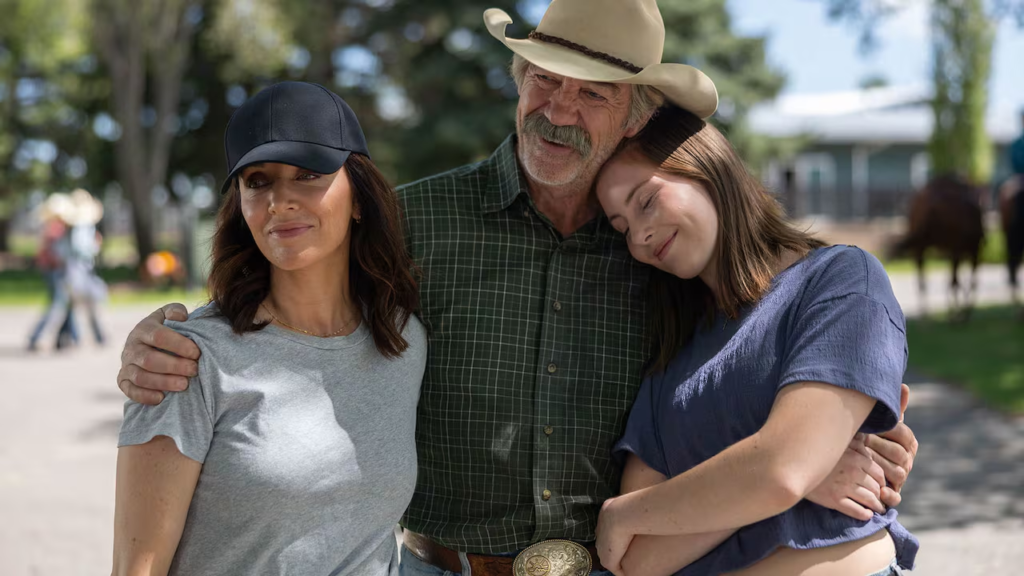
Jack’s Arc: The Hearing Aid He Didn’t Want to Need
The Jack storyline in Season 19 operates almost entirely through indirection — which is how the show has always written him best. Jack Bartlett does not monologue about his fears. He resists hearing aids. He hesitates before accepting Dex, the new ranch hand, whose arrival he didn’t initiate and doesn’t entirely welcome. He pushes back against the idea of extra help with the kind of quiet stubbornness that is recognizable to anyone who has watched a person they love refuse to acknowledge that something has changed.
What makes the hearing aid detail so effective is its specificity. A hearing aid is not a dramatic medical crisis — it is a small, mundane accommodation to the reality of aging, the kind of thing that millions of people navigate without fanfare. But for Jack Bartlett, a man whose entire identity has been built around presence, authority, and the ability to hear what is happening on his land before anyone else does, it is not small at all. His resistance to the hearing aid is his resistance to the idea that Heartland can continue even when he is no longer able to do everything himself. His fear of becoming less useful — of being sidelined, of needing to be managed rather than consulted — is the fear underneath every hesitation and every refusal of help across the season.
The show handles this without sentimentality. Jack doesn’t have a breakdown. He doesn’t deliver a speech about his fears. He accepts the hearing aid. He hires Dex. He takes difficult but necessary steps without making them dramatic, which is the most accurate portrayal of how real people navigate this particular kind of loss — quietly, reluctantly, and with the pretense that it doesn’t cost them anything.
Lou’s Arc: The Controlled Collapse of Someone Doing Too Much
Where Jack’s arc unfolds through small refusals and small acceptances, Lou’s Season 19 arc is about the slow accumulation of pressure until even her considerable capacity for control begins to crack. Between managing Heartland Beef, protecting the ranch from rustlers, and keeping the family’s financial situation from deteriorating, Lou has spent the season operating under constant, unrelenting pressure — and her response to that pressure is to take on more of it, because the alternative is admitting she cannot handle it alone.
That pattern is Lou Fleming’s defining flaw and her most recognizable quality. She is, as the show has always known, the kind of person whose instinct in any crisis is to become more useful rather than to ask for help. She controlled the Heartland Beef operation. She controlled the response to the rustler threat. She controlled her anxiety about the ranch’s financial situation by working harder at controlling outcomes. And in Season 19, the show watches all of that controlled energy turn into something that is beginning to collapse under its own weight.
The cattle losses in the finale hit especially hard because they represent the failure of all that control. Lou seriously considers taking out a loan — not out of ambition, but out of fear that if she lets her guard down for a moment, everything will fall apart. That distinction matters: this is not Lou making a bold business decision. It is Lou operating from fear, which is a place the show has rarely put her so explicitly.
The Moment Both Arcs Converge
By the Season 19 finale, “Forgiveness,” both Jack and Lou have arrived at the same difficult truth through different paths. Jack has already taken his steps — accepting hearing aids, hiring Dex, trusting others to do their part — and is watching Lou work through the same lesson he has been quietly learning all season. Lou, pushed past her limit by the cattle losses and the rustler confrontation, begins to recognize what Jack’s arc has been demonstrating for ten episodes: that Heartland’s strength has never come from one person holding everything together. It has always come from the family sharing the load.
That realization is expressed not in a single dramatic scene but in the accumulation of several quieter ones: Lou beginning to follow Jack’s lead. Jack not needing to say much because he has already said it by example. The two of them arriving at a shared understanding — that the instinct to carry everything alone, however understandable, is not a form of strength. It is a form of fear dressed up as competence.
This parallel structure is one of Season 19’s most sophisticated pieces of writing. The show takes two characters who are ostensibly very different — the old patriarch resisting his own aging, the driven middle-aged woman resisting her own limits — and reveals that they are running the same emotional program, at different speeds, toward the same resolution. Neither of them gets a triumphant moment. Both of them get something quieter and more durable: the beginning of a different relationship with their own limitations.
Why This Storyline Deserves More Attention
In a season that ended with a firefly-lit marriage proposal and a cliffhanger that sent fan communities into extended debate, the Jack-Lou parallel arc has been significantly underweighted in post-season coverage. That is understandable — the proposal is more immediately dramatic, more shareable, more debatable. But the Jack-Lou storyline is arguably the one that does more lasting work for the show’s thematic identity.
Heartland has always been about family as a form of resilience — the idea that what keeps a ranch, or a family, or a community going is not individual strength but collective responsibility. The Jack-Lou arc in Season 19 is the purest expression of that theme the show has delivered in several seasons. It takes two of the show’s oldest and most familiar characters and finds something genuinely new to say about them — not through dramatic plot twists, but through the kind of quiet, specific character work that the show does better than almost any other drama currently on television.
Heading into Season 20, which may be the show’s final chapter, that arc carries particular weight. If Heartland is building toward a conclusion, the lesson that Jack and Lou arrived at in Season 19 — that holding on too tightly to being the one who holds everything together is itself a kind of letting go — feels like exactly the kind of thematic groundwork a finale needs. Not a resolution. A foundation.
- Newness , Newsbeat
- Tháng 6 23, 2026
- 108 views
Why Graham Wardle Really Left Heartland — And Why He’s Never Coming Back
Few exits in Canadian television history hit harder than Graham Wardle’s departure from Heartland in 2021. After fourteen seasons as Ty Borden — the troubled ranch hand turned devoted husband, father, and veterinarian who spent fourteen years growing up on screen alongside Amy Fleming — Wardle chose to leave. The character he played died of a blood clot in Season 14, Episode 1, in a scene that generated more viewer grief than almost any other moment in the show’s nineteen-year run. In the years since, the rumours have been persistent: that he was pushed out, that there was a falling out, that the door might one day open again. The actual story is both simpler and more interesting than any of those versions, and Wardle has told it clearly enough that there is no longer any real mystery about what happened — only a fan base that, understandably, finds it difficult to accept.
The Decision That Started in Season 10
The most important fact about Wardle’s exit is one that most casual viewers don’t know: he started thinking about leaving years before it actually happened. By Season 10 — roughly 2016, with the show already a decade old and Wardle a decade into the role — he had begun quietly wrestling with whether he wanted to continue. He was not unhappy on set. The relationships he had built with the cast and crew were genuine, and his on-screen chemistry with Amber Marshall was the emotional engine of everything the show did best. The question was not about the job. It was about himself.
By Season 13, the internal debate had resolved into a clear decision. He was sure he wanted to leave, and he told the production team. What followed was not a sudden departure but a carefully managed exit planned over two years — a timeline that reflects both how much the show valued the character and how much Wardle valued the audience that had watched him grow up on screen.
The writers faced an important creative question: how do you write out one of the show’s most beloved characters in a way that feels earned and honest? Leaving Ty alive but simply absent — moving away, taking a job elsewhere, drifting out of the story — was considered and rejected. Together with Wardle, the decision was made that Ty Borden would not simply leave. Ty Borden would die. The groundwork was laid in the Season 13 finale, “The Passing of the Torch,” when a poacher’s stray bullet hit both Amy and Ty on the ranch. Ty’s wound seemed survivable. The Season 14 premiere revealed otherwise.
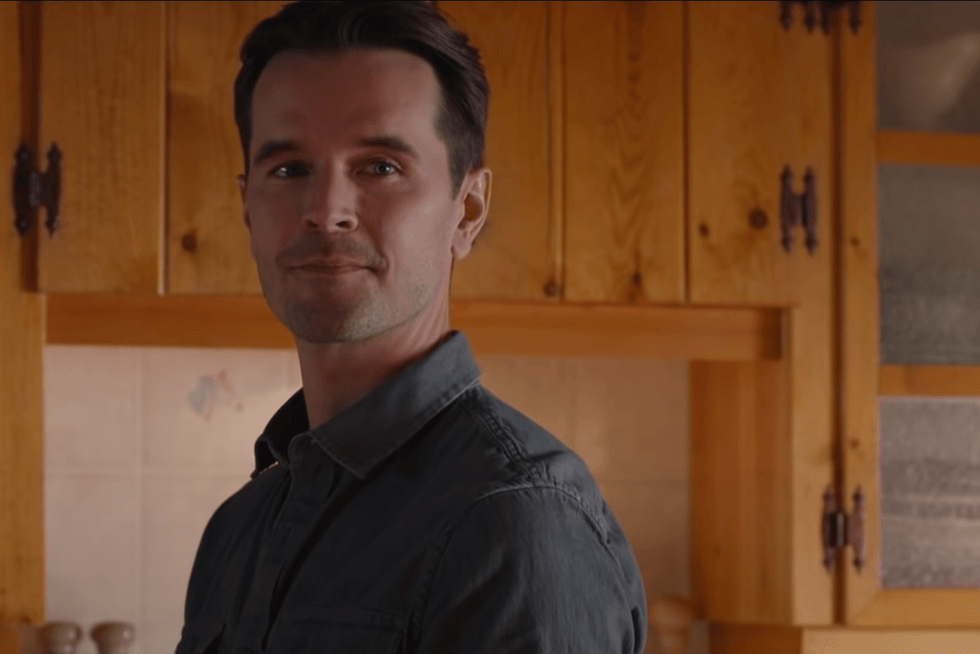
How Ty Borden Actually Died
The medical specifics of Ty’s death matter because they were chosen deliberately. Ty died from deep vein thrombosis — a blood clot that developed as a complication of the gunshot wound he received in the Season 13 finale. He did not die from the bullet itself. He collapsed while tending to his horse Spartan on the ranch, in an environment that was completely familiar and safe, which made the moment land with the particular brutality that comes from tragedy arriving in ordinary places.
The choice to kill Ty from a delayed complication rather than the original wound was narratively significant. It preserved the Season 13 finale’s emotional register — Ty surviving the shooting, the family pulling together, the immediate crisis passing — while making his death feel like the kind of thing that actually happens: not the dramatic moment, but the quiet aftermath that nobody prepared for. For fans who had followed the character for thirteen seasons, the gap between “Ty survived the shooting” and “Ty is gone” was exactly the kind of emotional whiplash that the show has always been willing to inflict when the story called for it.
Wardle’s final regular appearance as Ty Borden was in the Season 13 finale, which aired in 2020. Ty’s death was depicted in the Season 14 premiere, which aired on July 8, 2021. In the years since, Wardle has appeared in flashback sequences within the show, but he has not rejoined Heartland as an active cast member — and based on everything he has said publicly, he has no plans to do so.
What Graham Wardle Has Said — In His Own Words
Wardle has not been evasive about his reasons for leaving. In a detailed interview published on his own platform, Time Has Come, he addressed the departure directly and cleared up what he called misconceptions that had circulated since 2021.
He described the decision as following his heart and moving in a new direction after years of contemplation — not a sudden impulse but a gradual, honest reckoning with what he wanted his life to look like. He was explicit that the exit was entirely his own choice, made with the full support of the cast, crew, and production team. He was not fired. There was no falling out. The relationship between Wardle and the Heartland production ended the same way it began — with mutual respect and a shared commitment to giving the character the ending he deserved.
What makes his account particularly candid is the way he describes the timeline. By Season 10, he had thoughts about leaving. By Season 13, the decision was made. That means he spent approximately three seasons still fully committed to the role while knowing he had chosen to leave — a professional discipline that rarely gets acknowledged in coverage of cast departures, which tend to frame these moments as sudden and dramatic. The reality, in Wardle’s case, was the opposite: a long, careful wind-down executed with as much care for the audience as for the character.
He also addressed the quality of what those fourteen years produced. In the same interview, he reflected on his favorite memories from set — not the scenes themselves, but the in-between moments: riding in the shuttle van with Shaun Johnston, workshopping dialogue together, asking each other what a moment meant before they filmed it. He described deep gratitude for working alongside actors who shared his commitment to making the characters feel genuine, and called the experience of playing Ty’s transformation from troubled teenager to devoted husband one of the most meaningful of his professional life.
What He’s Doing Now
Since leaving Heartland, Wardle has built a creative life that looks nothing like the one he left. He launched Time Has Come, a podcast in which he has conversations with guests ranging from former co-stars to strangers he finds interesting. The show has featured Heartland alumni including Jessica Amlee, who played Mallory Wells, and Amber Marshall herself, who appeared in Episode 9 of the podcast — a reunion that generated significant attention from the fan base.
He has also pursued photography and filmmaking as primary creative outlets rather than side interests, working on projects that reflect his own perspective rather than roles he has been cast in. In 2023, he published Find Your Truth, a collection of his writings and poetry — a creative direction that would have been difficult to pursue while filming a major network drama for six months of every year.
Born September 6, 1986, in Mission, British Columbia, and raised in New Westminster near Vancouver, Wardle studied at the Motion Picture and Production Program at Capilano University, graduating in 2007. He booked the Heartland pilot almost immediately after graduation, which means the show was effectively his entire professional adult life up to the point he chose to leave. Seen in that context, the decision to leave at 34, with nearly fifteen years of the same role behind him, reads less like abandonment and more like the kind of necessary reinvention that most people in any career eventually have to face.
Will He Ever Come Back?
As of 2026, the answer is the same it has been since 2021: no. Wardle has not returned to Heartland in any active capacity, and nothing in his public statements suggests he intends to. Flashback sequences have occasionally used footage or brief appearances, which is a common device for long-running shows managing the legacy of departed characters — but these are not returns. They are the show honoring what Ty meant while the story continues without him.
The fan theories that have circulated periodically — including the recent claim that Jack somehow knew Ty was alive and has been hiding it for six years — are, in Wardle’s own framing, built on a misunderstanding of the departure. Ty Borden did not leave. He died. And that death was chosen deliberately, collaboratively, and carefully, specifically because leaving him alive but absent would have felt dishonest to a character whose whole arc was about showing up fully for the people he loved.
For Season 20, heading into what may be the show’s final chapter, the most honest expectation is that Ty’s presence will continue to be felt through Amy’s choices and the show’s memory of who he was — not through a return that would undo the integrity of the exit both Wardle and the production worked hard to get right.
Some doors close cleanly. This one did.
Ann Blyth, 98: The Last Voice of Hollywood’s Golden Age Has Gone Silent
- Tháng 6 26, 2026
- 118 views