
 Televison New
Everyone is talking about Nathan’s proposal. Everyone has an opinion about whether Amy should say yes. Everyone is counting down to Season 20’s premiere to find out what she said in that firefly-lit field on Salt Spring Island. That conversation is real and it matters — but it has almost entirely eclipsed what may be the most emotionally precise thing Heartland Season 19 actually did: the slow, parallel unraveling and rebuilding of Jack Bartlett and Lou Fleming, told through a hearing aid and a near-breakdown, in a season that used its quietest moments to say something the show has rarely said this directly. Heartland does not survive because one person is strong enough to hold it together. It survives because people learn, eventually, to stop trying to do that alone.
Two Characters, One Question
Jack Bartlett is eighty-something years old in the show’s current timeline — a man who has kept his promise to hold onto six generations of ranch land for his entire adult life. Lou Fleming is forty-three, a former New York career woman who came home when her mother died and never fully left — a woman who has spent two decades trying to do everything, fix everything, and control the outcome of situations that resist control. On the surface, they are very different characters at very different stages of life. Season 19 revealed how much they share.
The season’s official premise — the Bartlett-Fleming family risks everything to keep Heartland and those they love out of harm’s way — applies most literally to the cattle rustler storyline and the Pryce family rivalry. But it describes Jack and Lou’s internal arcs just as accurately. Both of them, across ten episodes, are quietly risking the thing they most fear losing: their usefulness. Their identity as the people the ranch cannot function without. Their certainty that Heartland needs them specifically, in the form they have always taken, or it will fall apart.
Season 19 tests that certainty carefully and methodically, and finds it wanting — in the best possible way.
Jack’s Arc: The Hearing Aid He Didn’t Want to Need
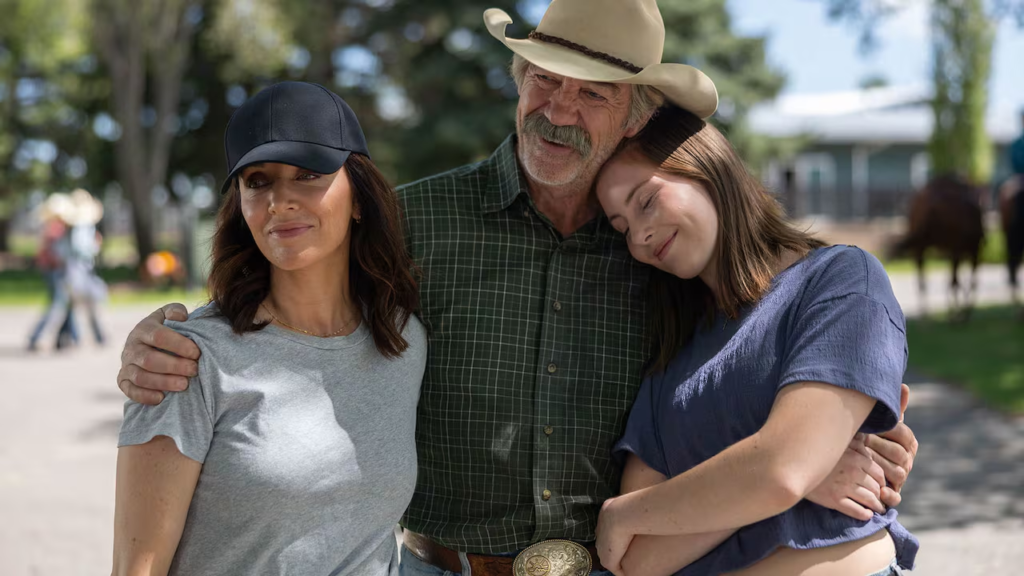
The Jack storyline in Season 19 operates almost entirely through indirection — which is how the show has always written him best. Jack Bartlett does not monologue about his fears. He resists hearing aids. He hesitates before accepting Dex, the new ranch hand, whose arrival he didn’t initiate and doesn’t entirely welcome. He pushes back against the idea of extra help with the kind of quiet stubbornness that is recognizable to anyone who has watched a person they love refuse to acknowledge that something has changed.
What makes the hearing aid detail so effective is its specificity. A hearing aid is not a dramatic medical crisis — it is a small, mundane accommodation to the reality of aging, the kind of thing that millions of people navigate without fanfare. But for Jack Bartlett, a man whose entire identity has been built around presence, authority, and the ability to hear what is happening on his land before anyone else does, it is not small at all. His resistance to the hearing aid is his resistance to the idea that Heartland can continue even when he is no longer able to do everything himself. His fear of becoming less useful — of being sidelined, of needing to be managed rather than consulted — is the fear underneath every hesitation and every refusal of help across the season.
The show handles this without sentimentality. Jack doesn’t have a breakdown. He doesn’t deliver a speech about his fears. He accepts the hearing aid. He hires Dex. He takes difficult but necessary steps without making them dramatic, which is the most accurate portrayal of how real people navigate this particular kind of loss — quietly, reluctantly, and with the pretense that it doesn’t cost them anything.

Lou’s Arc: The Controlled Collapse of Someone Doing Too Much
Where Jack’s arc unfolds through small refusals and small acceptances, Lou’s Season 19 arc is about the slow accumulation of pressure until even her considerable capacity for control begins to crack. Between managing Heartland Beef, protecting the ranch from rustlers, and keeping the family’s financial situation from deteriorating, Lou has spent the season operating under constant, unrelenting pressure — and her response to that pressure is to take on more of it, because the alternative is admitting she cannot handle it alone.
That pattern is Lou Fleming’s defining flaw and her most recognizable quality. She is, as the show has always known, the kind of person whose instinct in any crisis is to become more useful rather than to ask for help. She controlled the Heartland Beef operation. She controlled the response to the rustler threat. She controlled her anxiety about the ranch’s financial situation by working harder at controlling outcomes. And in Season 19, the show watches all of that controlled energy turn into something that is beginning to collapse under its own weight.
The cattle losses in the finale hit especially hard because they represent the failure of all that control. Lou seriously considers taking out a loan — not out of ambition, but out of fear that if she lets her guard down for a moment, everything will fall apart. That distinction matters: this is not Lou making a bold business decision. It is Lou operating from fear, which is a place the show has rarely put her so explicitly.
The Moment Both Arcs Converge
By the Season 19 finale, “Forgiveness,” both Jack and Lou have arrived at the same difficult truth through different paths. Jack has already taken his steps — accepting hearing aids, hiring Dex, trusting others to do their part — and is watching Lou work through the same lesson he has been quietly learning all season. Lou, pushed past her limit by the cattle losses and the rustler confrontation, begins to recognize what Jack’s arc has been demonstrating for ten episodes: that Heartland’s strength has never come from one person holding everything together. It has always come from the family sharing the load.
That realization is expressed not in a single dramatic scene but in the accumulation of several quieter ones: Lou beginning to follow Jack’s lead. Jack not needing to say much because he has already said it by example. The two of them arriving at a shared understanding — that the instinct to carry everything alone, however understandable, is not a form of strength. It is a form of fear dressed up as competence.
This parallel structure is one of Season 19’s most sophisticated pieces of writing. The show takes two characters who are ostensibly very different — the old patriarch resisting his own aging, the driven middle-aged woman resisting her own limits — and reveals that they are running the same emotional program, at different speeds, toward the same resolution. Neither of them gets a triumphant moment. Both of them get something quieter and more durable: the beginning of a different relationship with their own limitations.
Why This Storyline Deserves More Attention
In a season that ended with a firefly-lit marriage proposal and a cliffhanger that sent fan communities into extended debate, the Jack-Lou parallel arc has been significantly underweighted in post-season coverage. That is understandable — the proposal is more immediately dramatic, more shareable, more debatable. But the Jack-Lou storyline is arguably the one that does more lasting work for the show’s thematic identity.
Heartland has always been about family as a form of resilience — the idea that what keeps a ranch, or a family, or a community going is not individual strength but collective responsibility. The Jack-Lou arc in Season 19 is the purest expression of that theme the show has delivered in several seasons. It takes two of the show’s oldest and most familiar characters and finds something genuinely new to say about them — not through dramatic plot twists, but through the kind of quiet, specific character work that the show does better than almost any other drama currently on television.
Heading into Season 20, which may be the show’s final chapter, that arc carries particular weight. If Heartland is building toward a conclusion, the lesson that Jack and Lou arrived at in Season 19 — that holding on too tightly to being the one who holds everything together is itself a kind of letting go — feels like exactly the kind of thematic groundwork a finale needs. Not a resolution. A foundation.