
 Televison New
Introduction: The Horror Next Door In the realm of psychological thrillers, the most terrifying stories are often not the ones involving supernatural entities, but the ones rooted in the grim reality of human depravity. Released in 2021 as part of Lifetime’s “Ripped from the Headlines” feature, Girl in the Basement is a visceral, haunting portrayal of a young woman’s decades-long imprisonment at the hands of her own father. Inspired by the horrific true story of the Elisabeth Fritzl case in Austria, the film navigates the dark corridors of domestic abuse, psychological manipulation, and the incredible will to survive. At Storyline Movies, we look beyond the surface level of this “true crime” adaptation to understand the genius behind its storytelling and the heavy emotional weight it carries.
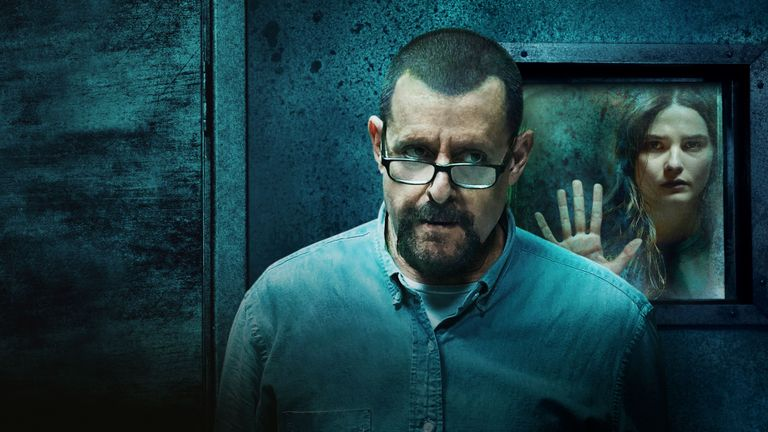
The Premise: A Sanctuary Turned Into a Tomb The film follows Sara (played by Stefanie Scott), a vibrant teenager looking forward to her 18th birthday and a future away from her overbearing and controlling father, Don (Judd Nelson). However, her dreams are shattered when Don lures her into the basement of their suburban home, trapping her in a soundproofed bunker he spent years meticulously preparing. What was supposed to be a temporary punishment turns into a 20-year nightmare. The brilliance of the “storyline” lies in the terrifying proximity of the horror—while Sara’s mother and sister live their lives just a few feet above her, she is subjected to unspeakable trauma in the darkness below.
Judd Nelson: The Anatomy of a Monster The success of Girl in the Basement hinges on the performance of Judd Nelson. Known for his “Brat Pack” roles in the 80s, Nelson delivers a career-defining performance as Don. He doesn’t play the character as a mustache-twirling villain; instead, he portrays a man fueled by a toxic need for control and a warped sense of “protection.” Don truly believes he is keeping his daughter safe from the “corrupting” world outside. This psychological complexity is what makes the film so disturbing. Don is the ultimate “Noir” antagonist—a monster hiding behind a mask of suburban normalcy and patriarchal authority.
Stefanie Scott: The Portrait of Resilience Opposite Nelson, Stefanie Scott delivers a heartbreakingly authentic performance as Sara. We watch her transform from a hopeful teenager into a weathered woman who has endured the unthinkable. Scott captures the stages of captivity with profound nuance—from the initial denial and desperate escape attempts to the eventual, soul-crushing resignation, and finally, the fierce maternal instinct that arises when she is forced to raise her children in a windowless room. Her performance is the anchor of the film, ensuring that the audience never loses sight of the human being at the center of the tragedy.
The Directorial Vision of Elisabeth Röhm Directing a film with such sensitive and dark subject matter requires a delicate touch, and Elisabeth Röhm succeeds in making the film impactful without being purely exploitative. She focuses on the psychological toll of isolation. The cinematography in the basement is claustrophobic and dim, contrasting sharply with the bright, sunny world above. This visual dichotomy reinforces the “in-between” state of Sara’s existence—she is dead to the world but very much alive in her suffering. Röhm’s direction ensures that the story remains focused on Sara’s survival rather than just the graphic nature of her abuse.
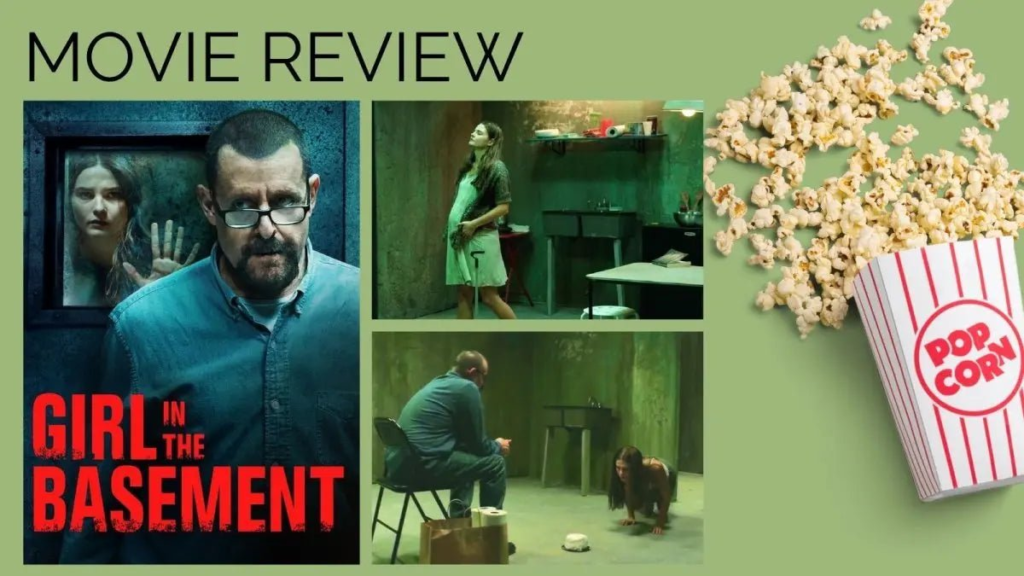
A Mirror to the Fritzl Case: Fact vs. Fiction While the film changes names and locations (moving the setting to the United States), the parallels to the real-life Elisabeth Fritzl case are unmistakable. By bringing this “storyline” to a modern, American suburban setting, the film forces the audience to confront the uncomfortable truth that such horrors can happen anywhere. It highlights the systemic failures and the “bystander effect” that can allow such crimes to go unnoticed for decades. For the true-crime enthusiasts at Storyline Movies, analyzing the differences between the movie and the actual case adds another layer of intrigue and educational value to the viewing experience.
Themes of Motherhood and Hope At its core, Girl in the Basement is a story about the power of motherhood. Sara’s children, born in captivity, become her reason to keep fighting. The scenes where she tries to give them a semblance of a “normal” life—teaching them to read and play within the confines of four concrete walls—are both beautiful and devastating. It is this flicker of hope, this refusal to let her spirit be completely broken, that makes the film’s conclusion so powerful. It isn’t just about her escape; it’s about her reclamation of her identity.
The Impact on the Audience: Why We Watch Why do we gravitate toward such dark narratives? Girl in the Basement serves a dual purpose. First, it acts as a cathartic exploration of our fears regarding safety and trust within the family unit. Second, it honors the survivors of such atrocities. By shedding light on the darkness, the film encourages vigilance and empathy. It’s a difficult watch, but a necessary one, as it challenges us to look closer at the world around us.
Conclusion: The Light at the End of the Tunnel Girl in the Basement (2021) is a haunting masterpiece of the “Captivity Noir” subgenre. It is a film that lingers in the mind long after the final frame, driven by powerhouse performances and a narrative that refuses to pull its punches. At Storyline Movies, we believe that the true “genius” of the film lies in its ability to find a shred of humanity in the most inhumane of circumstances. It is a story of a girl who lost her youth in a basement but found a strength that even the darkest shadow could not extinguish.
If you are a fan of true-crime dramas that challenge your emotions and your intellect, ‘Girl in the Basement’ is a cinematic journey you cannot afford to miss. Just remember: sometimes, the greatest monsters are the ones who hold the key to the front door.