
 Televison New
Introduction: The Weight of a Mother’s Guilt In the landscape of modern horror, the most effective scares often stem from the most profound human tragedies. The Other Side of the Door, directed by Johannes Roberts and released in 2016, is a chilling testament to this rule. Set against the vibrant yet haunting backdrop of Mumbai, India, the film explores the devastating aftermath of a family tragedy and the lengths a mother will go to find closure. At Storyline Movies, we look beyond the jump scares to dissect the narrative of “maternal guilt”—a force so powerful it can tear open the veil between our world and the next. This film is not just a ghost story; it is a dark meditation on the impossibility of letting go.
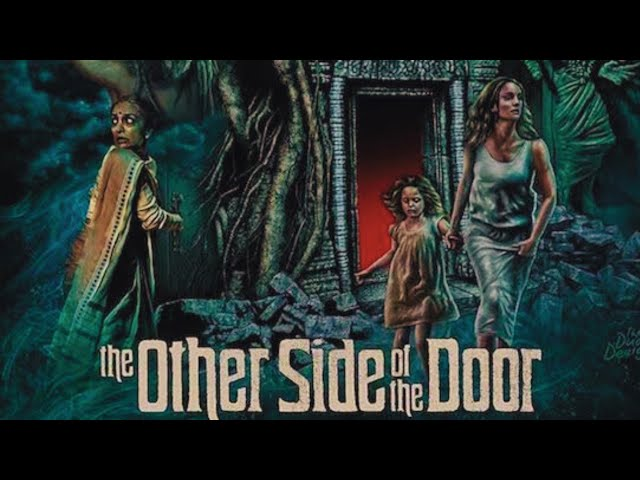
The Premise: A Ritual Gone Wrong The story centers on Maria (played by Sarah Wayne Callies), a woman living in India with her husband Michael and their daughter Lucy. The family is haunted by a recent car accident that claimed the life of their young son, Oliver. Maria, consumed by the “survivor’s guilt” of being unable to save both children, is spiraling into a deep depression. Her housekeeper, Piki, reveals a secret: there is an abandoned temple in a remote village where the line between the living and the dead is thin. If Maria spreads her son’s ashes and locks herself inside, she can speak to Oliver one last time. There is only one absolute rule: No matter what she hears, she must never open the door.
The Gothic Horror of the “Forbidden Door” The central “storyline” of the film is a classic Gothic trope—the forbidden room or the sealed door. This concept, popularized by stories like Bluebeard, serves as a perfect metaphor for the boundaries of nature. The genius of the film lies in Maria’s moment of weakness. When she hears her son’s voice pleading for help on the other side, her maternal instinct overrides her common sense. By opening the door, she doesn’t just invite her son back; she invites an ancient, malevolent force into the world of the living. This moment serves as the film’s “Noir” turning point, where a search for healing becomes a descent into chaos.
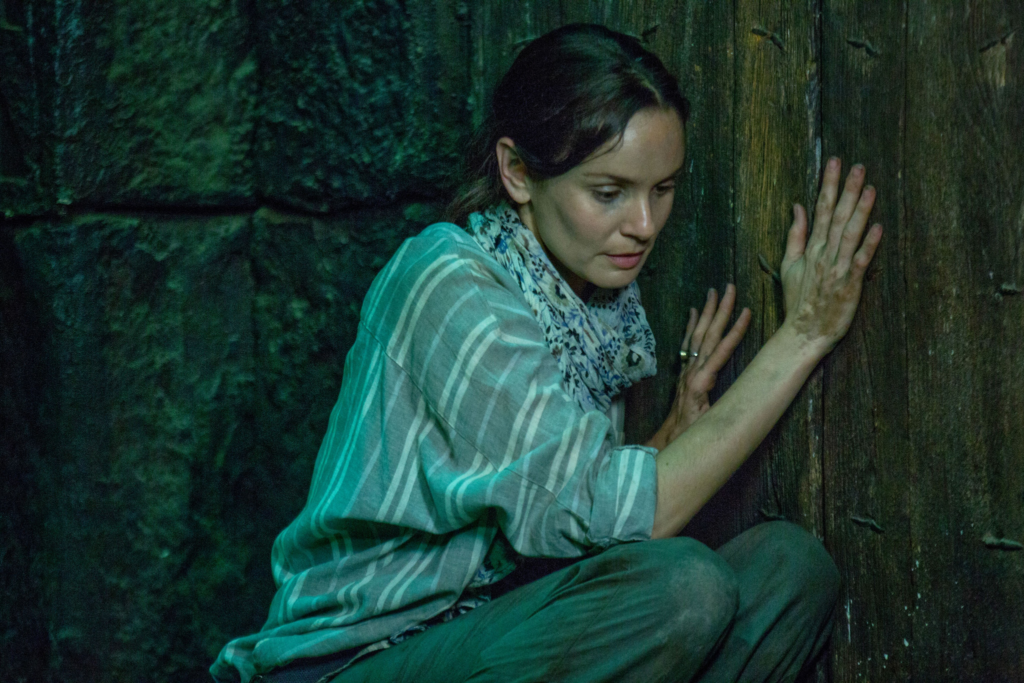
Sarah Wayne Callies: A Masterclass in Emotional Horror Best known for her roles in The Walking Dead and Prison Break, Sarah Wayne Callies delivers a powerhouse performance as Maria. She captures the frantic, bone-deep exhaustion of a grieving parent. Her transformation from a rational woman into someone willing to dabble in the occult is handled with a grounded realism. We feel her desperation, which makes her decision to open the door understandable, if not forgivable. Callies ensures that Maria remains a sympathetic protagonist, even as her actions put her remaining family in mortal peril.
The Cultural Backdrop: India as a Character One of the most striking aspects of The Other Side of the Door is its setting. By placing a Western family in the heart of Mumbai, the film utilizes the “stranger in a strange land” dynamic. The cinematography captures the duality of India—the crowded, colorful markets contrasted with the dusty, ancient, and shadowy temples. The inclusion of the “Aghori”—the ash-covered forest dwellers who guard the gates of the dead—adds a layer of authentic folk horror that is rarely seen in mainstream Hollywood productions. The setting isn’t just window dressing; it provides the mythological framework that makes the supernatural elements feel inevitable.
Myths and Monsters: The Myriad-Armed Guardian The film introduces a terrifying entity based on a distorted version of the goddess Myriad. This four-armed, skeletal guardian of the underworld represents the balance of life and death. The creature design is genuinely unsettling, relying on practical effects and jarring movements that feel ancient and predatory. Unlike many modern horror films that rely on CGI, The Other Side of the Door uses its monster sparingly, building tension through shadows and the sound of scratching on the other side of the door.
The Theme of “Poetic Justice” and Consequences At Storyline Movies, we often discuss how every action in a narrative must have a cost. This film is a brutal lesson in consequences. It suggests that grief is a natural cycle that cannot be cheated. Maria’s attempt to bypass the finality of death is seen as an act of cosmic hubris. The horror that unfolds is a form of “poetic justice” for disturbing the balance of the universe. The film’s final act is a relentless sequence of events that forces the characters—and the audience—to realize that some doors are meant to stay closed for a reason.
The Visual Style: Claustrophobia and Shadows Johannes Roberts utilizes lighting and sound to create a sense of encroaching darkness. As the malevolent force begins to take over Maria’s home, the house itself starts to feel like a tomb. The sound design is particularly effective, with the whispers of the dead echoing through the hallways, making the viewer feel as trapped as the characters. This claustrophobic atmosphere is the hallmark of a great psychological thriller, turning a family home into a battlefield for the soul.
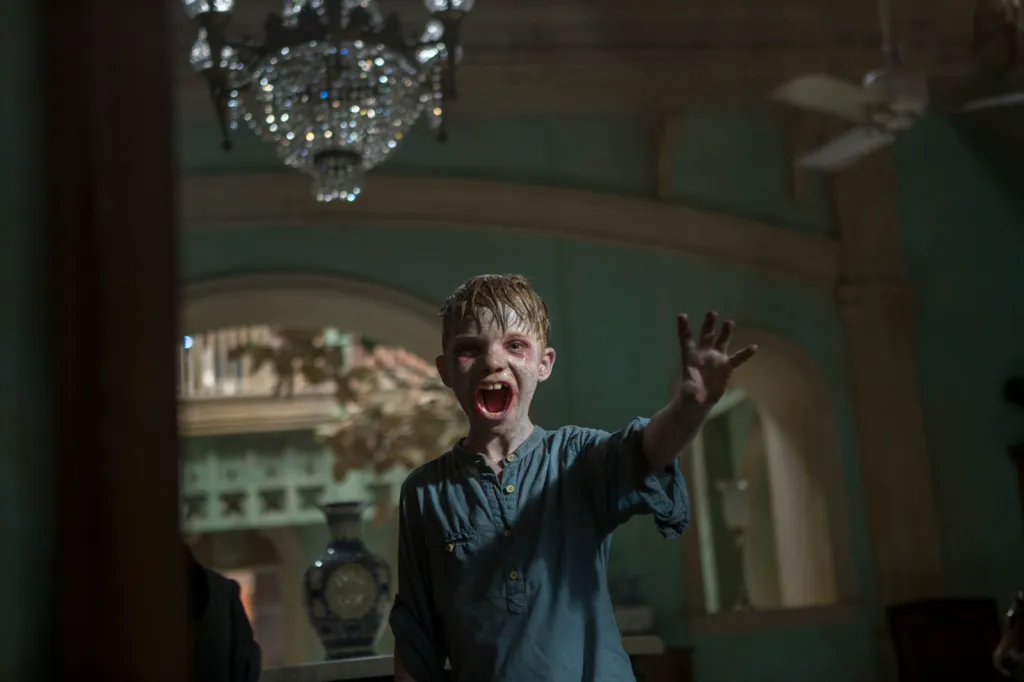
Conclusion: The Echoes of a Locked Door The Other Side of the Door (2016) is a haunting exploration of the darkest corners of the human heart. It is a film that reminds us that while love is eternal, the dead must be allowed to rest. It is a standout entry in the “Folk Horror” genre, elevated by its unique setting and a deeply emotional central performance. At Storyline Movies, we salute this film for its courage to end on a note of chilling ambiguity, leaving the audience to wonder: if you heard the voice of the one you lost, would you have the strength to keep the door locked?
For fans of atmospheric, culturally rich horror like ‘The Conjuring’ or ‘Hereditary’, this is a journey to the other side that you won’t soon forget. Just remember the rule: No matter what, don’t open the door.