Lou Fleming – The Strategic Heart and the Bridge Between Two Worlds

Introduction: The Architect of Survival In the sweeping, rustic world of the Heartland ranch, where the primary focus is often on the mystical connection between horses and humans, it is easy to overlook the cold, hard reality of survival. A ranch, no matter how beautiful, is a business, and businesses require a visionary. That visionary is Lou Fleming. When we first met Lou, she was a high-powered corporate executive in New York City, a woman of spreadsheets, skyscrapers, and high heels. Her return to her rural roots wasn’t just a change of scenery; it was a “Noir” struggle of identity and purpose. At the core of the series, Lou represents the bridge between the “Old World” and the modern era. In this 1000-word analysis, we explore the “genius” of Lou Fleming—the woman who provided the strategic backbone that allowed the ranch to thrive in a 21st-century landscape.
The Urban Catalyst in a Rural Haven Lou Fleming (played with brilliant complexity by Michelle Morgan) brought a different kind of “Noir” energy to the Hudson prairies. While her sister, Amy, possesses an intuitive, almost spiritual gift with horses, Lou possesses the gift of manifestation. She understands that in order to save the things we love, we must sometimes change the way we manage them. Lou’s decision to transform the struggling family ranch into the “Heartland Corporate Retreat” was a masterstroke of entrepreneurial “genius.” It was a “Storyline” that initially faced resistance from the traditionalist Jack Bartlett, but it ultimately proved to be the lifeblood of the property. Lou showed the world that a ranch doesn’t have to stay stuck in the past to honor its history. She introduced marketing, branding, and global outreach, proving that rural life can be sophisticated, profitable, and sustainable.

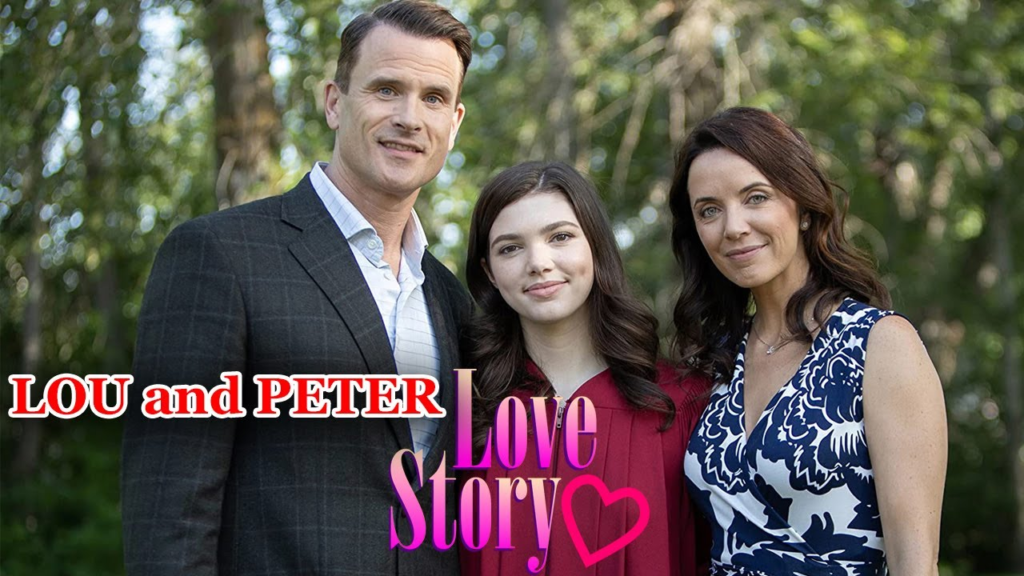
The Perfectionist’s Burden: A Study in Modern Resilience One of the most meaningful aspects of Lou’s journey is the relentless pressure she places upon herself. Lou is a classic overachiever, a woman who wants to be the “perfect” everything—the perfect sister, the perfect mother, the perfect business owner, and eventually, the perfect mayor. This “Storyline” explores the dark “Noir” side of perfectionism: the anxiety, the fear of failure, and the exhaustion of trying to “have it all.” Her struggles with her divorce from Peter Morris and the challenges of long-distance co-parenting are among the most realistic and heartbreaking arcs in the series. Lou doesn’t always handle things perfectly; she stumbles, she overthinks, and she occasionally collapses under the weight of her own expectations. This vulnerability is what makes her so deeply relatable to the audience. She isn’t a flawless hero; she is a real woman navigating the impossible demands of modern life.

The Emotional Anchor: Protecting the Fleming-Bartlett Legacy While Lou is often seen as the “business-minded” one, her motivations are purely emotional. Every strategic move she makes is rooted in a fierce, protective love for her family. She is the one who organizes the dinners, maintains the household, and keeps the family’s schedule running like clockwork. In many ways, Lou stepped into the matriarchal role left vacant by their mother, Marion. She took on the burden of being the “responsible one” so that Amy could focus on her gift. Her relationship with Amy is the emotional spine of the show—a mix of sisterly rivalry, protective instinct, and unconditional support. When the ranch is under threat, whether from financial ruin or external enemies, Lou is the first one in the trenches, fighting with her intellect and her indomitable will.

Leading with Heart: The Evolution into Public Service Lou’s transition from a private business owner to the Mayor of Hudson was a natural evolution of her character. It allowed the show to explore the “Spirit of the Law” through her eyes. Lou’s “genius” for organization and her deep-seated empathy for her community made her a formidable leader. Her political career provided a new “Storyline” that dealt with the ethics of power, the importance of community service, and the struggle to maintain one’s integrity in a political landscape. As Mayor, Lou became a champion for the town of Hudson, proving that her vision extended far beyond the fences of the ranch. She became a role model for women everywhere, showing that you can lead with both strength and compassion.
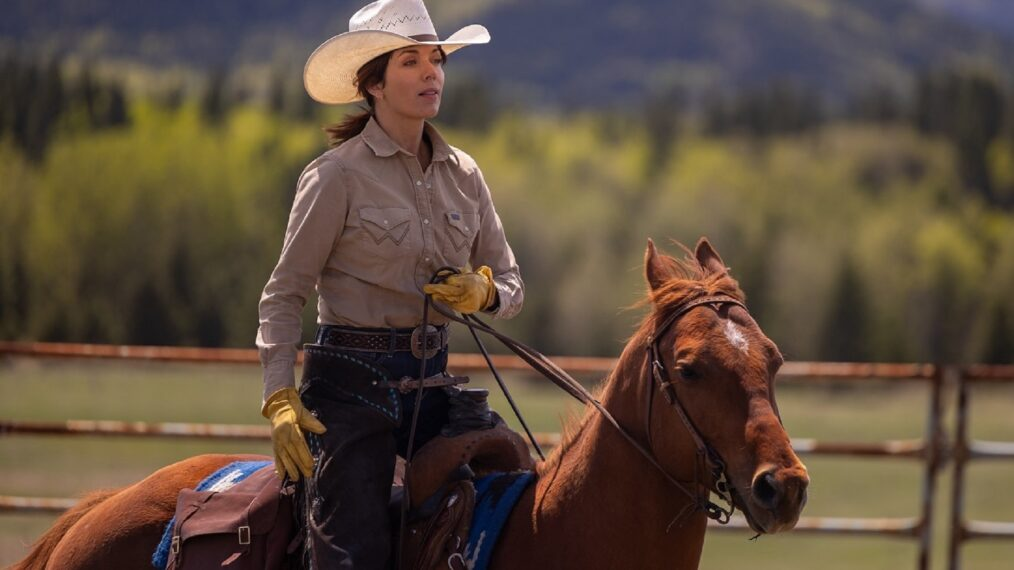
The “Storyline” of Growth: Finding Peace in the Chaos In the most recent seasons, we have seen a matured Lou Fleming—a woman who has learned that she cannot control everything. She has found a way to balance her ambition with a newfound appreciation for the quiet moments of life. Her journey is a reminder that success is not just about the numbers on a balance sheet, but about the quality of the connections we have with the people we love. Lou has finally found her “Heartland”—not as a place she had to fix, but as a place where she finally belongs. She has integrated her New York “genius” with her Alberta “soul,” creating a life that is uniquely her own.

Conclusion: The Unsung Heroine of the Prairie Lou Fleming is the unsung hero of the series because she is the one who keeps the lights on. She is the strategist, the organizer, and the protector. Without her, the ranch would have been a beautiful memory; with her, it is a living, breathing future. She reminds us that leadership requires courage, and that the hardest work is often the work that happens behind the scenes.

Lou Fleming is the proof that you can take the girl out of the city, but the girl’s brilliance will shine wherever she plants her roots. She is the brain, the brawn, and the beauty of the ranch.
  • Related Posts

    The Woman Behind Amy Fleming: Amber Marshall’s Real Life Is More Heartland Than the Show Itself

    There is a question that follows Amber Marshall wherever Heartland goes: how much of Amy Fleming is actually her? The honest answer, backed by nearly two decades of interviews, candid social media posts, and the quiet accumulation of choices she has made in her own life since 2007, is: more than almost any other actor-character parallel in television history. Marshall did not just play a horse-healing cowgirl on a Canadian ranch drama. She became one. And the story of how that happened — from a ten-year-old circling real estate listings in Ontario to a woman who now works with her own horse on the same set where her character lives — is as compelling as anything the show’s writers have ever put on screen.

    The Girl Who Always Knew

    Amber Marshall was born and raised in London, Ontario, far from the Alberta foothills that would eventually define her adult life. But the connection to animals and rural life started early — unusually early. She began riding at the age of three and spent much of her childhood around horses, starting with English riding before the Western lifestyle found her later. By the time she was ten years old, she was already circling ranch property listings in real estate magazines, not as a fantasy, but as a genuine, specific plan for the kind of life she intended to have one day.

    Acting was always part of the picture too, running alongside her love of animals rather than competing with it. But the two threads of her life — performance and horses — did not fully converge until a single audition tape changed everything.

    The Audition She Almost Missed

    By the time the Heartland casting call came around in 2007, Marshall was worn down. The cost and frustration of auditioning had started to accumulate, and she had begun quietly questioning whether the whole pursuit was worth continuing. Then her agent told her about a role that seemed, on paper, almost written for her specifically: a young woman with a gift for healing horses, living on her family’s Alberta ranch.

    There was a problem. She was away working on another project and could not make the regular audition. So she taped something herself and sent it in — old-school, awkward, slow to load. The producers saw enough almost immediately. The role of Amy Fleming was hers.

    What she could not have known at the time was that saying yes to that audition tape meant saying yes to an entirely different version of her life. Heartland brought her west, and Alberta, she has said, felt right almost immediately — like a place that had been waiting for her. “If it wasn’t for the show bringing me out here,” she has told interviewers, “I don’t know that I would have just thought, ‘I’m going to move out west.'” She has lived there ever since.

    When Her Own Horse Became the Show’s Most Famous Horse

    Of all the ways Marshall’s real life has woven into Heartland‘s fiction, none is more striking than what happened to Spartan — Amy Fleming’s iconic horse, arguably the show’s most beloved non-human character.

    The original Spartan was a black gelding named Stormy, who joined the set at just four years old, unusually young for a television horse. “Usually, we don’t have any horses that are younger than 10,” Marshall has shared, “but Stormy just had this calm, gentle soul. He loved the limelight.” Stormy played Spartan for more than a decade, appearing in nearly every major storyline involving Amy and her trusted partner.

    But as the years passed, Stormy developed arthritis. His joints were sore, his temperament was shifting, and Marshall recognized what she was seeing. “He was sore… and starting to get grumpy. I said, ‘This isn’t right for him.'” Rather than push a horse past his limits for the sake of continuity, she did something that felt natural to her and quietly radical for a television production: she suggested a new storyline to account for a new Spartan — and proposed her own horse, Hawk, as the replacement.

    The producers agreed. Hawk stepped into the role. Today, Marshall works with her own horse every single day on the same set where she has spent nearly twenty years of her professional life. “Now I get to work with my own horse every day,” she has said, calling the experience both meaningful and full-circle. Stormy, meanwhile, is retired and living comfortably with one of the show’s original wranglers, alongside two other former Heartland horses. “They’re the three old guys now,” Marshall has said. “Stormy’s pampered and happy, and it makes me happy knowing he’s living his best life.”

    The Ranch, the Store, and the Life She Built

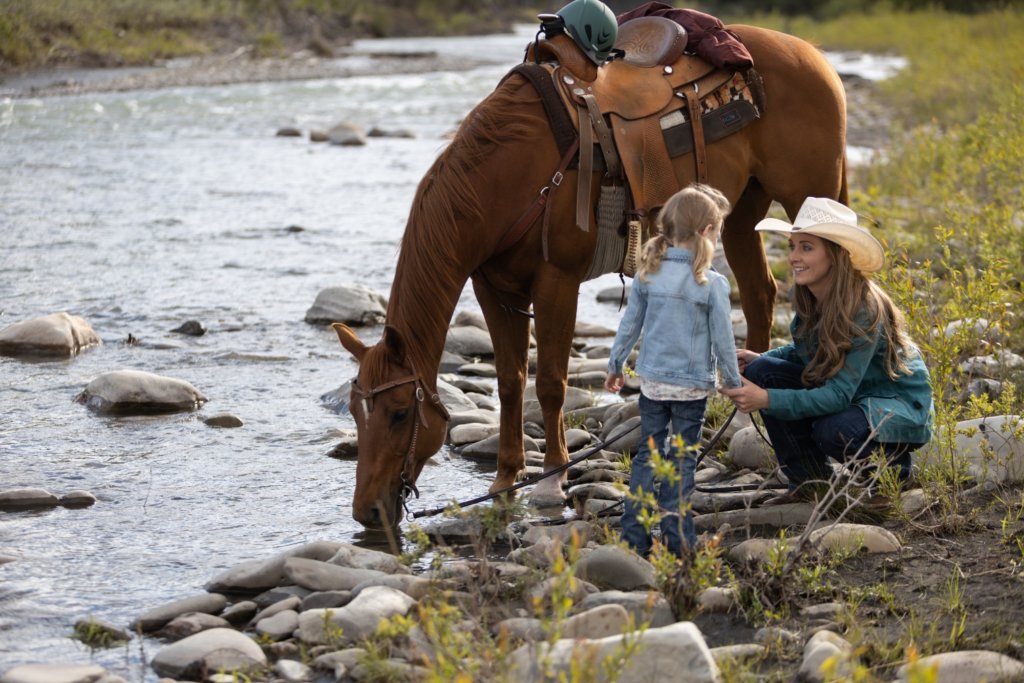
    Off camera, Marshall’s daily life in Alberta looks less like a celebrity’s schedule and more like a working rancher’s. Her farm sits in the rolling countryside outside Calgary, where her off-season mornings involve checking calves, mucking stalls, and moving between dogs, cats, cows, chickens, ducks, and the occasional peacock. “People ask if I’m getting tired of Heartland,” she has said. “I won’t be done until they tell me I’m done. I love it — the people, the horses, the fact that I get to film in my own backyard and sleep in my own bed every night. I’m such a homebody.”

    That rootedness extended into a business venture that surprised some fans but surprised nobody who had been paying attention. Marshall opened Marshall’s Country Store in Diamond Valley, Alberta — a shop selling her own Amber Marshall apparel line alongside Western wear, accessories, and home décor, much of it crafted by local artisans who share her affinity for country living. The store has become a destination in its own right for fans visiting the area, adding another layer to the real-world geography that the show has built around itself over nineteen years.

    Her relationship with animals extends beyond horses and livestock. During quieter periods, she has volunteered at local veterinary clinics and humane societies, an extension of the same philosophy that defines Amy Fleming’s work on screen: pay attention, stay calm, be consistent, and actually listen. “Animals aren’t fooled by appearances,” she has said. “They react to what you bring around them.”

    The Blurred Line That Makes the Show Work

    Ask Marshall why Heartland has lasted nineteen seasons — twenty come fall 2026 — and she gives an answer that is not about writing rooms or network strategy. “Horses and cowgirls,” she says. “There’s something about the Western lifestyle. That connection between humans and horses that people just feel. Even if you’ve never been near a horse, there’s a respect there. I think that’s what keeps people watching.” And then, more specifically: “I believe horses have a lot to do with the longevity of Heartland. You can feel their power even through a screen.”

    What makes that statement interesting is that it comes from a woman who has never had to fake that feeling. The show’s authenticity — the thing critics and fans most consistently point to when explaining why a Canadian family drama about a horse ranch has run for nearly two decades and generated close to 700 million hours of global Netflix viewing — is inseparable from the fact that its lead actress genuinely lives the life she portrays. She did not adopt a character. She grew into one that was already there.

    As Season 20 begins filming in Alberta this summer, Marshall will be doing what she has done every summer since 2007: working with horses, sleeping in her own bed, and bringing a version of herself to a role that has never required her to pretend.

    For a show that has always been about the quiet power of living close to the land, there may be no better foundation than that.

    HEARTLAND’S GREATEST LEGACY: AMY & TY – THE ALPHA MASTERPIECE OF AUTHENTIC LOVE

    Chapter 1: The Definition of Authenticity – A Noir Light in Modern Television The “genius” of Heartland lies in its “meaningful” ability to deliver what millions crave: pure, unforced realism. This chapter explores how Amy and Ty’s bond became the most authentic love story on television. In 2026, where the media landscape is often filled with shallow, “Noir” drama, their “Storyline” stands as an “Alpha” “Masterpiece” of emotional truth, proving that genuine connection is the ultimate “Spirit of the Law” of romance.

    Chapter 2: Growing Up Together – The “Alpha” Journey from Teens to Maturity For nearly two decades, fans have watched Amy and Ty grow up together—not just as characters, but as real people. This section analyzes the “genius” of their “meaningful” transformation. From young, uncertain teenagers dealing with “Noir” family struggles to mature adults navigating life, love, and loss, their “Alpha” resilience has shone through every scene, making their “Storyline” a true “Masterpiece” of shared growth.

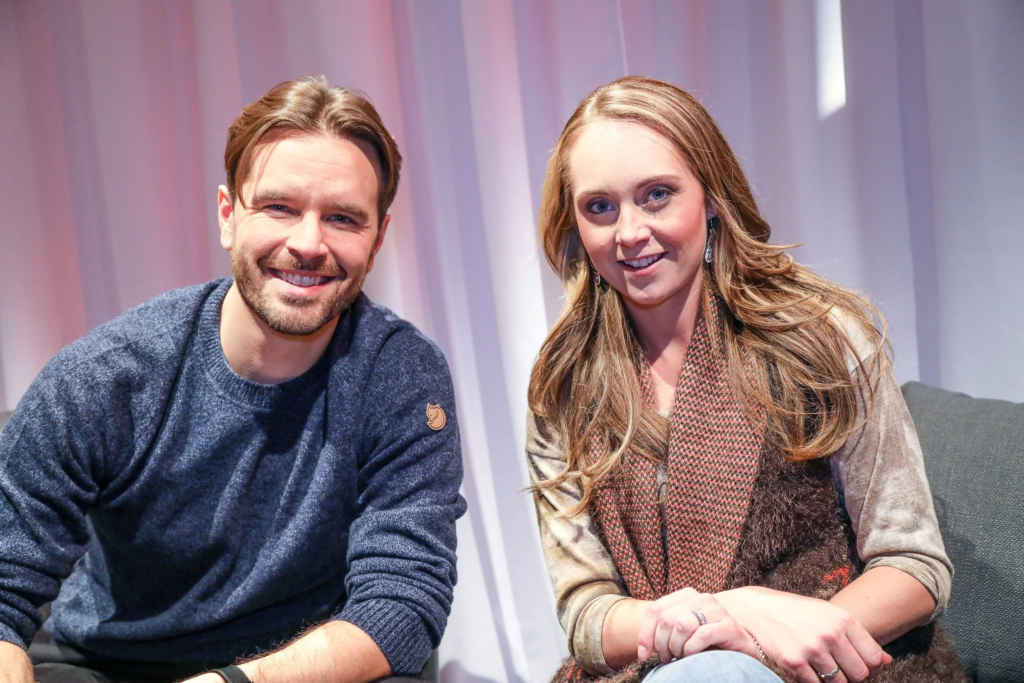
    Chapter 3: Amber & Graham – The Real-Life Trust Behind the Screen Their on-screen romance feels so real because it’s built on years of real-life trust, laughter, and mutual respect. This chapter dives into the “meaningful” “Spirit of the Law” of Amber Marshall and Graham Wardle’s genuine friendship. This rare “Alpha” chemistry is a technical and emotional “Masterpiece,” showing that a “Noir” camera can never fake the deep, “meaningful” bond forged by two actors over decades of dedication.

    Chapter 4: Navigating Loss – The Noir Shadow That Tested the Flame True love is not without its “Noir” challenges. This section examines how the “Storyline” handled the ultimate test of separation and grief. Ty’s presence, even in his absence, remained a “meaningful” “Alpha” anchor for Amy. The way their love story adapted to tragedy is a “Masterpiece” of “Noir” storytelling, proving that a deep “Spirit of the Law” of connection continues to feel fresh, deep, and incredibly moving even in 2026.

    Chapter 5: A Love Story That Grew Up with Us – The Universal Alpha Impact This is more than just a TV couple—it’s a love story that grew up with us. This chapter analyzes the “meaningful” relationship between the show and its global fan base. In 2026, fans look back at Amy and Ty’s “Storyline” as a mirror to their own lives. Their “Alpha” stability provided a “Masterpiece” of comfort, establishing a “Spirit of the Law” of hope that has touched generations of viewers around the world.

    Chapter 6: Conclusion – The Immortal Law of True Connection Ultimately, the “genius” of Amy and Ty’s legacy is that it transcends the limits of fiction. As we celebrate their path in 2026, their “Alpha” love story remains an unbroken “Masterpiece.” It serves as a “meaningful” reminder that in a “Noir” world of temporary trends, the “Spirit of the Law” of authentic affection, trust, and shared history is the only thing that truly lasts forever.