Lolita (1997): A Haunting Symphony of Obsession and Moral Decay

Introduction: The Unfilmable Masterpiece When Vladimir Nabokov’s Lolita was first published, it was labeled “scandalous” and “unprintable.” To bring such a story to the silver screen requires a delicate balance of artistic vision and narrative restraint. While Stanley Kubrick’s 1962 version relied on coded satire due to censorship, Adrian Lyne’s 1997 adaptation chose a more visceral, atmospheric path. Starring Jeremy Irons and Dominique Swain, Lolita (1997) is a lush, poetic, yet deeply disturbing journey into the mind of a predator. At Storyline Movies, we are stripping away the controversy to examine the film as a piece of “Noir” art—a story that explores the tragic collision of obsession and innocence.
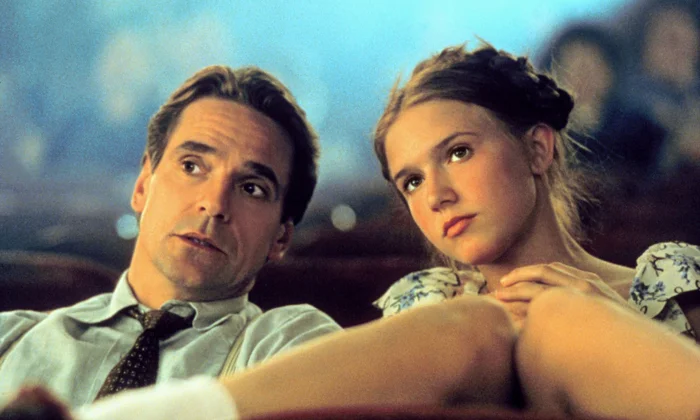
The Premise: The Road to Perdition The “storyline” follows Humbert Humbert (Jeremy Irons), a refined European professor with a dark, psychological fixation on what he calls “nymphets.” Seeking refuge in a small American town, he meets Dolores Haze (Dominique Swain), a 12-year-old girl whom he instantly identifies as his “Lolita.” To stay near her, Humbert enters into a loveless marriage with her mother, Charlotte (Melanie Griffith). When Charlotte meets a sudden end, Humbert embarks on a cross-country odyssey with Dolores, hidden behind a thin veil of “fatherhood.” It is a road movie where the destination is moral annihilation.

Jeremy Irons: The Eloquent Monster The “genius” of the 1997 version lies in Jeremy Irons’ haunting performance. Unlike a cartoonish villain, Irons portrays Humbert as a man of intellect and shattered elegance. His voice-over narration—taken directly from Nabokov’s prose—is seductive and manipulative, forcing the audience to see the world through his biased lens. Irons makes Humbert a “Noir” protagonist in the truest sense: a man who is fully aware of his depravity but is powerless against his own obsessions. It is a performance that is both captivating and repulsive, creating a profound sense of “internal horror.”

Dominique Swain: The Lost Innocence Dominique Swain, in her debut role, brings a raw and complex energy to Dolores. Unlike the 1962 version where the character seemed more mature, Swain’s “Lolita” is clearly a child playing at being an adult. Her performance highlights the tragedy of the story—she is a girl robbed of her childhood, oscillating between playful curiosity and a deep, intuitive fear of the man who has claimed her. The film brilliantly portrays her not as a “temptress,” but as a victim of Humbert’s projection, a child caught in a nightmare she cannot yet fully name.
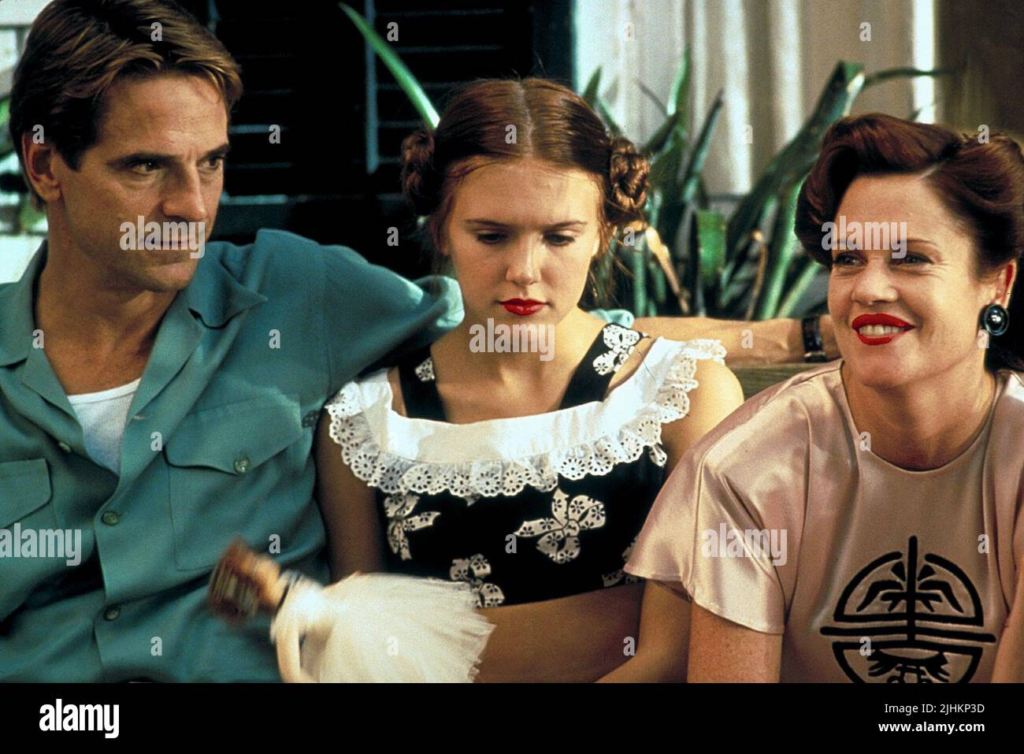
The Aesthetic of Obsession: Adrian Lyne’s Visual Style Director Adrian Lyne, known for Fatal Attraction and Unfaithful, uses his signature visual style to create a dreamlike, almost suffocating atmosphere. The cinematography is heavy with amber tones, shadows, and the dust of late summer afternoons. This “sun-drenched Noir” aesthetic makes the illicit nature of the relationship feel even more suffocating. The film doesn’t rely on graphic content to disturb; instead, it uses the lingering gaze of the camera and the haunting score by Ennio Morricone to build a sense of impending doom.

Nabokov’s Prose vs. Lyne’s Vision The 1997 film is arguably more faithful to the spirit of the novel than the 1962 version. It captures the “lyrical tragedy” that Nabokov intended—the idea that Humbert’s great “love” is actually a destructive, self-serving delusion. At Storyline Movies, we analyze how the film handles the “unreliable narrator” trope. By visualizing Humbert’s thoughts, Lyne shows the discrepancy between the “beauty” Humbert perceives and the “horror” he is actually enacting. It is a masterclass in subjective storytelling.

The Mystery of Quilty: The Double in the Shadows A crucial element of the “Storyline” is the presence of Clare Quilty (Frank Langella). Quilty acts as Humbert’s dark reflection—a man even more depraved and elusive. The cat-and-mouse game between Humbert and Quilty adds a layer of psychological suspense to the film, turning the second half into a “Noir” thriller. Langella’s performance provides a chilling counterpoint to Irons’ desperation, leading to a climax that is as surreal as it is violent.

The Cultural Controversy: Art or Exploitation? Even in 1997, the film struggled to find a distributor in the United States. The debate remains: can a film about such a taboo subject be considered art? At Storyline Movies, we believe the value of Lolita lies in its ability to force the audience to confront uncomfortable truths about human nature and the power of language to disguise cruelty. It is a film that demands a mature audience capable of discerning the difference between a depiction of a crime and the glorification

of it.

Conclusion: A Monument to Taboo and Tragedy Lolita (1997) is a difficult, beautiful, and profoundly tragic piece of cinema. It is a symphony of obsession that refuses to provide easy answers or a moralizing conclusion. Through the powerhouse performances of Irons and Swain, the film captures the essence of Nabokov’s warning: that the most dangerous monsters are often the ones who speak with the most beautiful words.

For those who appreciate cinema that pushes boundaries and explores the darkest corners of the psyche, ‘Lolita’ is an essential, albeit unsettling, experience. It remains a haunting reminder of the fragility of innocence and the destructive power of a heart lost to obsession.
  • Related Posts

    The Woman Behind Amy Fleming: Amber Marshall’s Real Life Is More Heartland Than the Show Itself

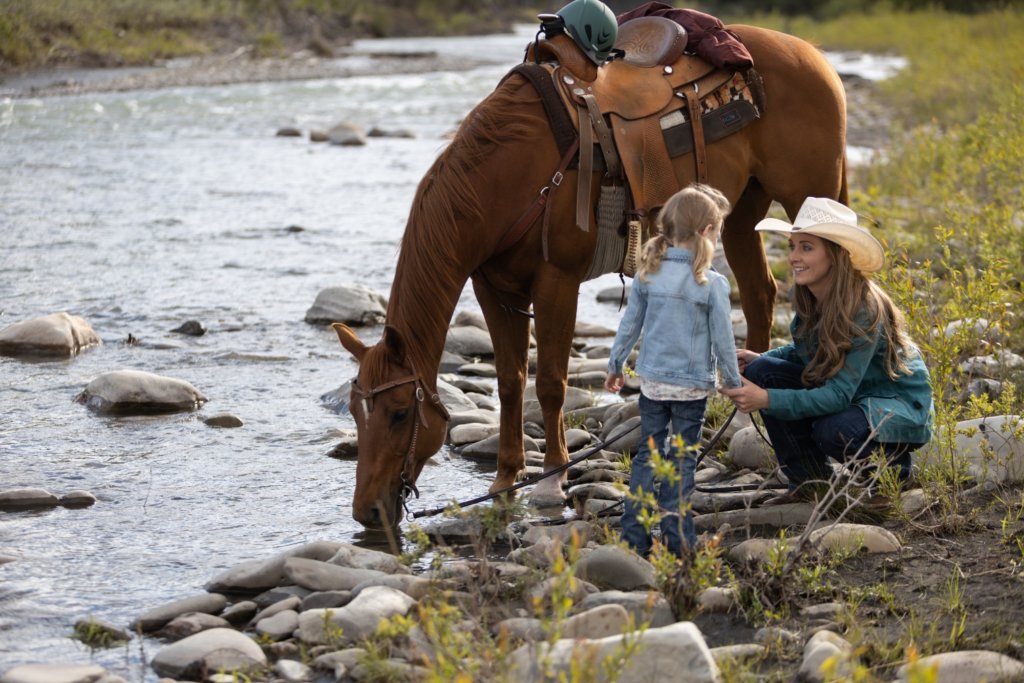
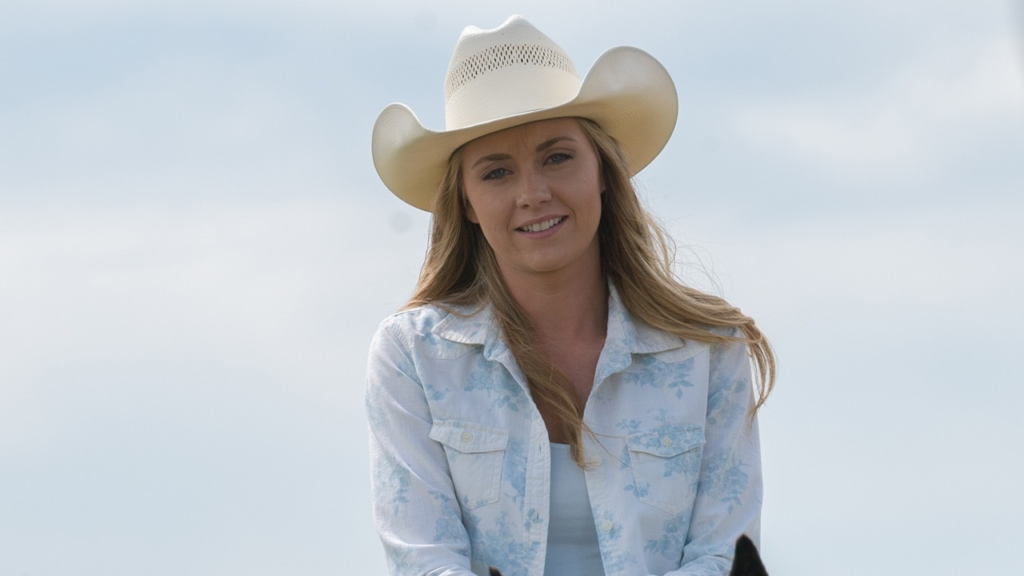
    There is a question that follows Amber Marshall wherever Heartland goes: how much of Amy Fleming is actually her? The honest answer, backed by nearly two decades of interviews, candid social media posts, and the quiet accumulation of choices she has made in her own life since 2007, is: more than almost any other actor-character parallel in television history. Marshall did not just play a horse-healing cowgirl on a Canadian ranch drama. She became one. And the story of how that happened — from a ten-year-old circling real estate listings in Ontario to a woman who now works with her own horse on the same set where her character lives — is as compelling as anything the show’s writers have ever put on screen.

    The Girl Who Always Knew

    Amber Marshall was born and raised in London, Ontario, far from the Alberta foothills that would eventually define her adult life. But the connection to animals and rural life started early — unusually early. She began riding at the age of three and spent much of her childhood around horses, starting with English riding before the Western lifestyle found her later. By the time she was ten years old, she was already circling ranch property listings in real estate magazines, not as a fantasy, but as a genuine, specific plan for the kind of life she intended to have one day.

    Acting was always part of the picture too, running alongside her love of animals rather than competing with it. But the two threads of her life — performance and horses — did not fully converge until a single audition tape changed everything.

    The Audition She Almost Missed

    By the time the Heartland casting call came around in 2007, Marshall was worn down. The cost and frustration of auditioning had started to accumulate, and she had begun quietly questioning whether the whole pursuit was worth continuing. Then her agent told her about a role that seemed, on paper, almost written for her specifically: a young woman with a gift for healing horses, living on her family’s Alberta ranch.

    There was a problem. She was away working on another project and could not make the regular audition. So she taped something herself and sent it in — old-school, awkward, slow to load. The producers saw enough almost immediately. The role of Amy Fleming was hers.

    What she could not have known at the time was that saying yes to that audition tape meant saying yes to an entirely different version of her life. Heartland brought her west, and Alberta, she has said, felt right almost immediately — like a place that had been waiting for her. “If it wasn’t for the show bringing me out here,” she has told interviewers, “I don’t know that I would have just thought, ‘I’m going to move out west.'” She has lived there ever since.

    When Her Own Horse Became the Show’s Most Famous Horse

    Of all the ways Marshall’s real life has woven into Heartland‘s fiction, none is more striking than what happened to Spartan — Amy Fleming’s iconic horse, arguably the show’s most beloved non-human character.

    The original Spartan was a black gelding named Stormy, who joined the set at just four years old, unusually young for a television horse. “Usually, we don’t have any horses that are younger than 10,” Marshall has shared, “but Stormy just had this calm, gentle soul. He loved the limelight.” Stormy played Spartan for more than a decade, appearing in nearly every major storyline involving Amy and her trusted partner.

    But as the years passed, Stormy developed arthritis. His joints were sore, his temperament was shifting, and Marshall recognized what she was seeing. “He was sore… and starting to get grumpy. I said, ‘This isn’t right for him.'” Rather than push a horse past his limits for the sake of continuity, she did something that felt natural to her and quietly radical for a television production: she suggested a new storyline to account for a new Spartan — and proposed her own horse, Hawk, as the replacement.

    The producers agreed. Hawk stepped into the role. Today, Marshall works with her own horse every single day on the same set where she has spent nearly twenty years of her professional life. “Now I get to work with my own horse every day,” she has said, calling the experience both meaningful and full-circle. Stormy, meanwhile, is retired and living comfortably with one of the show’s original wranglers, alongside two other former Heartland horses. “They’re the three old guys now,” Marshall has said. “Stormy’s pampered and happy, and it makes me happy knowing he’s living his best life.”

    The Ranch, the Store, and the Life She Built

    Off camera, Marshall’s daily life in Alberta looks less like a celebrity’s schedule and more like a working rancher’s. Her farm sits in the rolling countryside outside Calgary, where her off-season mornings involve checking calves, mucking stalls, and moving between dogs, cats, cows, chickens, ducks, and the occasional peacock. “People ask if I’m getting tired of Heartland,” she has said. “I won’t be done until they tell me I’m done. I love it — the people, the horses, the fact that I get to film in my own backyard and sleep in my own bed every night. I’m such a homebody.”

    That rootedness extended into a business venture that surprised some fans but surprised nobody who had been paying attention. Marshall opened Marshall’s Country Store in Diamond Valley, Alberta — a shop selling her own Amber Marshall apparel line alongside Western wear, accessories, and home décor, much of it crafted by local artisans who share her affinity for country living. The store has become a destination in its own right for fans visiting the area, adding another layer to the real-world geography that the show has built around itself over nineteen years.

    Her relationship with animals extends beyond horses and livestock. During quieter periods, she has volunteered at local veterinary clinics and humane societies, an extension of the same philosophy that defines Amy Fleming’s work on screen: pay attention, stay calm, be consistent, and actually listen. “Animals aren’t fooled by appearances,” she has said. “They react to what you bring around them.”

    The Blurred Line That Makes the Show Work

    Ask Marshall why Heartland has lasted nineteen seasons — twenty come fall 2026 — and she gives an answer that is not about writing rooms or network strategy. “Horses and cowgirls,” she says. “There’s something about the Western lifestyle. That connection between humans and horses that people just feel. Even if you’ve never been near a horse, there’s a respect there. I think that’s what keeps people watching.” And then, more specifically: “I believe horses have a lot to do with the longevity of Heartland. You can feel their power even through a screen.”

    What makes that statement interesting is that it comes from a woman who has never had to fake that feeling. The show’s authenticity — the thing critics and fans most consistently point to when explaining why a Canadian family drama about a horse ranch has run for nearly two decades and generated close to 700 million hours of global Netflix viewing — is inseparable from the fact that its lead actress genuinely lives the life she portrays. She did not adopt a character. She grew into one that was already there.

    As Season 20 begins filming in Alberta this summer, Marshall will be doing what she has done every summer since 2007: working with horses, sleeping in her own bed, and bringing a version of herself to a role that has never required her to pretend.

    For a show that has always been about the quiet power of living close to the land, there may be no better foundation than that.

    HEARTLAND’S GREATEST LEGACY: AMY & TY – THE ALPHA MASTERPIECE OF AUTHENTIC LOVE

    Chapter 1: The Definition of Authenticity – A Noir Light in Modern Television The “genius” of Heartland lies in its “meaningful” ability to deliver what millions crave: pure, unforced realism. This chapter explores how Amy and Ty’s bond became the most authentic love story on television. In 2026, where the media landscape is often filled with shallow, “Noir” drama, their “Storyline” stands as an “Alpha” “Masterpiece” of emotional truth, proving that genuine connection is the ultimate “Spirit of the Law” of romance.

    Chapter 2: Growing Up Together – The “Alpha” Journey from Teens to Maturity For nearly two decades, fans have watched Amy and Ty grow up together—not just as characters, but as real people. This section analyzes the “genius” of their “meaningful” transformation. From young, uncertain teenagers dealing with “Noir” family struggles to mature adults navigating life, love, and loss, their “Alpha” resilience has shone through every scene, making their “Storyline” a true “Masterpiece” of shared growth.

    Chapter 3: Amber & Graham – The Real-Life Trust Behind the Screen Their on-screen romance feels so real because it’s built on years of real-life trust, laughter, and mutual respect. This chapter dives into the “meaningful” “Spirit of the Law” of Amber Marshall and Graham Wardle’s genuine friendship. This rare “Alpha” chemistry is a technical and emotional “Masterpiece,” showing that a “Noir” camera can never fake the deep, “meaningful” bond forged by two actors over decades of dedication.

    Chapter 4: Navigating Loss – The Noir Shadow That Tested the Flame True love is not without its “Noir” challenges. This section examines how the “Storyline” handled the ultimate test of separation and grief. Ty’s presence, even in his absence, remained a “meaningful” “Alpha” anchor for Amy. The way their love story adapted to tragedy is a “Masterpiece” of “Noir” storytelling, proving that a deep “Spirit of the Law” of connection continues to feel fresh, deep, and incredibly moving even in 2026.

    Chapter 5: A Love Story That Grew Up with Us – The Universal Alpha Impact This is more than just a TV couple—it’s a love story that grew up with us. This chapter analyzes the “meaningful” relationship between the show and its global fan base. In 2026, fans look back at Amy and Ty’s “Storyline” as a mirror to their own lives. Their “Alpha” stability provided a “Masterpiece” of comfort, establishing a “Spirit of the Law” of hope that has touched generations of viewers around the world.

    Chapter 6: Conclusion – The Immortal Law of True Connection Ultimately, the “genius” of Amy and Ty’s legacy is that it transcends the limits of fiction. As we celebrate their path in 2026, their “Alpha” love story remains an unbroken “Masterpiece.” It serves as a “meaningful” reminder that in a “Noir” world of temporary trends, the “Spirit of the Law” of authentic affection, trust, and shared history is the only thing that truly lasts forever.