

 Televison New
Introduction: A Walk That Shook the Foundations of a City In the history of social justice, some battles are fought with grand speeches and loud protests, while others are won through the simple, grueling act of walking. The Long Walk Home (1990), directed by Richard Pearce, is a cinematic masterpiece that captures the 1955 Montgomery Bus Boycott through a uniquely intimate and “Noir” lens. Starring the incomparable Sissy Spacek and Whoopi Goldberg, this film isn’t just a historical drama; it is a profound exploration of the intersection between two worlds—one of white privilege and one of Black resilience. At Storyline Movies, we are deconstructing the “genius” of this narrative, showing how a domestic “Storyline” became a powerful symbol of universal human rights.
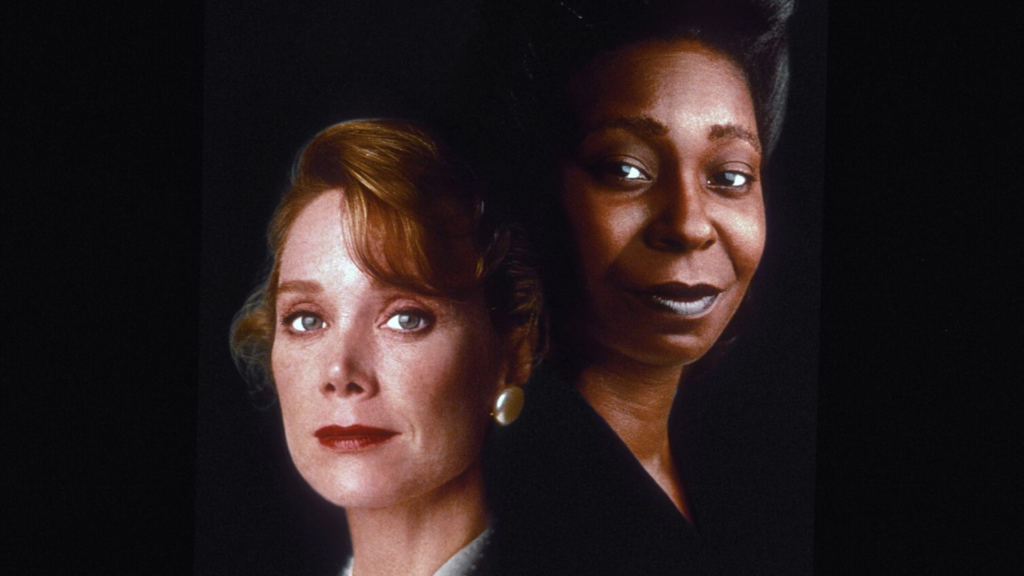
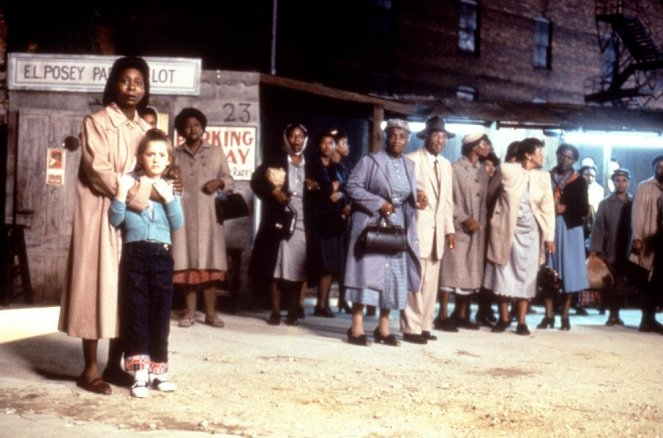
The Premise: Two Women, Two Worlds, One Struggle The story is set in Montgomery, Alabama, during the height of racial segregation. Miriam Thompson (Sissy Spacek) is a wealthy white socialite living a sheltered life of comfort, while Odessa Cotter (Whoopi Goldberg) is her quiet, dignified maid who travels hours every day to serve the Thompson family. When the Black community begins a boycott of the city’s segregated bus system following Rosa Parks’ arrest, Odessa is forced to walk miles in the sweltering heat to get to work. The “genius” of the script lies in its focus on the “small” moments—the swollen feet, the dusty shoes, and the silence that speaks louder than words.
Miriam Thompson: The Awakening of a Conscience Sissy Spacek delivers a “Noir” performance of quiet intensity as Miriam. Initially, Miriam is not a revolutionary; she is a woman of her time, oblivious to the systemic cruelty surrounding her. However, as she witnesses Odessa’s quiet suffering and unwavering resolve, Miriam’s “Storyline” takes a transformative turn. She begins to offer Odessa rides, an act of kindness that is viewed as a radical betrayal by her husband and her community. Miriam’s journey is a masterclass in moral evolution, illustrating the difficult process of unlearning privilege and standing up for what is right, even when it costs you everything.
Odessa Cotter: The Dignity of Silence Whoopi Goldberg provides a performance of incredible restraint and power. As Odessa, she carries the weight of a movement on her shoulders without ever raising her voice. Her “genius” is in her stoicism. She isn’t just a maid; she is the moral anchor of the film. Through her, The Long Walk Home explores the concept of “The Long Walk”—a metaphor for the endurance required to achieve freedom. Every step she takes is a quiet rebellion against a system designed to keep her down. The film honors the millions of “ordinary” women like Odessa who were the true backbone of the Civil Rights Movement.
The Aesthetic: The Heat and the Dust of Injustice Visually, the film utilizes a warm, saturated color palette that makes the audience feel the oppressive Alabama heat. The cinematography creates a “Noir” atmosphere of tension, particularly in the scenes where white mobs threaten the boycotters. The contrast between the lush, air-conditioned world of the Thompson estate and the dusty, sun-drenched roads where Odessa walks serves as a constant visual reminder of the divide. At Storyline Movies, we appreciate how the camera lingers on the faces of the boycotters—showing their exhaustion, their pain, and their unyielding pride.
The Domestic Noir: A Battle in the Backyard While the boycott happens in the streets, the true conflict of the film often takes place within the Thompson household. The tension between Miriam and her husband, Norman, represents the fracture within the white community. The film portrays the “Noir” side of suburban life—the social ostracization, the threats of violence, and the domestic pressure to remain silent. It shows that for Miriam, the “Long Walk Home” was a psychological journey toward independence from a patriarchal and racist society.
The “Storyline Movies” Perspective: Why This Story Matters Today At Storyline Movies, we believe that The Long Walk Home is more relevant now than ever. It teaches us that change often begins with a single person making a choice to see the humanity in another. It’s not just a movie about the past; it’s a lesson in empathy and solidarity. By centering the story on the relationship between two women, the film humanizes a massive historical event, making it accessible and deeply moving for a modern audience. It reminds us that the road to justice is long, but it is a journey we must take together.
Conclusion: A Journey That Never Ends The Long Walk Home (1990) is a timeless piece of cinema. It is a story of courage, friendship, and the quiet power of the human spirit. Through the lens of two legendary actresses, it captures a moment in time that changed the world forever.
For our followers who appreciate cinema with a heart and a message, ‘The Long Walk Home’ is an essential experience. It’s time to take the first step. Are you ready to walk?