

Televison New
- Newsbeat , Newness
- Tháng 6 22, 2026
- 98 views
Nathan and Gracie Pryce: How One Sibling Tried to Save Heartland While the Other Tried to Destroy It
The Pryce family arrived in Heartland as business rivals. They stayed as something far more complicated. Across Seasons 18 and 19, Nathan and Gracie Pryce tested the Bartlett-Fleming family in ways that went beyond the standard competitor-threatens-ranch storyline — Nathan by falling in love with the ranch’s most important person, and Gracie by waging a quiet, calculated war against everything the ranch represents. By the time Season 19’s finale aired in December 2025, the Pryce siblings had pulled off something rare in long-running family dramas: they genuinely changed the show’s emotional center of gravity, in opposite directions, at the same time. Understanding exactly what they did — and what Nathan’s presence means heading into Season 20 — is essential context for anyone watching Heartland right now.
The Pryce Ranch: A Rival Built From Real History
Nathan Pryce Jr. was not introduced as a villain. He is the son of Nathan Pryce Senior, an owner of one of the ranches adjacent to Heartland, and the same age range as Lou, having helped her once in high school. When he returned to Hudson to help manage his father’s deteriorating health — his father had been diagnosed with Alzheimer’s and was forgetting things — the show was careful to establish him as someone carrying the weight of a complicated family legacy rather than someone choosing conflict for its own sake.
The business rivalry came later, and it came fast. When Crowne Shoppes decided to drop Heartland Beef to sell primarily Pryce Beef, Heartland went to war with Pryce Ranch. The escalation was swift and personal — this caused some tension between Nathan and Amy, especially when he trusted Amy with the reality of his father’s diagnosis, and Amy told Lou, who spilled the news to the owner of Crowne Shoppes, which in effect caused Crowne Shoppes to drop Pryce Beef.
That early sequence established something important about Nathan that the show returned to throughout Season 19: he is a man whose instinct is to trust, even when trust costs him something significant. The Crowne Shoppes incident could have ended his relationship with Amy before it began. Instead it became the first real test of whether the connection between them was worth the business complications around it.
Gracie’s Arrival: When a Protector Becomes a Threat
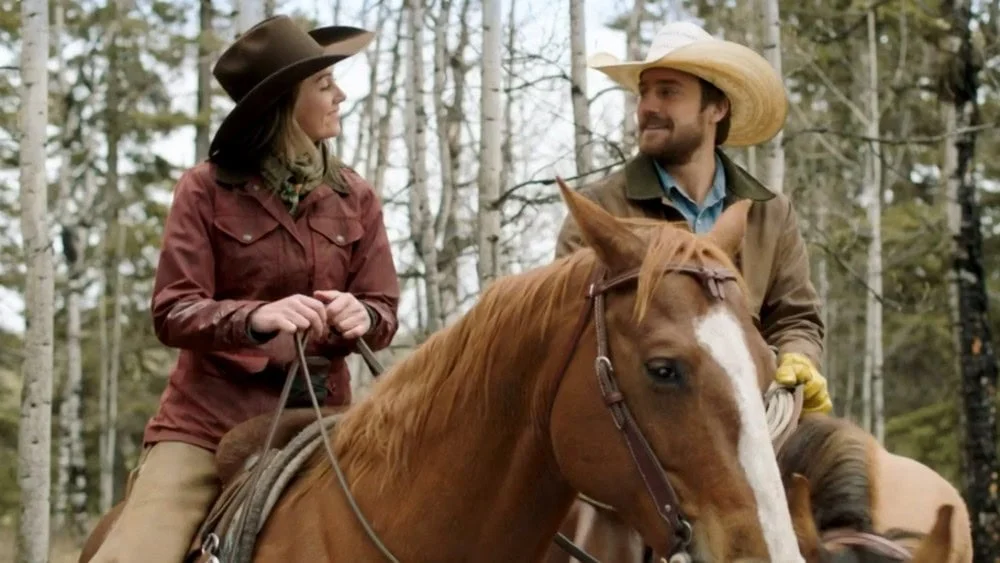
If Nathan’s arc in Season 18 was about a man slowly choosing love over legacy, Gracie’s arrival at the end of that season was the show’s way of complicating that choice immediately. Gracie Pryce is sharp, ambitious, and determined to take control of the Pryce family empire — no matter who stands in her way. Her first scene made her intentions explicit: her first words to Nathan were about declaring war on Heartland because of them sabotaging the business.
What made Gracie genuinely interesting as an antagonist, rather than simply a corporate villain, was the Season 19 premiere’s careful reintroduction of her character. When Lou tells Jack who she is, Jack remembers her as a young girl who once admired Marion — a memory that softens her edges and makes her seem a bit more human. The show gave her history before it gave her menace, and that choice paid dividends across the season.
Lou realized early that she might have met her match in Gracie Pryce. Both women are protective older sisters who are outspoken and fiercely loyal. Their conversations, which seem polite on the surface, carry the weight of two people who recognize strength when they see it. Gracie tells Lou that she is willing to be civil for the good of Nathan and Amy’s relationship, but also warns her that she “plays to win.”
That warning was not idle. Gracie’s methods across Season 19 were calculated rather than explosive — which made them harder to counter and more damaging when they finally landed.
The Sabotage: What Gracie Actually Did to Heartland
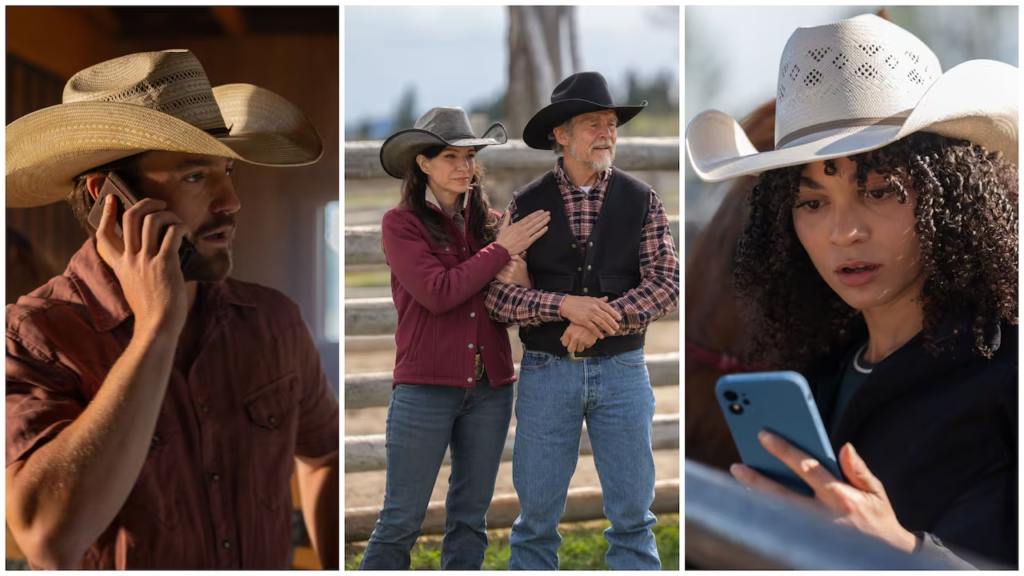
Season 19’s most carefully constructed plot thread concerned the cattle rustling that plagued Heartland across the middle episodes — and the revelation of who was behind it. The trail built slowly: Amy’s doubt deepened when she remembered seeing Gracie Pryce in the barn right before feeding time the previous day, a detail she couldn’t ignore, even if she had no proof of anything.
The professional attack was equally deliberate. Gracie’s behavior across Episode 5 kept both Amy and the audience guessing. At the top of the episode, she suggested that Amy’s success is due to her mother Marion’s legacy rather than her own talent. The comment was precisely aimed — not a direct accusation, but a seed of doubt planted in exactly the right place. Combined with the suspicious timing around Spartan and Polaris both falling ill, Gracie managed to shake Amy’s professional confidence without leaving any fingerprints.
The rustler storyline’s resolution in the finale was the season’s most dramatically satisfying reveal. Nathan found a sack of the same cattle feed Lou had flagged earlier in the season — the very same feed Gracie had brought onto Pryce Ranch. That discovery, paired with a ledger entry showing a $7,500 payment to a numbered company connected to Wes, made the truth impossible to ignore: Gracie was involved.
What followed was one of Season 19’s most emotionally complex scenes. Before Nathan confronted her, he had a revealing conversation with his father. Nathan Pryce Sr. recalled an incident from Gracie’s childhood, when she threw a rock at a schoolmate who was bullying her younger brother. While he was clear that he never condoned her actions, he explained that even then, Gracie’s instincts were driven by fierce loyalty and the need to protect the people she loved. It did not excuse what she had done — but it reframed her entirely, from a villain into a person whose worst qualities and best qualities came from the same place.
Nathan’s Choice: The Moment That Changed Everything
When Nathan finally confronted Gracie, he gave her a choice: sell him her half of Pryce Ranch and walk away without criminal charges, or face the legal consequences. Gracie signed the papers, furious and humiliated, and left with one final bitter remark aimed at Nathan about Amy: “I hope she’s worth it.”
That line is worth sitting with. It was not a threat. It was a challenge — an older sister’s final, backhanded acknowledgment that her brother had chosen something over the family business, and her skepticism that the choice would hold. For Nathan, this painful reckoning led to the loss of a business partner and the last tie to a family dynamic that had defined so much of his life. Without his sister’s influence, and no longer responsible for cleaning up her messes or bound by the obligation to carry on the Pryce family business, Nathan finally seemed free to build something of his own.
That freedom is the emotional engine behind the proposal that closed Season 19. As fireflies glittered around them, Nathan revealed that he couldn’t imagine his future without Amy and Lyndy at his side, and he asked her to build that future with him on Salt Spring Island. The proposal was not just romantic — it was the logical conclusion of everything the Pryce storyline had been building across two seasons. Nathan had dismantled the last obstacle between himself and a life he actually wanted. The question was whether Amy would meet him there.
What This Means for Season 20
Gracie’s exit from the show — she signed away her half of Pryce Ranch and left Hudson — closes the most immediate threat to Heartland’s livelihood that the Pryce family represented. But it opens several questions that Season 20 will need to address.
Nathan now owns Pryce Ranch outright, but his proposal suggests he may intend to leave it — or at minimum, restructure his relationship with it significantly. A move to Salt Spring Island, where he mentioned potentially going to pay off Gracie’s debts and restart his life, would take him away from the adjacent property that has been central to his storyline since Season 18. What happens to Pryce Ranch if Nathan leaves — and whether that creates new business complications for Heartland — is a thread Season 20 has inherited.
Gracie’s parting words also leave open the possibility of a return. Her exit was bitter but not irreversible. The show rarely closes doors permanently on characters who leave under emotional rather than narrative circumstances, and Gracie’s specific relationship with the ranch and with Nathan gives her a credible reason to return if the story calls for it.
Most immediately, though, the Pryce storyline’s legacy is Nathan himself — a man who spent two seasons navigating between his family’s legacy and his own instincts, and who chose, definitively, to trust Amy and Lyndy over everything else. Whether that choice is rewarded, complicated, or quietly reversed by scheduling realities beyond the show’s control is the central unresolved question heading into fall 2026.
Gracie said she hoped Amy would be worth it. Season 20 will answer whether she was right to wonder.
- Newsbeat , Newness
- Tháng 6 22, 2026
- 118 views
Everything That Happened in Heartland Season 19 — And Why the Finale Has Fans Desperate for Season 20
Heartland Season 19 premiered on CBC on October 5, 2025, and wrapped its ten-episode run on December 7, 2025 — bringing the show’s total episode count to 279 across nineteen seasons. Titled under the banner “Risk Everything,” the season picked up directly from the chaos left behind by Season 18: a family business rivalry that had escalated into something personal, a romance caught between loyalty and love, and a ranch that had survived so much it had almost started to feel permanent. Season 19 tested that permanence in almost every direction. Here is a full breakdown of what happened — and why the finale left the fan base in the state it’s currently in.
The Central Premise: Everything on the Line
In Season 19, the Bartlett-Fleming family risk everything to keep Heartland and those they love out of harm’s way. That single-sentence premise from CBC is deliberately broad, but the season earns it. The threats are not just external — a wildfire, a rival family, cattle rustlers — but internal: the slow accumulation of secrets, compromises, and deferred decisions that families on long-running dramas carry into every new chapter. Season 19 brings several of those deferred decisions to a head, and the choices made in the final two episodes reverberate into Season 20 in ways the show has rarely managed so efficiently.
Episode by Episode: What Season 19 Actually Covers
Episode 1 — “Risk Everything” A raging wildfire threatens the ranch, forcing the Heartland family to evacuate. But when a pregnant mare is trapped in the fire’s path, Amy risks everything to try and save her. The season opens with immediate, visceral stakes — no slow build, no re-introduction of characters. The wildfire sequence establishes the season’s emotional register from its first minutes: this is a season about how far people will go for the things and beings they love.
Episode 2 — “Two Can Keep a Secret” Amy must deal with the fallout when Lyndy’s first 4-H show goes awry. Meanwhile, Katie does something unexpected with Dodger. The episode title functions as both plot description and thematic signpost — secrets and their consequences run through Season 19 as a recurring undercurrent, and this early episode plants several that take most of the season to surface.
Episode 3 — “Ghosts” Amy is confronted by memories of Ty when she returns to Pike River with Nathan to work with Search and Rescue horses. The episode is one of the season’s most emotionally careful — it puts Amy physically back in a landscape tied to her history with Ty while asking her to move forward with Nathan. The parallel is not subtle, but it is handled with the kind of patience that has always distinguished the show’s approach to grief.
Episode 4 Amy and Ashley hunt for a crashed plane while Caleb and Nathan battle nature and each other. Jack and Lisa coordinate traditional hay-gathering. The Caleb-Nathan tension, seeded across Season 18, gets its most direct confrontation here — two men whose histories with Amy sit at very different distances, thrown together by circumstance and forced to work through it.
Episode 5 — The Reputation Storyline Begins Amy’s working with an Olympian’s horse when Spartan’s health suddenly declines. After her high-profile client questions her integrity, rumors threaten her reputation as a horse trainer. The professional threat to Amy’s identity as a horse healer is one of Season 19’s most underrated storylines — it attacks the thing she has been most confident about for nineteen years, and the show handles it with more nuance than a simple “false accusation” arc would normally allow.
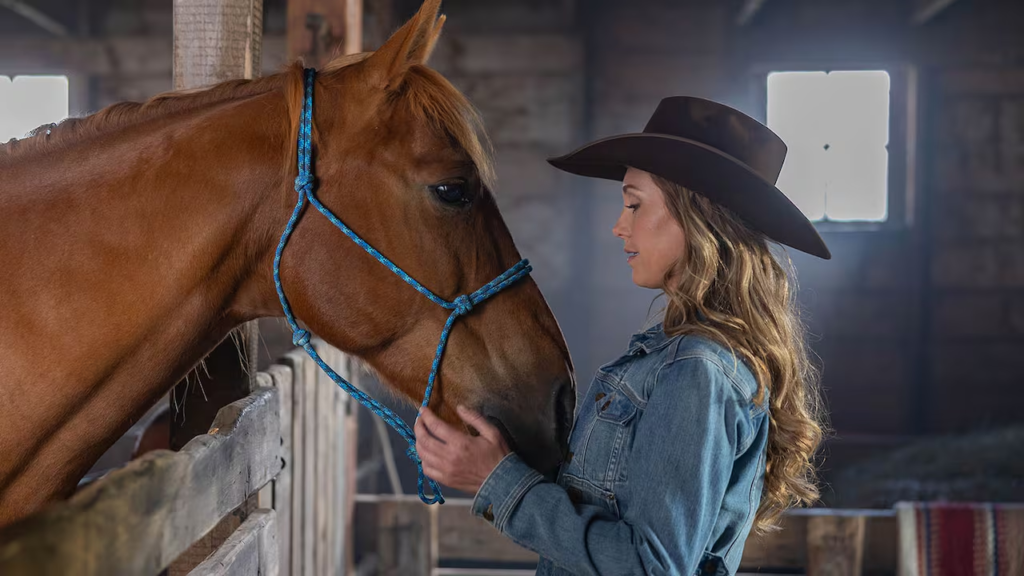
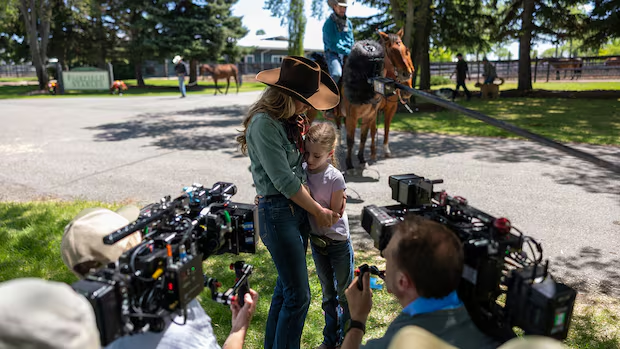
Episode 6 — The 275th Episode Milestone The whole family heads to the Hudson Rodeo, where Amy puts everything on the line to save her reputation. Katie proves herself at her first big Hudson Wilds Flag Team performance. The 275th episode of Heartland was filmed at a real rodeo event in Alberta, and the production used the authentic crowd to shoot the arena sequences — a production choice that gives the episode an energy that interior ranch scenes rarely match. Katie’s flag team storyline, which began quietly in Season 18, pays off in a moment that the show’s younger fan base responded to strongly.
Episode 7 — Lou Directs Michelle Morgan, who plays Lou, directed this episode — her latest in a directing role she has taken on multiple times across the show’s run. The episode features a significant scene between Lou and Amy, and a quiet porch conversation between Jack and Lisa that several fan commentators cited as one of the season’s most understated emotional highlights.
Episode 8 — Lou Directs Again / Gracie Returns Morgan directed a second episode this season. While Amy secretly works with Gracie’s new horse, Lou and Jack are determined to catch the rustlers, and Dex confronts his past. Georgie returns to Heartland. Georgie’s return after her time in Brussels as a show jumper had been one of the season’s most anticipated moments, and the episode uses her arrival to shift the family’s emotional center of gravity before the final stretch.
Episode 9 — “Revenge” The cattle rustler subplot, which had been building across the season’s middle episodes, reaches its confrontational peak. Lou and Jack’s determination to identify the rustlers drives most of the episode’s momentum, while Amy’s parallel storyline with Gracie’s horse adds another layer to the complicated Pryce family dynamic that has defined the season’s central conflict.
Episode 10 — “Forgiveness” Georgie grapples with Phoenix’s situation as the rustlers’ identities come to light. Amy and the Heartland family face crucial choices about what lies ahead. The finale resolves several of the season’s plotlines while deliberately leaving its most important one open. Georgie, having defied doubts about her aging horse Phoenix, wins the Springview Grand Prix — and is then offered a placement at a stable in Austria, a storyline that Season 20 will need to address. Lou and Jack resolve the rustler thread in a way that has divided fan opinion. And then, in the scene that has defined the entire post-season conversation, Nathan takes Amy and Lyndy to Salt Spring Island and proposes marriage in a firefly-lit pasture — asking the three of them to begin a new life together. The episode ends before Amy answers.

The Season’s Three Major Character Arcs
Amy Fleming: Season 19 is the most professionally and personally pressured the character has been since the seasons immediately following Ty’s death. Her reputation as a horse trainer is publicly attacked by a high-profile client, forcing her to defend her identity in the arena where she has always felt most secure. Simultaneously, her relationship with Nathan deepens past the point where it can be kept separate from her family and her daughter — and the season finale makes clear that the question of where Amy’s future is actually located, at Heartland Ranch or somewhere entirely new, can no longer be deferred.
Lou Fleming: Lou tries to refocus her attention on her family — but when a new adversary threatens the ranch, she is forced to make some difficult choices. Season 19 gives Lou one of her more quietly complex arcs in several years, using the external threat to the ranch as a lens for examining what she is actually willing to sacrifice to protect it. Her scenes with Amy in the episodes Morgan directed are among the most emotionally direct the two characters have shared since the early seasons.
Jack Bartlett: Jack is the steadfast rancher he’s always been, but his patience is tested after he hires an unlikely new ranch hand, Dex. The Jack-Dex dynamic functions as the season’s quietest and most consistently satisfying subplot — an older man who has seen everything finding himself unexpectedly responsible for someone with a complicated past that mirrors several of the show’s earlier character trajectories. This is also the first season that Tim Fleming hasn’t appeared in any episodes since his introduction — a notable absence that the season handles mostly by not drawing attention to it, though fans have noted it consistently in discussion forums.
Why This Season Sets Up Season 20 So Effectively
Season 19 does something the show has not always managed cleanly: it ends with genuine structural uncertainty rather than emotional resolution dressed as a cliffhanger. The question of whether Amy says yes to Nathan’s proposal is not just a romantic beat — it is a question about whether Heartland the show can continue to be Heartland if its central character leaves the ranch that gives the show its name and its identity.
Georgie’s Austria offer adds a second layer: a beloved recurring character being pulled away from the ranch by professional success, in a storyline that mirrors the real-world pattern of long-running shows cycling through cast members as actors’ opportunities expand. The rustler resolution, meanwhile, closes one chapter of the Pryce-Bartlett family rivalry while leaving room for whatever Season 20 chooses to do with those relationships next.
Taken together, Season 19 functions less as a self-contained story and more as an extended setup — one that will only fully make sense when Season 20 arrives in fall 2026 and starts answering the questions it was designed to raise.
- Newness , Newsbeat
- Tháng 6 20, 2026
- 113 views
Faith, Family, and Horses: The Real Reason Heartland Has 695 Million Viewers That Nobody Is Talking About
When people try to explain why Heartland has accumulated 695 million hours of global Netflix viewing in just two years — making it one of the platform’s most-watched catalog titles while carrying a TV-PG rating, no prestige drama credentials, and almost no marketing budget outside Canada — the answers usually focus on horses, or nostalgia, or the scenery. Those answers are not wrong. But they are not complete. The fuller explanation sits in a piece of data from a March 2026 industry study published by The Wrap: conservative, rural, and middle-American viewers have consistently reported feeling underrepresented in the movies and TV shows produced by major studios — and Heartland has been quietly, steadily serving that audience for nineteen years while almost everyone in Hollywood looked the other way.
The Audience Nobody In Hollywood Talked About
For most of the past decade, the conventional wisdom in prestige television was fairly simple: edgy content, morally complex characters, and adult themes drove critical acclaim and subscriber growth. Shows like Breaking Bad, Succession, and Game of Thrones defined what “good television” was supposed to look like, and the audiences that preferred something quieter, cleaner, and more family-oriented were treated as a niche — a legacy broadcast demographic slowly aging out of cultural relevance.
The data was always telling a different story. According to the NRG study cited by The Wrap in March 2026, studios had been overlooking a measurable and economically significant segment of the American audience: conservative, rural, and middle-American viewers who felt mainstream entertainment did not reflect their values or their lives. The study found that in 2025, studios began reassessing their relationship with audiences who do not live in Los Angeles, New York, or other cosmopolitan cultural hubs, and increased their investment into stories that speak more directly to audiences who had previously regarded mainstream entertainment with a fair degree of skepticism. The result, the study noted, was a small but noticeable uptick in the percentage of conservative viewers who felt their values and beliefs were being represented on screen.
That shift in 2025 was not a discovery. It was a belated acknowledgment of something Heartland had known since 2007.
What “Faith-Based” Actually Means in Heartland’s Context
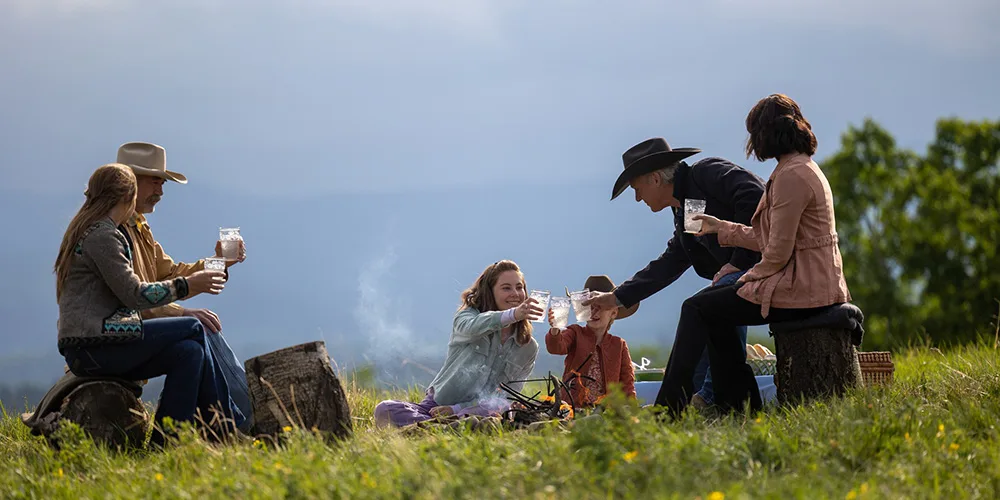
Heartland is not, technically, a Christian show. It is not produced or marketed as religious entertainment, and its storylines do not center on doctrinal content or overt evangelism. Its characters occasionally attend church, occasionally pray at meals, and occasionally navigate the kind of moral questions — loyalty, forgiveness, integrity under pressure — that religious frameworks have traditionally provided language for. But the show’s faith content is incidental rather than central, woven into the fabric of characters who happen to hold those values rather than characters defined by them.
What the show does embody, consistently and deliberately, is a set of values that overlap significantly with faith-based priorities without being reducible to any specific religion: multigenerational family loyalty, honest labor, community accountability, the idea that the land and the people who work it carry a dignity that deserves respect. These are not explicitly Christian values — they are rural values, and the two categories overlap without being identical.
Charley Humbard, founder of UP Entertainment, the network that holds first-window U.S. streaming rights to Heartland, has spoken about this distinction directly. “It executes on a lot of good basic Christian and family values so well and it’s real and authentic,” he told The Christian Post. But he was equally clear that the show’s appeal extends beyond any single religious demographic. “Just because you’re a Christian doesn’t mean you don’t have a kid that sometimes ends up with a drug addiction, or a teenager who gets pregnant before they should, or tough times happen to you,” he explained. “Things happen. Just because you’re Christian doesn’t mean it won’t.” That authenticity — the show’s willingness to portray real difficulty inside a framework that still believes in resolution and family — is precisely what distinguishes it from content that moralizes rather than narrates.
UP Entertainment’s own research suggested at the time that over 40 million Americans were actively seeking wholesome, family-safe content on television. Heartland was its flagship vehicle for reaching them.

The Companies That Understood First — and the Returns They Generated
The faith-and-family audience that Heartland had been quietly serving did not stay invisible forever. As the NRG study noted, studios and streaming services began taking notice in 2025, following a string of high-profile financial results from content that targeted this demographic explicitly.
Angel Studios, the company behind The Chosen and Sound of Freedom, went public in September 2025 following the success of its crowd-funded model, becoming one of the more unusual success stories in recent entertainment industry history. Its model — asking audiences to fund content they actually want rather than predicting what audiences might accept — generated enough revenue to sustain an independent studio and attract mainstream distribution attention. In October 2025, Prime Video launched Wonder Project, a premium subscription add-on specifically for faith-based content, with the platform-exclusive series House of David as its headline title. That these moves happened in 2025, not 2015, is a measure of how long the industry underestimated the audience size.
The NRG study also turned up a finding that challenges some of the assumptions behind faith-based content’s perceived demographic limitations: Millennial and Gen Z Christians are actually more likely to seek out content with religious themes than older generations. If accurate, this suggests the faith-and-family audience is not an aging demographic in terminal decline but a cross-generational viewership that has simply not been well-served by mainstream production pipelines — and is now beginning to be.
Why Heartland’s Numbers Carry a Specific Warning for Hollywood
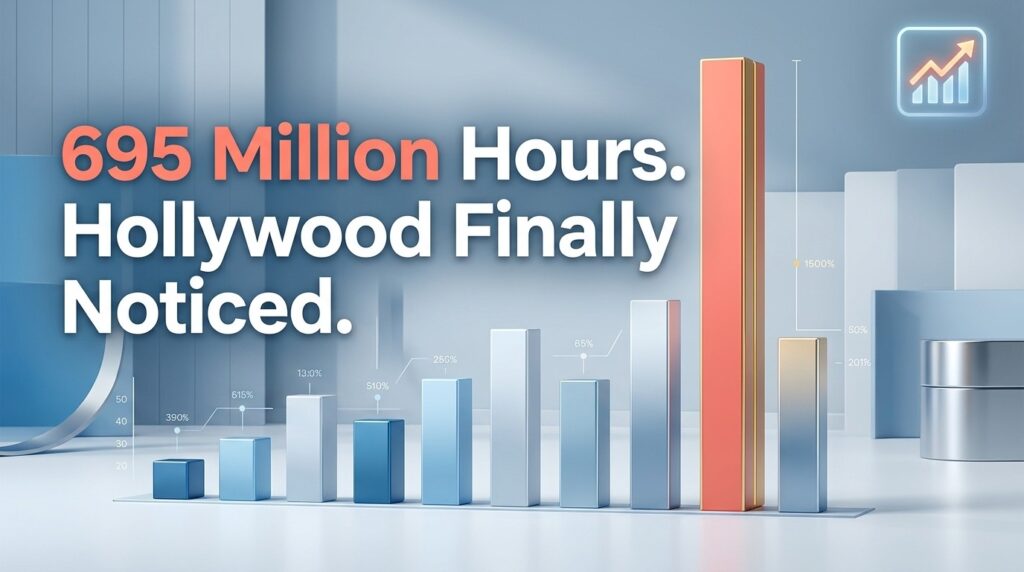
The 695 million global viewing hours that Heartland generated on Netflix between 2023 and mid-2025 are notable not just for their scale but for what they reveal about the show’s audience behavior. Unlike prestige dramas that generate large numbers in a concentrated burst around premiere weekends, Heartland‘s viewing is distributed differently — spread across a back catalog of over 260 episodes, accumulated by viewers who return to the same seasons repeatedly rather than burning through new content and moving on. This repeat-viewing pattern is structurally more valuable to a streaming platform than a single spike, because it keeps subscribers on the platform between new releases.
That behavioral pattern is characteristic of the faith-and-family audience more broadly. Viewers in this demographic tend to watch more slowly, more deliberately, and with more household participation — multiple family members watching together rather than individuals consuming content on separate devices. Those viewing habits drive hours-watched metrics far higher than solo streaming behavior would, which partly explains how a TV-PG Canadian ranch drama can post numbers that rival or exceed prestige productions with ten times the marketing investment.
What Hollywood is slowly learning, and what Heartland demonstrated years before the industry was paying attention, is that underrepresented audiences do not disappear when you ignore them. They find what serves them and they stay loyal to it in ways that more casual audiences rarely match. The 695 million hours are not the result of a viral moment or a prestige campaign. They are the result of nineteen years of consistent, authentic storytelling aimed at an audience that had very few other options — and chose to stay.
As Season 20 films in Alberta this summer, Heartland is preparing to close whatever chapter it is closing with that same audience still watching. Whether Hollywood has fully absorbed the lesson the show spent two decades teaching is, at this point, a separate question entirely.
- Newness , Newsbeat
- Tháng 6 20, 2026
- 98 views
Amy’s Answer, Nathan’s Future, and a Surprising Conflict: Why Season 20’s First Episode Is Already the Most Anticipated in Heartland History
When the Season 19 finale of Heartland cut to black in early February 2026, it left millions of viewers staring at a dark screen with one question unanswered: did Amy Fleming say yes? The scene — Nathan Pryce kneeling in a firefly-lit field on Salt Spring Island, asking Amy and her daughter Lyndy to start a new life with him — is already being called the most emotionally loaded cliffhanger in the show’s nineteen-year history. But there is a second story running underneath the romantic drama that most fan coverage has not yet addressed: the actor who plays Nathan Pryce, Spencer Lord, is now a series regular on one of television’s biggest prestige dramas — HBO’s The Last of Us — and his Season 3 filming schedule creates a real, documented conflict with Heartland Season 20 production currently underway in Alberta. What that means for Amy’s answer, Nathan’s future on the show, and the emotional shape of Heartland‘s possible final season is the most genuinely complicated question heading into fall 2026.
The Proposal That Stopped Everything
To understand the weight of what Season 20 has to resolve, it helps to trace exactly how Season 19 built to its final scene. Nathan Pryce Jr. first appeared in Heartland in Season 17, introduced as an old high school acquaintance of Lou Fleming’s who returns to Hudson to take over his father’s ranch after a diagnosis of Alzheimer’s. His early relationship with Amy was built on friction — the Pryce and Bartlett-Fleming ranches were in direct commercial competition, and Amy’s family, particularly Jack and Tim, viewed Nathan with suspicion that took most of two seasons to soften.
What made the relationship narratively interesting was its slow pace and genuine complication. Nathan, as Spencer Lord himself described it in interviews, is “emotionally stunted by a tumultuous upbringing” — not a simple love interest, but a man reintegrating into a community he was once forced to leave, carrying the weight of his family’s difficult legacy. Amy, meanwhile, was navigating her first serious relationship since the death of her husband Ty Borden in Season 14 — a dynamic that the show handled with more patience than most long-running dramas manage with widowed protagonists.
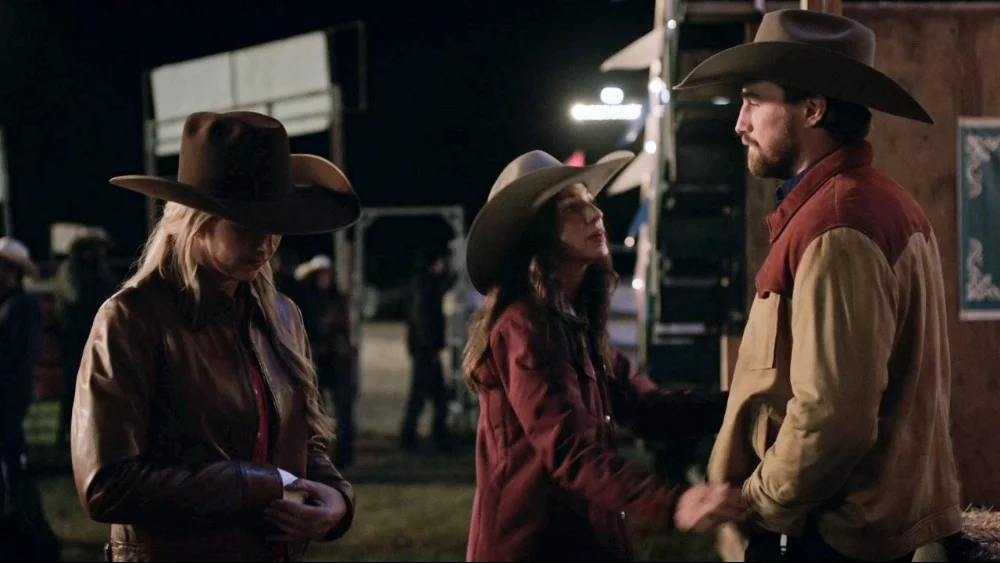
By Season 19’s finale, all of that groundwork converged in one scene. Nathan took Amy and Lyndy to his childhood spot on Salt Spring Island — the place that had meant something private and important to him before everything went wrong with his family. As fireflies lit up the surroundings, Nathan proposed to Amy, asking her to come with him to Salt Spring Island, where the three of them would begin a new life together. The episode ended before Amy answered.
Why This Cliffhanger Hits Differently
Heartland has used season-ending cliffhangers before, but the Nathan proposal carries a specific weight that goes beyond romantic suspense. The central question — will Amy say yes — is inseparable from a larger question the show has been building toward since Season 14: who is Amy Fleming after Ty Borden? The show spent five seasons carefully establishing that she is not defined by that loss, that she is capable of a full life and a new love, but it has never fully committed to what that looks like going forward. Nathan’s proposal is the moment where that question can no longer be deferred.
A yes carries enormous narrative implications. Nathan proposed asking Amy to come with him to Salt Spring Island, where the three of them would begin a new life together — which would mean Amy potentially leaving Heartland Ranch, the physical and emotional center of the show for nineteen years. That is not a small story beat. It is a potential restructuring of the show’s entire geography in what may be its final season.
A no carries its own weight. It would likely close the Amy-Nathan chapter and force the show to reckon with what Amy’s future looks like on her own terms — which, heading into a possible series finale, is its own kind of emotionally satisfying resolution, even if it is the harder one for fans currently rooting for the relationship.
Neither answer is safe. Both are interesting. And the fact that Season 20 must deliver one of them in its opening episode — with whatever dramatic and logistical complications accompany it — is precisely why the premiere is already the most anticipated single episode in the show’s two-decade run.
The Scheduling Conflict Nobody Is Talking About
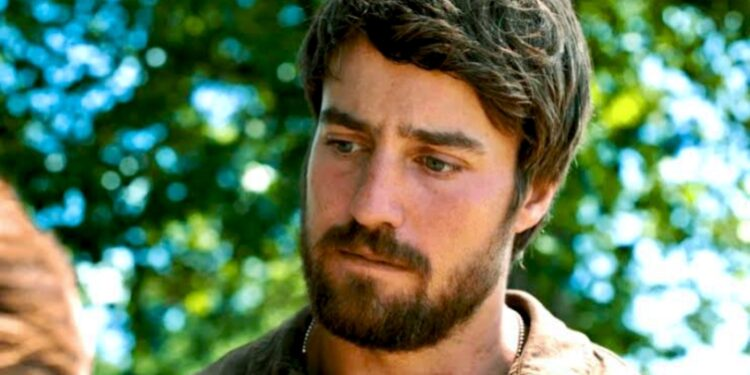
Here is where the Nathan Pryce storyline gets genuinely complicated in a way that goes beyond creative choices. Spencer Lord, the actor who plays Nathan, is not just appearing in Heartland. Since 2025, Lord has been playing Owen in the HBO drama series The Last of Us, a role that expanded from a recurring appearance in Season 2 to a main role in Season 3.
The Last of Us is not a small production. It is one of HBO’s flagship prestige series, with a global audience and a filming schedule that commands significant time from its cast. Lord’s elevation to a main role in Season 3 means he is no longer a guest player who can fit HBO around other commitments — he is a principal cast member with a demanding primary obligation.
Heartland Season 20 began filming in Calgary on May 12, 2026, with production scheduled to run through August 31. The Last of Us Season 3 production timelines, while not publicly confirmed in full detail, overlap with that same general window — creating a documented conflict between two significant commitments for the same actor at roughly the same time.
Neither production has publicly addressed how this is being managed. The Heartland Season 20 renewal announcement listed the returning cast without specific episode commitments attached to individual actors, which is standard for the show’s format but leaves Nathan’s actual screen time in the new season unconfirmed. Spencer Lord has not made public statements about how he is navigating the two schedules.
What this means for Amy’s answer and Nathan’s storyline in Season 20 is, at this point, genuinely unknown — but the possibilities are not reassuring for fans currently invested in the relationship. A reduced Nathan presence in Season 20, caused by scheduling rather than creative choice, would be a frustrating resolution to a two-season romantic build. A creative decision to write around the conflict — giving Nathan a storyline that explains his absence from key episodes — would require exactly the kind of careful writing that has not always accompanied the show’s handling of cast availability issues in the past.
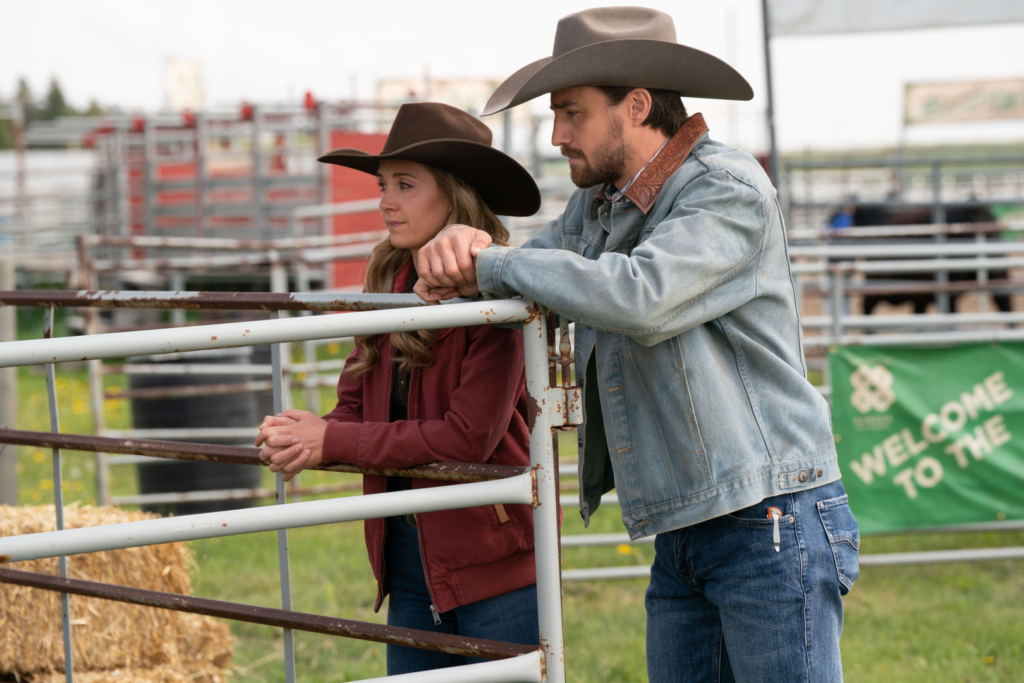
What Season 20’s First Episode Actually Needs to Deliver
Setting the scheduling question aside, the creative pressure on Season 20’s premiere is substantial regardless of how the Nathan situation resolves. Heartland is a show that has historically been cautious about major structural changes — it took multiple seasons to fully commit to Amy’s relationship with Nathan after Ty’s death, and the show has rarely used its premieres to drop bombshell resolutions to prior-season cliffhangers without significant setup.
The Nathan proposal breaks that pattern by design. There is no gradual unpacking available here. The scene ended mid-moment, and Season 20 begins in the same moment. Fans who have spent the spring and summer of 2026 arguing about whether Amy should say yes, whether she should stay at Heartland Ranch, and whether Nathan is the right fit for the family she has built will get their answer in the first episode — and whatever that answer is, half the audience will have their own strong reaction to it.
Characters confirmed to return in Season 20 include Lou, Jack, Nathan, Amy, Lyndy, Georgie, Caleb, Peter, and Mitch — a full ensemble that suggests the show is not planning a dramatic cast reduction regardless of how the proposal resolves. But confirmed to return and central to the story are different things, and where Nathan lands in the season’s emotional architecture will tell fans a great deal about whether Heartland is building toward the kind of finale that honors the last two seasons of his storyline — or quietly sidestepping a scheduling problem dressed up as a creative choice.
Either way, the first episode of Season 20 is carrying more weight than any premiere in Heartland‘s history. That alone makes it worth watching, whatever the answer turns out to be.
- Newsbeat , Newness
- Tháng 6 20, 2026
- 144 views
The Town That Became Hudson: How Heartland Turned High River, Alberta Into a Fan Pilgrimage Destination
If you have spent any time watching Heartland, you know Hudson, Alberta — the fictional small town where the Bartlett-Fleming family buys supplies, argues over coffee at Maggie’s Diner, and navigates the kind of slow-burning community drama that makes the show feel lived-in rather than manufactured. What you may not know is that Hudson does not exist. It never has. The streets, the storefronts, the diner, the park benches — all of it belongs to a real town called High River, located about 45 minutes south of Calgary in the foothills of the Canadian Rockies. And over nineteen seasons of Heartland, High River has done something remarkable: it has become a genuine fan pilgrimage destination, drawing thousands of visitors each year from the United States, Europe, and Australia who come not to see Canada, but to see the show — and find that the two things, as it turns out, are largely the same.
A Town 45 Minutes From Calgary That the World Now Knows as Hudson
High River sits in Foothills County, southeast of the Rocky Mountain foothills, in a part of Alberta that looks almost exactly the way non-Albertans imagine Alberta looks: wide open sky, rolling grassland, the jagged line of distant mountains on the western horizon, and a downtown that has changed slowly enough over the decades that it still reads as genuinely historic rather than restored-for-tourism. That combination of landscape and authentic small-town architecture is precisely why Heartland‘s location scouts chose it in 2007, and why the production has returned to the same streets, same storefronts, and same surrounding countryside for every season since.
The town is not a set. It is a functioning community of roughly 14,000 people where Heartland happens to film, and that distinction matters to the experience of visiting it. The streets fans walk are streets locals actually use. The diner exterior fans photograph is attached to a real building. The museum they visit is a working institution with its own community history that extends well beyond anything the show has done with it. Heartland did not create High River. It simply introduced it to the world
.
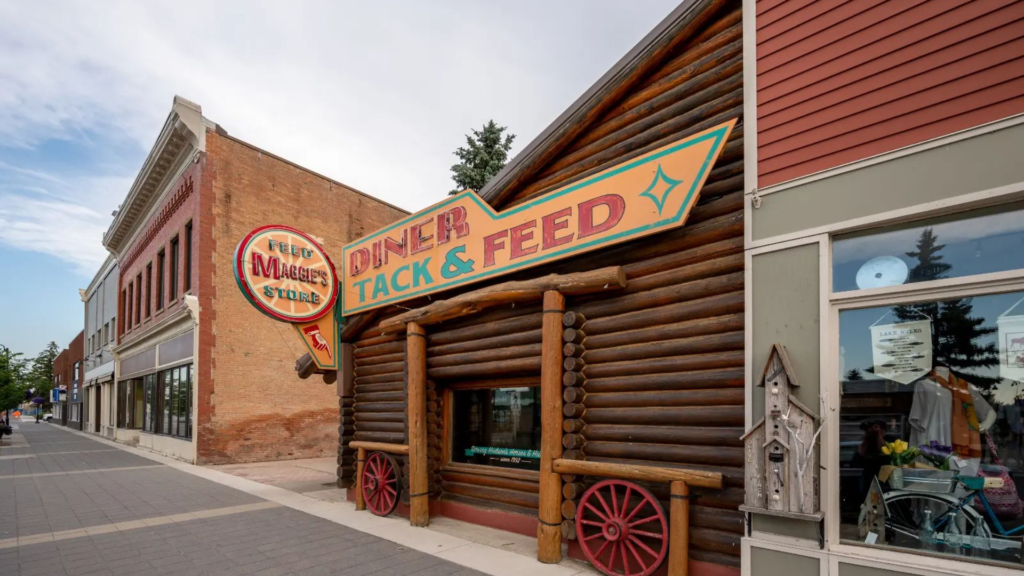
Maggie’s Diner: The Most Photographed Building in Foothills County
No single location in High River has become more synonymous with Heartland fan tourism than the building that serves as Maggie’s Diner on screen. Located downtown, the building’s public-facing position makes it one of the few filming locations fans can access completely freely — walking up to the windows, peering inside, taking photos from the sidewalk, or simply sitting across the street and watching the foot traffic move past a building they have seen on screen hundreds of times.
During active filming periods, the experience gets considerably more interesting. The production crew parks trailers behind the Museum of the Highwood — the town’s history museum, located in a historic Canadian Pacific Railway station — and locals and visitors alike can tell at a glance whether a filming day is underway. If the trailers are there, cast members are moving between set and holding areas throughout the day, and patient fans positioned in public spaces have occasionally spotted the show’s actors in transit. The museum’s own visitor services staff, well-versed in Heartland geography by now, reliably point new arrivals toward whatever is happening that day.
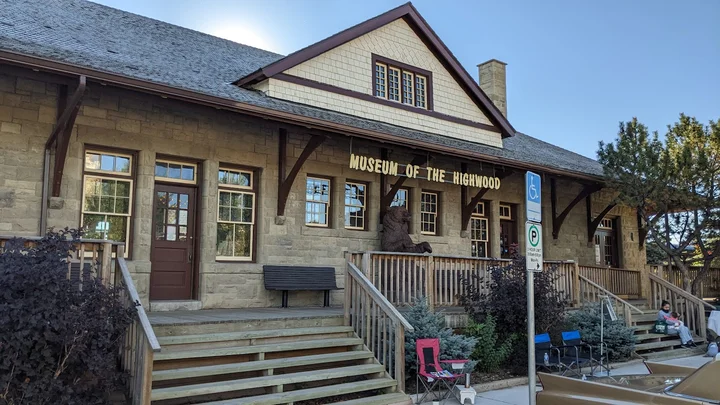
The Museum of the Highwood: Where High River’s History Meets Heartland’s
The Museum of the Highwood, housed inside a beautifully preserved Canadian Pacific Railway station, serves double duty for visitors to High River: it is the town’s primary historical institution and its most accessible Heartland experience under one roof. The museum maintains a dedicated Heartland exhibit featuring production materials, behind-the-scenes context, and documentation of the show’s relationship with the community — and its Visitor Information Centre, located inside the same building, functions as the unofficial starting point for any Heartland-focused visit to the area.
The museum’s numbers speak to the scale of what the show has done for the town. In 2019 alone, 18,000 people came through the museum’s doors — a record at the time — and of those, approximately 6,000 were there specifically for Heartland-related attractions. That figure represents roughly one in three visitors arriving at a small-town regional history museum because a television drama sent them there. For a town of 14,000 people, that is a meaningful tourism footprint, and it has grown steadily as the show’s international streaming reach has expanded.
The museum’s visitor services coordinator has noted the pattern that plays out repeatedly: fans arrive because of Heartland, but they end up staying longer or returning because of High River itself. “They’ll come because of Heartland,” she has said, “but they actually end up either staying longer or returning, because of that High River–southern Alberta charm.” The show functions, in practice, as a long-running tourism advertisement for a part of Canada that most international visitors might never have sought out on their own.
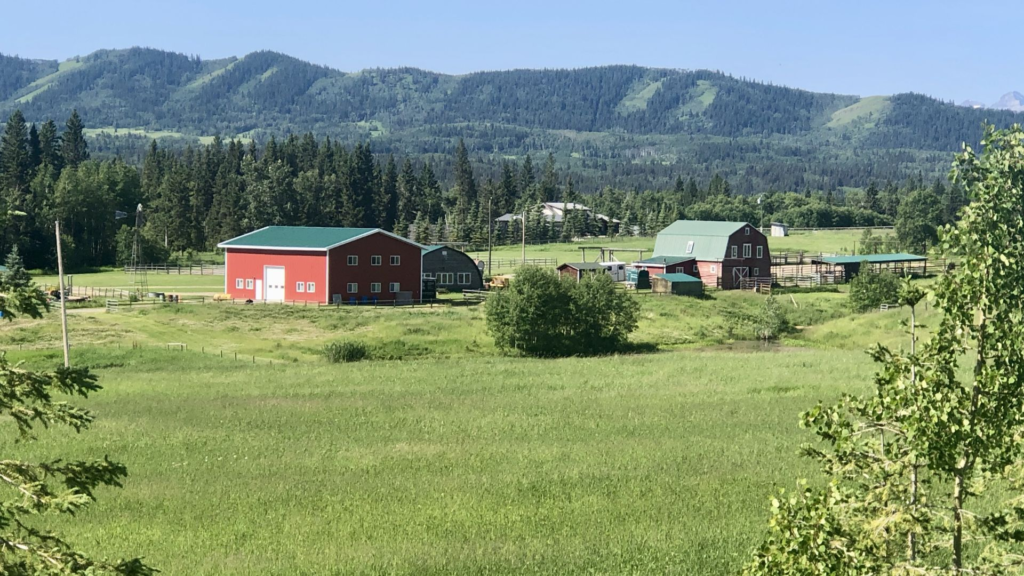
The Ranch Itself: Close, But Not Open
One of the most common questions from visiting Heartland fans is a simple one: can you go to the ranch? The answer is more complicated than most people expect. The famous Heartland ranch — the property with the barn, the corral, and the house exterior fans recognize from every episode — is filmed near Millarville, a small community southwest of Calgary. The ranch buildings were constructed specifically for the production and are located on privately owned land. There are no official tours. Visitors cannot walk freely onto the property.
What is possible, and what many fans do, is drive past on public roads to see the area from a distance. The surrounding Millarville countryside is publicly accessible and provides the same rolling foothills, mountain backdrops, and wide Alberta sky that make every outdoor shot on the show feel cinematic. Several other filming locations in the area are fully accessible: the Millarville Racetrack, which has appeared in rodeo and horse racing scenes throughout the series, is a working facility that hosts public events throughout the year. Spruce Meadows, a premier equestrian facility in Calgary that has appeared on screen, is open to visitors and draws families independently of any Heartland connection.
Travel Alberta has developed a three-day “Heartland Adventures in Southern Alberta” itinerary that guides visitors from Calgary through High River and west toward Millarville and other filming locations, providing practical routing for fans who want to see as much of the show’s real geography as possible. Tourism Calgary maintains a complementary self-guided version that can be completed as a day trip from the city.
A Town That Has Embraced Its Second Identity
What makes High River’s relationship with Heartland unusual among filming-location tourism stories is the degree to which the town has actively embraced the show rather than merely tolerating it. Local businesses in the visitor services sector have built their offerings around Heartland fan traffic. The museum has invested in exhibit infrastructure to serve that audience. Accommodation providers note that a meaningful share of overnight stays come from visitors who time their trips around filming schedules or fan events.
That embrace reflects something real about the fit between the show and the community. Heartland does not portray a glamorized or ironic version of small-town Alberta life. It portrays something that residents of High River and Foothills County can largely recognize: the rhythms of ranching, the textures of rural community, the particular way that landscape shapes identity in southern Alberta. When fans arrive looking for Hudson, what they find is a town that is, in most of the ways that matter, already a lot like it.
With Season 20 now filming in Alberta through August 2026 and a fall premiere scheduled on CBC, the timing for a High River visit has rarely been better — or more pointed. If the rumours about Season 20 being the show’s final chapter prove correct, this summer and fall represent the last opportunity to visit a town that is actively, simultaneously being both itself and the fictional place it has inhabited for nineteen years. For long-term fans, that window may be worth more than any guided tour.
- Uncategorized , Newness , Newsbeat
- Tháng 6 20, 2026
- 87 views
The Woman Behind Amy Fleming: Amber Marshall’s Real Life Is More Heartland Than the Show Itself
There is a question that follows Amber Marshall wherever Heartland goes: how much of Amy Fleming is actually her? The honest answer, backed by nearly two decades of interviews, candid social media posts, and the quiet accumulation of choices she has made in her own life since 2007, is: more than almost any other actor-character parallel in television history. Marshall did not just play a horse-healing cowgirl on a Canadian ranch drama. She became one. And the story of how that happened — from a ten-year-old circling real estate listings in Ontario to a woman who now works with her own horse on the same set where her character lives — is as compelling as anything the show’s writers have ever put on screen.
The Girl Who Always Knew
Amber Marshall was born and raised in London, Ontario, far from the Alberta foothills that would eventually define her adult life. But the connection to animals and rural life started early — unusually early. She began riding at the age of three and spent much of her childhood around horses, starting with English riding before the Western lifestyle found her later. By the time she was ten years old, she was already circling ranch property listings in real estate magazines, not as a fantasy, but as a genuine, specific plan for the kind of life she intended to have one day.
Acting was always part of the picture too, running alongside her love of animals rather than competing with it. But the two threads of her life — performance and horses — did not fully converge until a single audition tape changed everything.
The Audition She Almost Missed
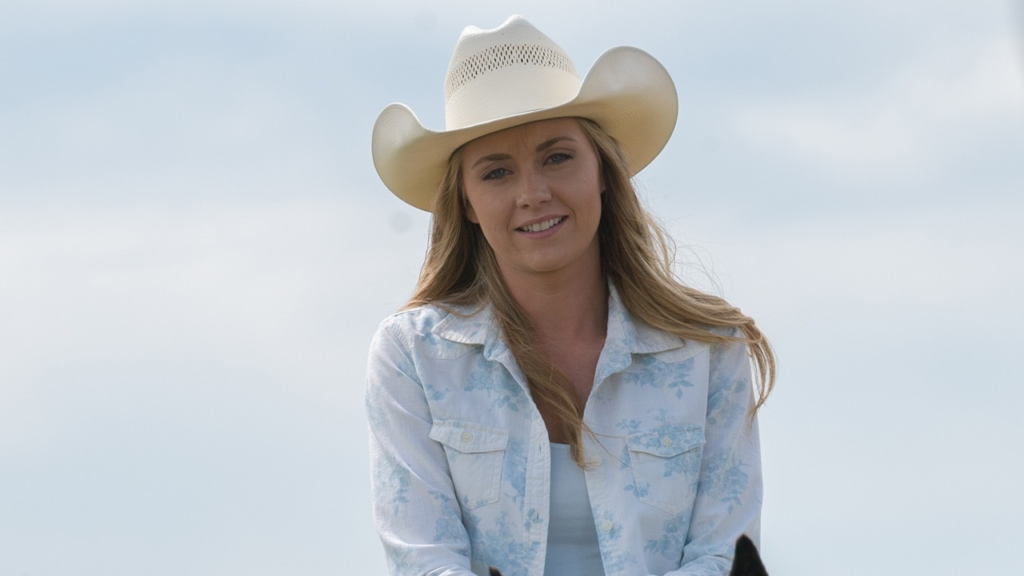
By the time the Heartland casting call came around in 2007, Marshall was worn down. The cost and frustration of auditioning had started to accumulate, and she had begun quietly questioning whether the whole pursuit was worth continuing. Then her agent told her about a role that seemed, on paper, almost written for her specifically: a young woman with a gift for healing horses, living on her family’s Alberta ranch.
There was a problem. She was away working on another project and could not make the regular audition. So she taped something herself and sent it in — old-school, awkward, slow to load. The producers saw enough almost immediately. The role of Amy Fleming was hers.
What she could not have known at the time was that saying yes to that audition tape meant saying yes to an entirely different version of her life. Heartland brought her west, and Alberta, she has said, felt right almost immediately — like a place that had been waiting for her. “If it wasn’t for the show bringing me out here,” she has told interviewers, “I don’t know that I would have just thought, ‘I’m going to move out west.'” She has lived there ever since.
When Her Own Horse Became the Show’s Most Famous Horse
Of all the ways Marshall’s real life has woven into Heartland‘s fiction, none is more striking than what happened to Spartan — Amy Fleming’s iconic horse, arguably the show’s most beloved non-human character.
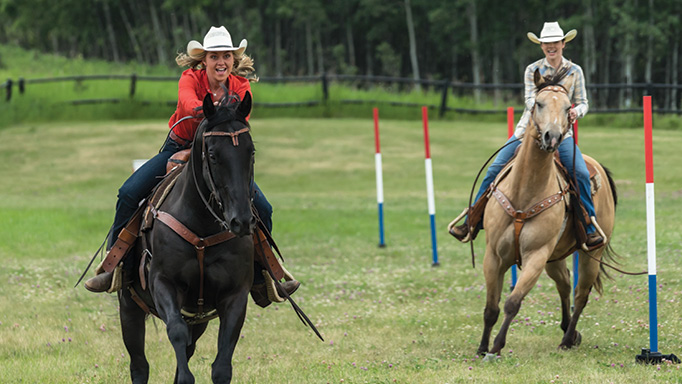
The original Spartan was a black gelding named Stormy, who joined the set at just four years old, unusually young for a television horse. “Usually, we don’t have any horses that are younger than 10,” Marshall has shared, “but Stormy just had this calm, gentle soul. He loved the limelight.” Stormy played Spartan for more than a decade, appearing in nearly every major storyline involving Amy and her trusted partner.
But as the years passed, Stormy developed arthritis. His joints were sore, his temperament was shifting, and Marshall recognized what she was seeing. “He was sore… and starting to get grumpy. I said, ‘This isn’t right for him.'” Rather than push a horse past his limits for the sake of continuity, she did something that felt natural to her and quietly radical for a television production: she suggested a new storyline to account for a new Spartan — and proposed her own horse, Hawk, as the replacement.
The producers agreed. Hawk stepped into the role. Today, Marshall works with her own horse every single day on the same set where she has spent nearly twenty years of her professional life. “Now I get to work with my own horse every day,” she has said, calling the experience both meaningful and full-circle. Stormy, meanwhile, is retired and living comfortably with one of the show’s original wranglers, alongside two other former Heartland horses. “They’re the three old guys now,” Marshall has said. “Stormy’s pampered and happy, and it makes me happy knowing he’s living his best life.”
The Ranch, the Store, and the Life She Built
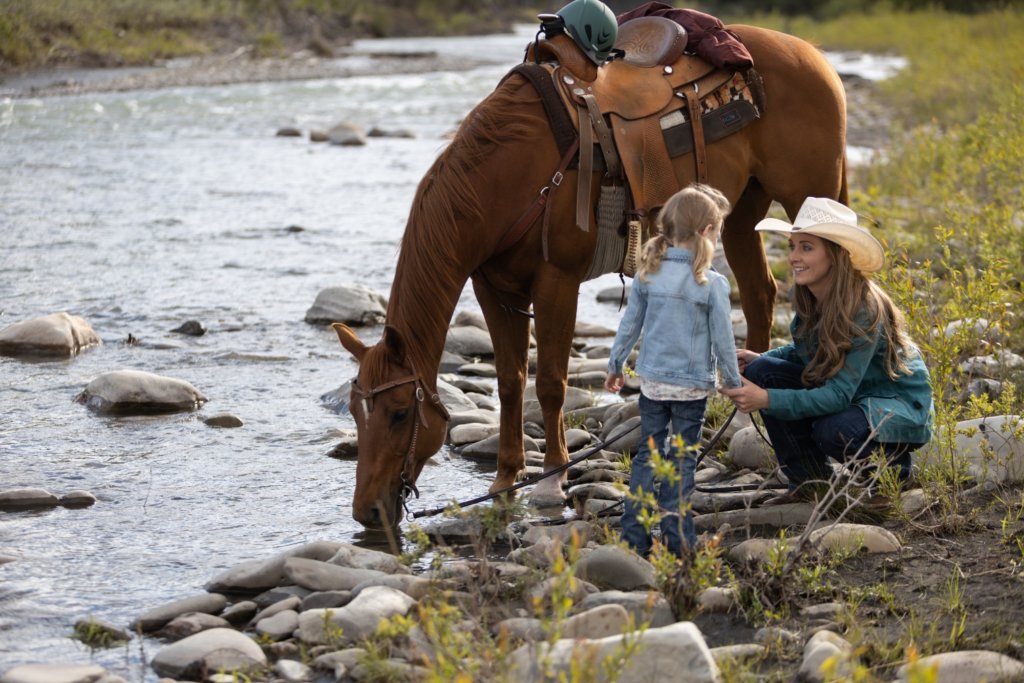
Off camera, Marshall’s daily life in Alberta looks less like a celebrity’s schedule and more like a working rancher’s. Her farm sits in the rolling countryside outside Calgary, where her off-season mornings involve checking calves, mucking stalls, and moving between dogs, cats, cows, chickens, ducks, and the occasional peacock. “People ask if I’m getting tired of Heartland,” she has said. “I won’t be done until they tell me I’m done. I love it — the people, the horses, the fact that I get to film in my own backyard and sleep in my own bed every night. I’m such a homebody.”
That rootedness extended into a business venture that surprised some fans but surprised nobody who had been paying attention. Marshall opened Marshall’s Country Store in Diamond Valley, Alberta — a shop selling her own Amber Marshall apparel line alongside Western wear, accessories, and home décor, much of it crafted by local artisans who share her affinity for country living. The store has become a destination in its own right for fans visiting the area, adding another layer to the real-world geography that the show has built around itself over nineteen years.
Her relationship with animals extends beyond horses and livestock. During quieter periods, she has volunteered at local veterinary clinics and humane societies, an extension of the same philosophy that defines Amy Fleming’s work on screen: pay attention, stay calm, be consistent, and actually listen. “Animals aren’t fooled by appearances,” she has said. “They react to what you bring around them.”
The Blurred Line That Makes the Show Work
Ask Marshall why Heartland has lasted nineteen seasons — twenty come fall 2026 — and she gives an answer that is not about writing rooms or network strategy. “Horses and cowgirls,” she says. “There’s something about the Western lifestyle. That connection between humans and horses that people just feel. Even if you’ve never been near a horse, there’s a respect there. I think that’s what keeps people watching.” And then, more specifically: “I believe horses have a lot to do with the longevity of Heartland. You can feel their power even through a screen.”
What makes that statement interesting is that it comes from a woman who has never had to fake that feeling. The show’s authenticity — the thing critics and fans most consistently point to when explaining why a Canadian family drama about a horse ranch has run for nearly two decades and generated close to 700 million hours of global Netflix viewing — is inseparable from the fact that its lead actress genuinely lives the life she portrays. She did not adopt a character. She grew into one that was already there.
As Season 20 begins filming in Alberta this summer, Marshall will be doing what she has done every summer since 2007: working with horses, sleeping in her own bed, and bringing a version of herself to a role that has never required her to pretend.
For a show that has always been about the quiet power of living close to the land, there may be no better foundation than that.
- Newsbeat , Newness
- Tháng 6 19, 2026
- 114 views
Heartland Almost Disappeared From Netflix Forever — Then a Last-Minute Deal Changed Everything
On July 31, 2025, millions of American Heartland fans went to bed believing they had just watched the show for the last time on Netflix. A “Last Day to Watch” notice had been live on the platform for weeks, attached to all 249 episodes across sixteen seasons — the clearest signal Netflix sends before a title disappears. August 1 came. And Heartland was still there. Then September arrived, and instead of a removal, something unexpected happened: Season 17 quietly appeared on the platform, followed eventually by the news that Netflix had secured a new multi-year deal for the show running through at least 2028. What looked like the beginning of the end turned out to be something closer to the opposite — and the full story of how that reversal happened says something important about just how valuable this show has become to a platform that almost let it go.
The “Last Day to Watch” Scare That Shook the Fan Base
The removal notice first appeared on Netflix US in early July 2025, and it landed like a gut punch in Heartland fan communities. All sixteen seasons, comprising 249 episodes, were listed with July 31 as the final day to stream. Netflix’s standard response, given via support chat at the time, was that the platform licenses titles from studios and rights holders around the world, and that renewals depend on whether rights are still available, how popular a title is in a given region, and how much it costs to license. That language, while technically accurate, offered fans no real reassurance.
The reaction online was immediate. Reddit threads filled with fans describing the show as a “daily happy place” they had returned to repeatedly, some noting they had watched through the entire catalog multiple times. The prospect of losing access to over 260 episodes — at a moment when newer seasons were not yet available on the platform and fans had nowhere else to easily watch — generated genuine distress that cut across the usual casual-viewer-versus-superfan divide.
The Last-Minute Reversal
August 1 arrived — and Heartland did not leave. The notice disappeared. No official statement came from Netflix, which had declined to comment on the situation at multiple points throughout July. What’s on Netflix, the industry tracking outlet that had first broken the removal warning, reported its understanding that a last-minute deal had been struck to keep the show on the platform temporarily, with the rights initially extended to September 1, 2025, and then again to January 1, 2026, before a longer-term agreement was finalized.
The full scope of that longer agreement became clearer in the weeks that followed. Netflix had secured streaming rights for Heartland in the US for at least three more years, extending through 2028 at minimum. Netflix has declined to officially comment on the deal’s specifics, but the practical effect was immediate: Season 17, which had been caught in limbo during the licensing uncertainty, joined the service on September 15, 2025. Season 18 followed on February 1, 2026. The show that had seemed on the verge of vanishing from the platform entirely suddenly had a roadmap stretching years into the future.
Why Netflix Fought to Keep It
The numbers make the answer obvious. According to Netflix’s own engagement reports, all seasons of Heartland combined accumulated 695.2 million hours of global viewing between 2023 and mid-2025 — a figure that places it comfortably among the platform’s most-watched catalog titles. Earlier estimates had the show logging over 500 million global viewing hours between 2023 and 2024 alone, representing roughly 55 million individual views. For context, those numbers were generated by a show with no Netflix original label, no award campaign, no prestige drama marketing — just consistent, reliable viewership from a deeply loyal audience that keeps returning to the same episodes again and again.
That repeat-viewing behavior is particularly valuable to streaming platforms. Heartland‘s back catalog of over 260 episodes creates the kind of long-tail engagement that keeps subscribers on the platform between new releases, which is precisely what makes the show so difficult to simply walk away from in a licensing negotiation. The removal notice in July 2025 was almost certainly a negotiating pressure point as much as it was a genuine goodbye — and the speed with which the deal was extended suggests Netflix understood the cost of losing it.
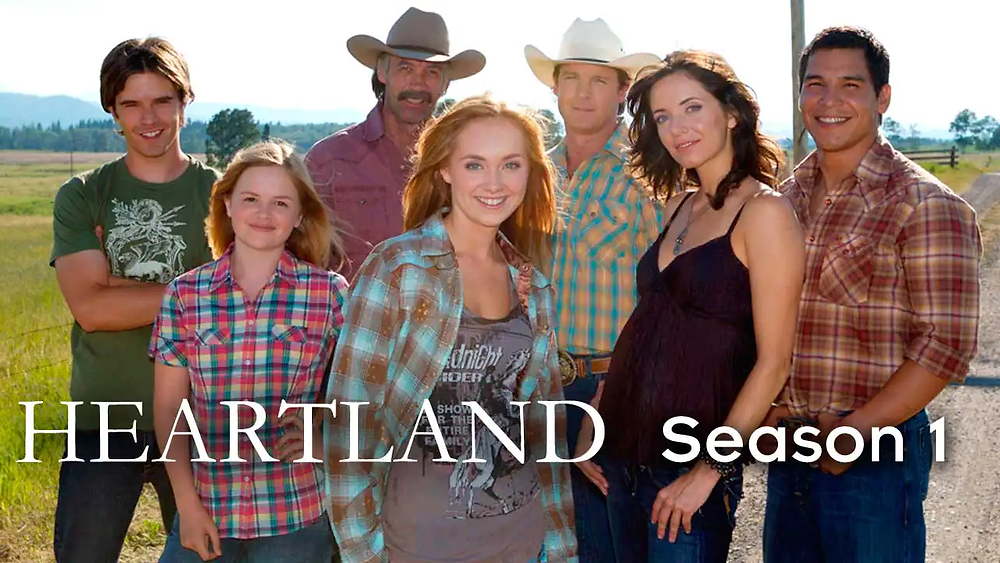
What the 2028 Deal Actually Means for Fans
The multi-year extension carries real practical consequences for how American fans can now plan their viewing of Heartland — particularly as the show heads into what many believe could be its final chapter with Season 20.
The most straightforward implication is stability. Netflix US subscribers no longer need to worry about the show disappearing mid-binge. With rights secured through at least September 2028, the full back catalog should remain accessible regardless of any individual season’s licensing movement. For long-term fans who use the platform as their primary access point, that security matters.
The extension also effectively maps out the next several years of the show’s Netflix US arrival schedule. Season 18 arrived February 1, 2026. Season 19 is expected sometime in 2027, following the end of UP Faith & Family’s exclusivity window. If Season 20 premieres on CBC in fall 2026 as planned and follows the same pattern, Netflix US subscribers could expect it to arrive in 2028 — the final year of the current deal, and potentially the final season of the show itself.
That timing carries a certain weight. If Season 20 is indeed Heartland‘s last, then the Netflix deal effectively guarantees American subscribers will get to see the show’s ending on their platform of choice — just considerably later than Canadian viewers and fans in other international markets.
The Bigger Question the Deal Raises
The near-loss of Heartland on Netflix in 2025 and the scramble to restore it points to a broader tension in how older, beloved catalog titles are handled in the streaming era. A show that generates nearly 700 million hours of viewing in two years is clearly worth keeping — yet the licensing framework that governs it nearly resulted in its removal from the platform where most of its American audience watches it.
For fans, the lesson of the August 2025 scare is a simple but uncomfortable one: no title on any streaming platform is permanent, no matter how popular or how long it has been there. The renewal through 2028 is good news, and it is real news — but it is also a window with an end date, not a permanent guarantee. What happens after 2028 depends on another round of negotiations that nobody outside of Netflix and the show’s rights holders can predict.
For now, though, Heartland fans in the United States can watch without the anxiety that accompanied much of 2025. The show is staying. The seasons are coming. And by the time the 2028 deadline arrives, the story of the Bartlett-Fleming family may have reached its final chapter — leaving Netflix holding the finale of one of the longest-running dramas in Canadian television history.
- Newsbeat , Newness
- Tháng 6 19, 2026
- 168 views
Heartland Season 19 Is Here — But Netflix Fans Can’t Watch It Yet. Here’s Why.
Season 19 of Heartland is already airing in the United States. The season finale has already aired. The cliffhanger has already aired. Fans who watched it on UPtv have already been arguing about it for months. And yet, if you are one of the millions of Americans who watch Heartland on Netflix, you cannot see any of it — not one episode — and you will not be able to until sometime in 2027. That gap, between when a Heartland season actually lands and when Netflix US subscribers can watch it, has become one of the more quietly maddening recurring stories in the show’s fan community, and Season 19 is its sharpest illustration yet.
What Season 19 Actually Covers
Before getting into the logistics of why Netflix fans are locked out, it helps to understand what they are actually missing. Season 19 premiered on CBC in Canada on October 5, 2025, and wrapped its ten-episode run on December 7, 2025. In the new season, the Bartlett-Fleming family must risk everything to keep Heartland and those they love out of harm’s way.
The season picks up directly from the Season 18 cliffhanger, with several major storylines running in parallel. Amy strikes a delicate balance between her commitment to her new relationship with Nathan and putting her daughter first. When her reputation as a horse trainer is called into question, she’s caught off guard and fights to save her good name. Meanwhile, Lou tries to refocus attention on her family — and not on work — but when a new adversary threatens the ranch, Lou is forced to make difficult choices. Jack is the steadfast rancher he’s always been, but his patience is tested after he hires an unlikely new ranch hand.
New and returning faces round out the season’s cast. The season introduces River, the captain of the local rodeo flag team, and Dex, a new ranch hand. Tammy Stillman appears as the long-lost sister to Lisa Stillman, Jack Bartlett’s longtime partner. Lou’s adopted daughter Georgie returns from Brussels where she trained as a show jumper. And Gracie Pryce, Nathan’s sister, is back after her debut in Season 18.
The season ends on its most talked-about moment: a marriage proposal from Nathan to Amy, delivered in a firefly-lit pasture, with Amy’s answer cut before the credits roll — a cliffhanger that has been driving fan debate ever since the finale aired in early February 2026.
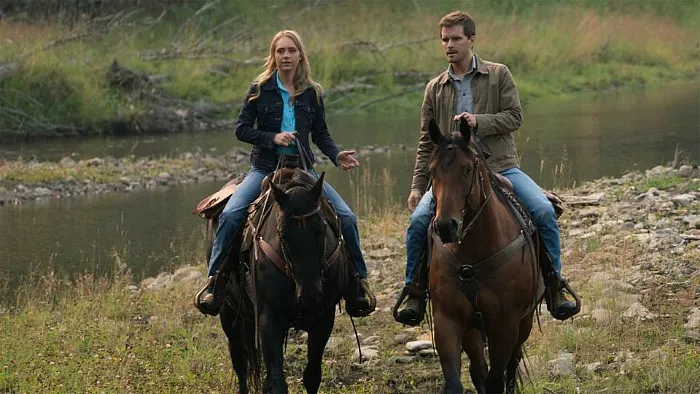
Why Netflix US Fans Are Locked Out Until 2027
Here is the structural reality behind the wait, and it comes down to one company most casual Netflix subscribers have probably never heard of.
Netflix doesn’t have first-run rights to Heartland in the United States. Those still reside with UPtv and UP Faith & Family. As confirmed by TVLine, the network served as the show’s U.S. home for its Season 19 debut, beginning on March 19, 2026. Their exclusivity period lasts about a year, so Heartland Season 19 is not expected to be on Netflix US until at least early 2027, though it could launch as late as summer.
UP Faith & Family began airing Season 19 on its streaming service in November 2025, with episodes debuting weekly. The head of streaming at UP Entertainment said at the time: “Heartland fans in the U.S. have long asked for a shorter wait after the Canadian debut, and we’ve been working diligently behind the scenes to make that a reality.” That statement, made with genuine enthusiasm, underscores the core irony: even UP Faith & Family acknowledges that American fans have long felt locked out of current content. Their solution, a few weeks’ faster delivery than previously, still leaves Netflix-only subscribers in the dark for a year or more.
Typically, UP Faith & Family keeps the show exclusively in the United States for a year before it becomes available on Netflix, so a mid-2027 release date is the most realistic expectation for Season 19 on the platform.
The Spoiler Problem Nobody Talks About
There is a less-discussed but very real side effect of this delay: the spoiler exposure that Netflix-only fans endure for an entire year before they can watch a season.
Season 19’s finale aired in Canada on December 7, 2025. It aired on UPtv in the United States on a rolling basis through early 2026. By the time Netflix US viewers finally get access to Season 19 in 2027, that marriage proposal cliffhanger will have been discussed, debated, memed, and reacted to online for well over a year. The show’s Reddit communities, Facebook fan groups, and YouTube reaction channels do not pause for Netflix subscribers. The conversation moves in real time, and fans who only have Netflix access face a quiet but persistent choice between avoiding all social media discussion of the show they love or accepting that they will know the answer before they watch the question.
That spoiler pressure is not abstract. The Nathan proposal is currently the most-discussed Heartland storyline in fan communities, and it has been since the February 2026 finale. Anyone following fan pages, Heartland hashtags, or even casual entertainment news has almost certainly encountered the outcome by now — months before Netflix US subscribers can officially watch it.
Your Options Right Now, Ranked
For American viewers who want to watch Season 19 without waiting until 2027, the options are limited but real.
The most immediate is a subscription to UP Faith & Family, which currently offers the show at $5.99 per month. Season 19 is fully available there now, all ten episodes, including the finale. For viewers who have already finished Season 18 on Netflix and want to keep going, this is the only fully legal, no-workaround solution available in the U.S. today.
The second option, widely discussed in fan communities, is using a VPN connected to a Canadian server to access CBC Gem, where Season 19 is also available. This sits in a legal gray zone that varies by terms of service and local law, and it requires a working VPN subscription, but it is technically possible for those willing to navigate the setup.
The third option is waiting. Netflix has confirmed rights to the show through at least September 2028 in the US, so Season 19 will eventually arrive — the question is simply whether fans are willing to spend the next year avoiding spoilers for a story the rest of the world has already seen.
What This Means Heading Into Season 20
The timing of all this makes Season 19’s Netflix delay particularly pointed. Season 20 is actively filming in Alberta right now, with a premiere scheduled for fall 2026 on CBC. By the time Netflix US fans finally get to watch Season 19 in 2027, Season 20 will have already aired in Canada and begun its own UPtv run in the United States. Netflix US viewers could, in theory, arrive at Season 19 already knowing the outcome of Season 20 — and still have to wait until approximately 2028 to watch it on their platform of choice.
For a show approaching what many believe could be its final chapter, that delay feels especially frustrating to fans who have built years of loyalty around watching it on Netflix. The show is not going anywhere — the Netflix deal runs through 2028 — but the gap between when Heartland happens and when Netflix America gets to experience it keeps widening, one season at a time.
- Newness , Newsbeat
- Tháng 6 19, 2026
- 90 views
Why American Heartland Fans Are Always a Year Behind — And It’s Only Getting Worse
Here is where American Heartland fans stand right now, in mid-June 2026: Netflix US has Season 18. UPtv is airing Season 19. Season 20 is actively filming in Calgary as you read this, set to premiere in Canada this fall. And according to every available projection, Netflix US subscribers won’t see Season 19 until sometime in 2027 — and Season 20 probably not until 2028. That is not a glitch. It is not a rumor. It is the show’s standard release architecture, and it has quietly become one of the most frustrating ongoing stories in streaming for a fan base that is, by every metric, enormous and deeply loyal.
A Show With a Giant Audience and a Complicated Delivery Problem
Heartland has been one of Netflix’s stealthiest success stories for over a decade. The show generates massive viewership year after year, aided significantly by the fact that the show has over 260 episodes in its back catalog. When new seasons arrive on the platform, they climb the charts quickly — Season 18’s February 2026 Netflix US debut sent the show into the Top 10 almost immediately, with some tracking outlets placing it as high as fourth in the country during its opening week.
But here is the catch that every Heartland fan in the United States eventually runs into: Netflix is not where this show lives first. It is where it arrives last.
The UP Faith & Family Bottleneck, Explained
The reason for the delay comes down to one entity most casual Netflix subscribers have probably never heard of: UP Faith & Family, a faith-and-family-oriented streaming service that holds the first-window streaming rights to Heartland in the United States.
The chain works like this. Each new season airs first on CBC and CBC Gem in Canada, typically in the fall. UP Faith & Family then holds the exclusive U.S. streaming rights, airing new seasons roughly a year after their Canadian debut, with new episodes dropping weekly. Only after that exclusivity window closes — typically another year — does the season migrate to Netflix US. Their exclusivity window must close before the season can migrate to Netflix, a process that typically takes around a year after the UP Faith & Family finale airs.
The math is punishing. Season 19 aired on CBC between October and December 2025. It made its U.S. cable debut on UPtv on March 19, 2026. Netflix US subscribers are not expected to see Season 19 until at least early 2027. Season 20, currently filming and due to premiere in Canada this fall 2026, would follow the same pattern — likely landing on Netflix US somewhere around 2028.
That means a Netflix-only viewer in the United States watching Heartland today is roughly two full seasons behind where the story actually is. They are watching Amy and Nathan’s relationship develop in Season 18, with no idea how the Season 19 finale’s marriage proposal cliffhanger resolves — and won’t find out on Netflix for another year and a half.
The International Divide That Makes It Worse
The frustration deepens considerably when American fans discover that this delay is almost entirely a U.S.-specific problem. International regions such as the United Kingdom and Australia receive new seasons of Heartland much sooner than those in the States, with new seasons released anywhere from nine to twelve months after their initial airing in Canada. That means a viewer in the UK or Australia watching Netflix could be a full year ahead of their American counterpart on the same platform, watching the same show.
In the majority of countries outside the United States, seasons 7 through 18 are currently accessible, with the most recent season having arrived last summer. Meanwhile, the U.S. market — where Heartland consistently ranks among Netflix’s most-watched titles when new seasons drop — is structurally locked out of current content by a licensing deal that predates the streaming era’s current competitive landscape.
The sole upside for dedicated American fans: Netflix has secured streaming rights for Heartland in the U.S. for at least three more years, extending through 2028, though the company has declined to officially comment. The show is not going anywhere. It is just going to keep arriving late.
Is There Any Way Around It?
Short answer: yes, but none of them are free. A VPN connected to a Canadian server allows viewers to access CBC Gem and watch new seasons as soon as they air in Canada. UP Faith & Family itself offers a subscription starting at $5.99 per month, which gives U.S. viewers access to new seasons roughly six to twelve months before they hit Netflix — currently the only legal way for American subscribers to watch Season 19 without a Canadian VPN. For viewers unwilling to pay for an additional streaming service, the honest advice is simple: wait, and expect that wait to run into next year.
What this situation really illustrates, though, is a structural tension that goes beyond one show. Heartland‘s multi-platform licensing deal made sense in an earlier era of TV distribution, when broadcast rights, cable rights, and streaming rights were sold in distinct layers to distinct buyers. In 2026, with streaming increasingly the primary way audiences consume long-running dramas, a model that puts a show’s most loyal subscribers a full two seasons behind the current story is starting to show its age — especially as that same show approaches what many believe could be its final chapter.
American fans who discover Heartland through Netflix today, fall in love with it, and then start hunting for Season 19 are about to learn a lesson the show’s existing fan base learned years ago: loving Heartland in the United States means learning to be patient in a way the rest of the world simply does not have to be.
- Newsbeat , Newness
- Tháng 6 17, 2026
- 93 views
The Heartland Fan Theory That Won’t Die: Did Jack Bartlett Know Ty Borden Was Alive All Along?
Few storylines in Heartland‘s nineteen-year history have left as deep a scar on its fan base as the death of Ty Borden. So it’s not entirely surprising that, nearly a decade later, a theory questioning whether that death was ever what it appeared to be has resurfaced, this time with a darker twist: that Jack Bartlett, the show’s steady, trusted patriarch, may have secretly known Ty was alive for six years and chose to hide it from his own family. The claim is circulating mostly through fan YouTube channels and social media threads citing an unverified “leaked script,” and it’s worth saying clearly up front: no credible entertainment outlet or official CBC source has confirmed any of this. Still, the fact that the theory has gained enough traction to spark real debate says something interesting about how unfinished some fans still feel Ty’s story is.
A Death That Never Quite Settled
To understand why this theory has any traction at all, it helps to revisit how Ty Borden actually left the show. Ty, played by Graham Wardle, was killed off abruptly in Season 9 after the actor made the decision to leave the series to pursue other creative projects. In the show’s storyline, Ty died from injuries sustained in a motorcycle accident while rushing to be by Amy’s side, a death that aired with little advance warning and immediately became one of the most discussed moments in Canadian television that year. Wardle has since spoken publicly about his choice to leave, describing it as a deeply personal decision tied to wanting new creative challenges, not a falling out with the production.
That abruptness is exactly what has kept conspiracy-style theories alive in Heartland fan communities ever since. Long before this latest Jack-related claim, fans had floated the idea that Ty’s death could eventually be retconned, pointing to the fact that soap-style family dramas have a long history of bringing back characters once thought dead, and that Wardle’s exit was framed as amicable rather than permanent, in theory leaving a creative door open if the show ever wanted to use it.
What the New Theory Actually Claims
The current version making the rounds goes further than simple “what if he’s alive” speculation. According to posts pushing the theory, Jack Bartlett has known for six years that Ty survived whatever happened to him, and has deliberately kept that information from Amy and the rest of the family for an unspecified “dark” reason. Some versions of the theory tie this to unconfirmed claims of a leaked Season 20 script, suggesting the truth would eventually surface and trigger a direct, emotional confrontation between Jack and Ty.
It’s worth being precise about what evidence actually exists here, because the answer is: very little that can be verified. There is no script excerpt, casting call, or official CBC statement attached to any of these claims that has been independently confirmed by entertainment trade press. What does exist is a pattern familiar to long-running fandoms: a handful of speculative YouTube videos and forum posts, amplified through shares and comment threads, gradually taking on the feel of “insider information” simply through repetition. That doesn’t necessarily mean the theory is wrong, fan theories have occasionally proven prophetic on other shows, but it does mean it should currently be treated as speculation, not reporting.
Why Fans Want to Believe It Anyway
Even without solid evidence, it’s not hard to see why this particular theory has resonance. Ty and Amy’s relationship was the emotional backbone of Heartland for nearly a decade, and his death came at a moment many fans felt was too sudden to deliver the kind of closure the storyline deserved. A theory that reframes his death as a secret rather than a permanent loss offers something the original ending didn’t: the possibility of resolution on the fans’ terms.
There’s also a structural reason this kind of theory tends to stick around longer in family dramas than in other genres. Shows like Heartland are built around themes of secrets, forgiveness, and long-buried family history, Jack himself has had past storylines involving things he chose not to disclose to his family for years. A theory casting him as someone capable of keeping an even bigger secret isn’t wildly out of step with how the show has written him before, even if this specific claim has no real backing. That internal logic is often exactly what lets unverified fan theories travel further than the evidence behind them would normally justify.
The Verdict: Compelling Story, Unconfirmed Facts
So where does that leave things heading into Season 20? Right now, the honest answer is simple: this is an unverified fan theory, not a confirmed plot development, and readers should treat any “leaked script” claims attached to it with real skepticism until an actual trade outlet or CBC itself says otherwise. That said, the theory’s popularity is itself a legitimate piece of Heartland fan culture worth covering, because it reveals just how unresolved Ty Borden’s exit still feels to a meaningful chunk of the audience, even nearly a decade later.
The bigger question this theory raises might not be “is it true,” but “should it be.” Would bringing Ty back, even fictionally, cheapen one of the show’s most emotionally important storylines, or would it finally give long-frustrated fans the closure his abrupt exit never delivered? That’s a debate Heartland viewers will likely keep having long after this particular rumor fades, whether or not Season 20 ever addresses it at all.
Ann Blyth, 98: The Last Voice of Hollywood’s Golden Age Has Gone Silent
- Tháng 6 26, 2026
- 119 views